

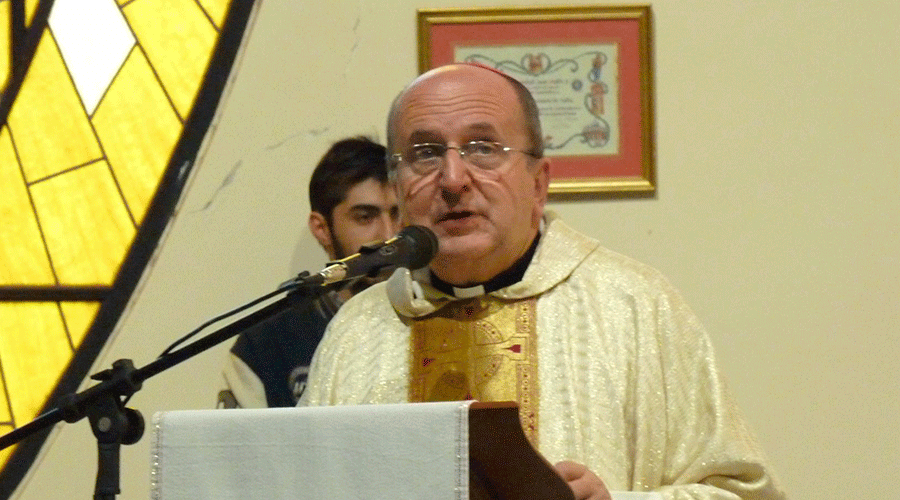
From the time the apparitions were made public, the Carmelites gave their support to the visionary. However, the Archdiocese of Salta questioned the authenticity of the phenomenon.
In the ruling issued April 5 by Judge Carolina Cáceres Moreno, the underlying issue was not addressed but specifically the object of the complaint: the relationship between the archbishop and the nuns, which reached the maximum point of conflict when the sisters became part of a foundation that gave a sort of legal status to the apparitions.
Consequently, in 2021 the Holy See sent Bishop de Elizalde, accompanied by Sister Isabel Guirov, as apostolic visitors in order to “analyze the problems raised.”
The following year, the Holy See ordered the religious congregation to “not in any way get involved in activities linked to the so-called spiritual work ‘I am the Immaculate Mother of the Divine Eucharistic Heart of Jesus’ and ‘I am the Most Sacred Eucharistic Heart of Jesus,’” the name of the spiritual movement formed around the alleged apparitions.
The meetings the sisters had with the archbishop, the apostolic visitors, and other factors are apparently what led the nuns to file a complaint for gender-based violence.
According to Infobae, the judge concluded that the Discalced Carmelites “have suffered acts of gender violence of an institutional scope of a religious, physical, psychological, and financial nature for a period of more than 20 years.”