
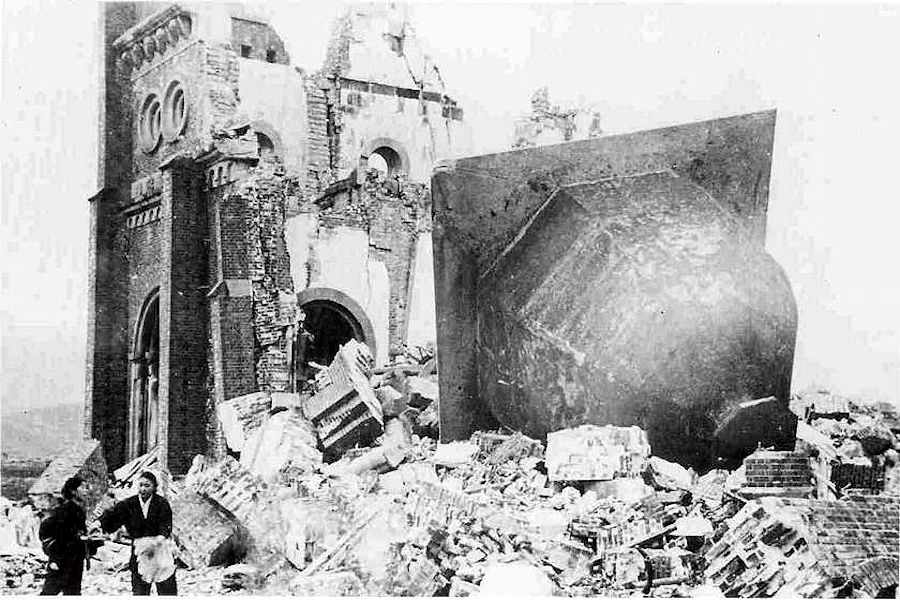
Nagasaki had about 240,000 inhabitants. A miscalculation by the Americans meant that the bomb did not fall on the center of the city, but the effect was still devastating and immediately killed some 75,000 people. In the days that followed, a similar number died from radiation injuries and illnesses.
History of the Catholic community in Nagasaki
Since the 16th century, Nagasaki has been an important center of Catholicism in Japan, initially evangelized by Jesuit and Franciscan missionaries.
The persecution against Catholics, which came almost immediately, was recalled in 2007 in the memoirs of Cardinal Giacomo Biffi, who died in 2017, in which he expressed the strong impact that the news of the atomic bombs dropped on Japan in 1945 had on him.
“I had already heard of Nagasaki,” he wrote. “I had come across it repeatedly in Giuseppe Schmidlin’s ‘Manual of the History of Catholic Missions,’ three volumes published in Milan in 1929. In Nagasaki, beginning in the 16th century, the first consistent Catholic community in Japan arose.”
“In Nagasaki,” he pointed out, “on Feb. 5, 1597, 36 martyrs had given their lives for Christ (six Franciscan missionaries, three Japanese Jesuits, and 26 laymen), canonized by Pius IX in 1862.”