
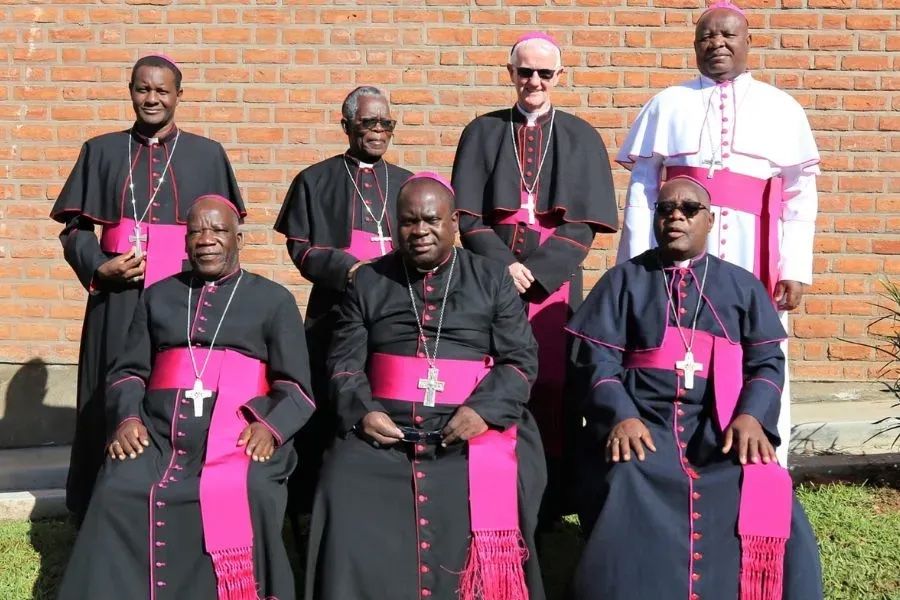
The bishops said they offered the clarifications “having noted certain erroneous interpretations of this declaration that have generated interest, fears, and worries among Catholics and people who look up to the Catholic Church for moral, spiritual, and doctrinal guidance.”
“The declaration is NOT about the blessing of same-sex unions and sacramental endorsement of the same as married couples,” they explained. “No, this is a document prompted by questions to the [Dicastery] for the Doctrine of the Faith regarding whether or not the blessings of God through his ministers can be extended to everybody regardless of their state, hence the title of the document is ‘On the Pastoral Meaning of Blessings’ and NOT on the blessing of same-sex unions.”
The Vatican declaration, the bishops continued, “while differentiating the meaning and levels of various blessings, reiterates that the Church’s teaching on marriage defined as an exclusive, stable, and indissoluble union between a man and a woman, naturally open to the generation of children, remains firm.”
They further reiterated that the declaration “says rites and prayers that could create confusion between what constitutes marriage and what contradicts it are not allowed (see Fiducia Supplicans, paragraph 4).”
“The same document stresses that the Church has always considered only those sexual relations that are lived out within marriage to be morally licit,” the bishops said.
Regarding ordinary blessings whose recipients can be people, objects of worship and devotion, sacred images, places of work, fruits of the earth, etc., ECM members said that “such blessings are to be given to anybody and anything bearing in mind that the great blessing of God is Jesus Christ, the Eternal Word with whom the Father blessed us while we were still sinners.”