

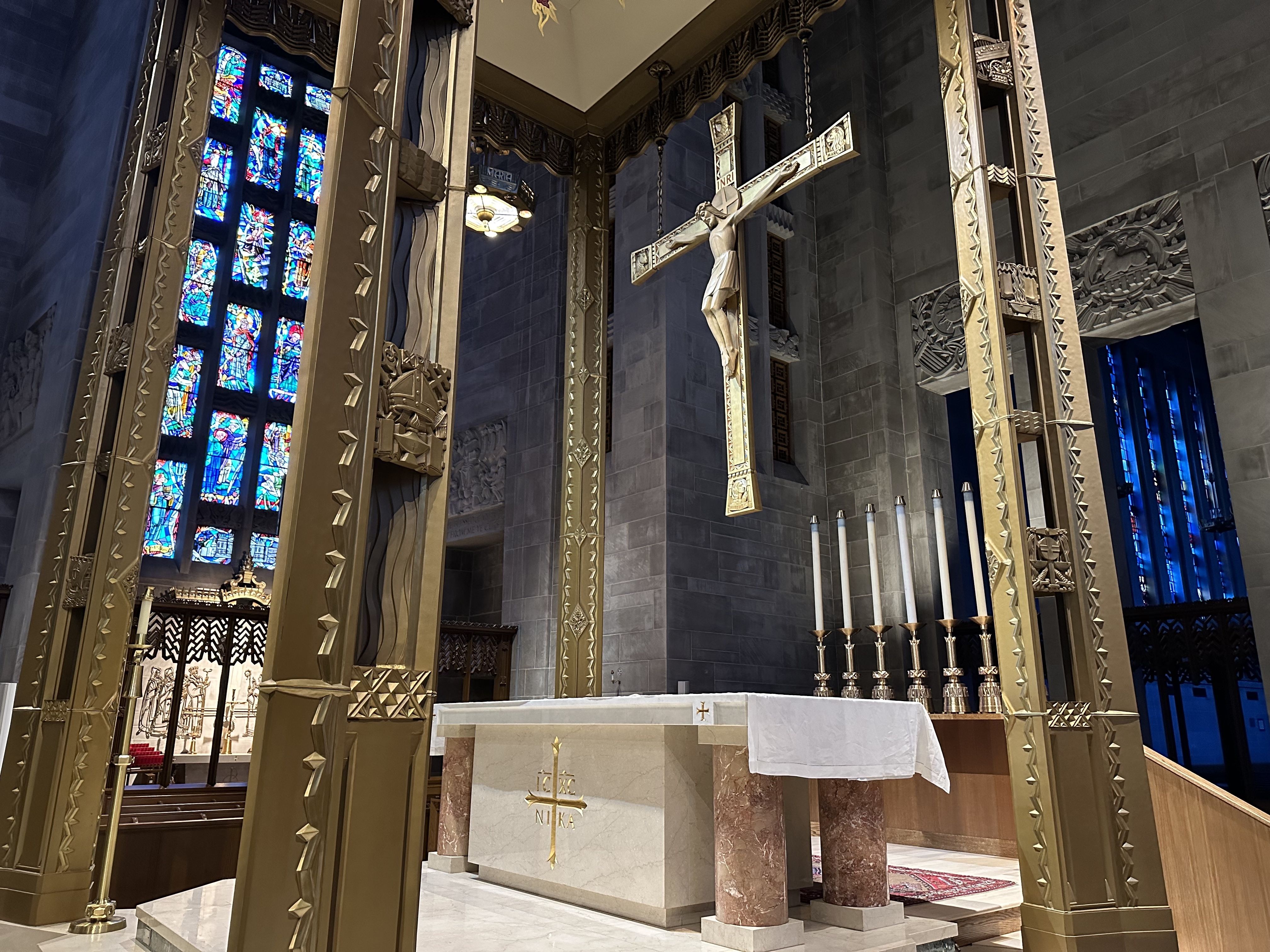
“It was amazing to see how the sanctuary really opens up,” Gough told CNA, adding that the congregation’s feedback has been “overwhelmingly positive,” with only a few people critical of the decision.
The platform, which is built with wood, is a “semi-permanent solution,” according to Gough, but the cathedral may consider replacing the wooden platform with a marble platform at a later date. In the meantime, he said the wooden structure and the use of the high altar is “not going anywhere.”
Gough said there was some consideration of restoring use of the high altar in the 1980s, but that the plan never went through. This changed during the COVID-19 pandemic when Archbishop William Lori began celebrating a livestreamed Mass at the cathedral on a regular basis. Gough said this led to conversations “about the significance of the building and about the architecture” and the consideration of restoring the high altar.
As a trial run, the cathedral rented a temporary structure to set up behind the high altar so that the altar could be used during the ordination of eight priests in June. The archbishop said in a letter in August that the experience was “joyous and awe-inspiring” and met with “overwhelmingly enthusiastic and positive” feedback, leading to the decision to make the structure permanent.
Gough, in his early November talk, said the restoration allows the cathedral to reflect the intent of the architects who designed it by making the altar the primary point of focus in the church.
“The principal altar is physically the source and the summit of the entire edifice, as everything in the cathedral points toward it and from it derives its meaning and power,” Gough said. “It is placed in a clear and visible spot, set apart from everything else so that there can be nothing to distract attention away from it, and highly elevated to ensure some line of sight for more than a thousand people gathered together to worship.”