

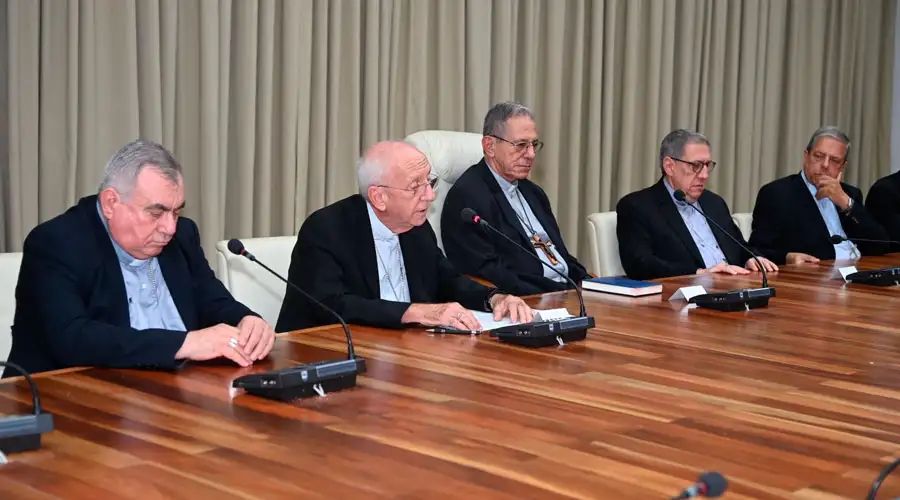
According to the Cuban presidency, “issues related to the work of the Catholic Church, the socioeconomic situation of the country, the strengthening of values in society, among other matters of common interest, were addressed.”
In addition, “the meeting took place in a climate of mutual respect in accordance with the policy of the Revolution towards religion and believers and full religious freedom enshrined in the Constitution of the Republic of Cuba,” the president’s office said.
The bishops said in their statement that they “listened to the information, criteria, and assessments” given by Díaz-Canel and Marrero, “who also fully explained their visions and future prospects regarding the issues addressed.”
The bishops thanked the government leaders for “the possibility of exchange” and “the opportunity to be heard,” and said they renewed “their commitment to the Cuban people and to everything that favors a more serene climate of peace, harmony, respect for all, and hope.”
According to the report recently published by DatoWorld, Cuba leads the “Poverty Index in Latin America,” with approximately 72% of its population below the extreme poverty line that was established by the World Bank at a daily income of less than $1.90.
As the communist regime does not publish figures on the level of poverty, DatoWorld took the report published in October 2022 by the Cuban Observatory for Human Rights as a reference.