

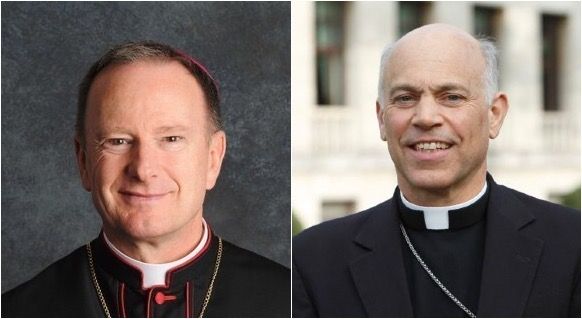
In their September letter, the California bishops noted that the Catholic Church “is called to do as Jesus did, to accompany in a spirit of solidarity those marginalized and suffering,” while still “affirming the beauty and truth of God’s creation.”
“Compassion that does not include both truth and charity is a misplaced compassion,” they wrote. “Support for those experiencing gender dysphoria must be characterized by an active concern for genuine Christian charity and the truth about the human person.”
Efforts by the Church to address these questions have taken several forms. In some cases, as with the California bishops last month, prelates have issued pastoral letters offering clarity and guidance.
Oklahoma City Archbishop Paul Coakley composed a similar letter earlier this year, while the Diocese of Cleveland said in a guidance document in August that Catholic institutions there must respond to those suffering from gender dysphoria by offering “a loving environment” while also “upholding the truth of God’s created reality.”
Archbishop George Lucas of Omaha, Nebraska, and Bishop Donald DeGrood of the Diocese of Sioux Falls, South Dakota, similarly issued policies last year directing schools to affirm the biological sex of their students rather than their “gender identity.” And bishops in Minnesota in 2020 issued directives to Catholic schools mandating that they follow Catholic teaching on biological sex, including keeping bathroom facilities and sporting events segregated by sex and not by “gender identity.”
Over the summer, meanwhile, the U.S. bishops voted to move forward with updates to their Ethical and Religious Directives to Catholic institutions, directing that health facilities “must not perform interventions, whether surgical or chemical, that aim to transform the sexual characteristics of a human body into those of the opposite sex.”