

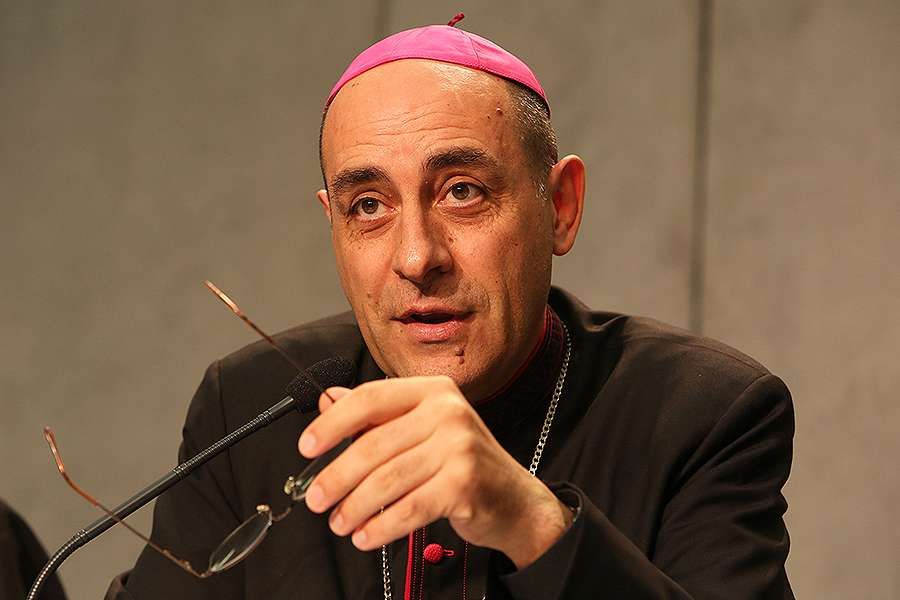
Especially in Africa, where “there is legislation that penalizes with prison the mere fact of declaring oneself to be gay, imagine [what a] a blessing [would do],” the DDF doctrinal chief said, adding that “it’s proper for each local bishop to make that discernment in his diocese or in any case, to give further guidance.”
Divided opinions
After the Dec. 18 publication of Fiducia Supplicans, there have been declarations from various bishops or bishops’ conferences around the world that have expressed diverse opinions.
Bishops from some nations such as Germany, Austria, and France have expressed satisfaction with the declaration, and some of them have even gone so far as to say that priests cannot refuse to impart these non-ritual blessings to persons in an irregular situation.
In other countries such as the United States, Ukraine, Ghana, Kenya, and Mexico, bishops have shown their support while warning of the difficulty of ensuring that these pastoral gestures do not lead to confusing people about a change in the doctrine on marriage and sexuality in the Catholic Church.
Along those lines, the bishop of Orihuela-Alicante in Spain, José Ignacio Munilla, noted that although the declaration is not “heretical,” its application can be “chaotic.”