

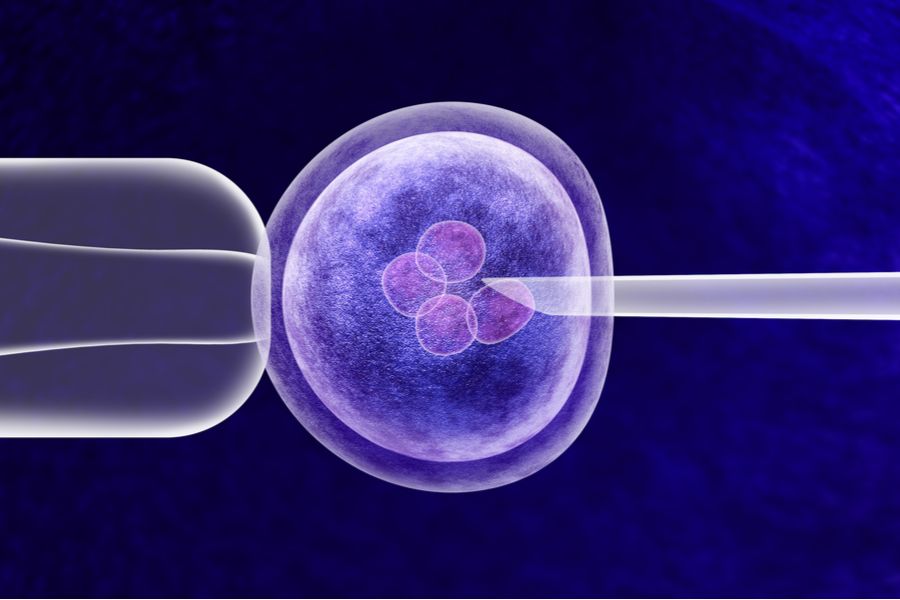
Both methods create a child who has two genetic mothers and one genetic father. The PNT method also requires the destruction of embryos. The MST process does not necessarily require the destruction of embryos, but researchers did destroy embryos as part of the researching process.
Through MST, nuclear genetic material is removed from the mother’s eggs and transferred to donated eggs that have had their nuclear genetic material removed before being fertilized with the father’s sperm. Through PNT, the mother’s eggs are first fertilized with the father’s sperm in a lab and then the nuclear genetic material is transferred to donated eggs that have had their nuclear genetic material removed.
“Mitochondrial donation treatment offers families with severe inherited mitochondrial illness the possibility of a healthy child,” the HFEA said in a statement. “The HFEA oversees a robust framework which ensures that mitochondrial donation is provided in a safe and ethical manner.”
As of May 10 the HFEA Statutory Approvals Committee has approved this treatment for 32 patients.
“All applications for treatment are assessed on an individual basis against the tests set out in the law and only after independent advice from experts,” the HFEA statement read. “These are still early days for mitochondrial donation treatment and the HFEA continues to review clinical and scientific developments. … We understand that the team at Newcastle hopes to publish information of their mitochondrial treatment programme in peer reviewed journals shortly.”
When Parliament was considering the initial research in 2015, it faced opposition from the Catholic Bishops’ Conference of England and Wales, which accused Parliament of approving the methods too hastily and objected to the destruction of human embryos in the treatment process.