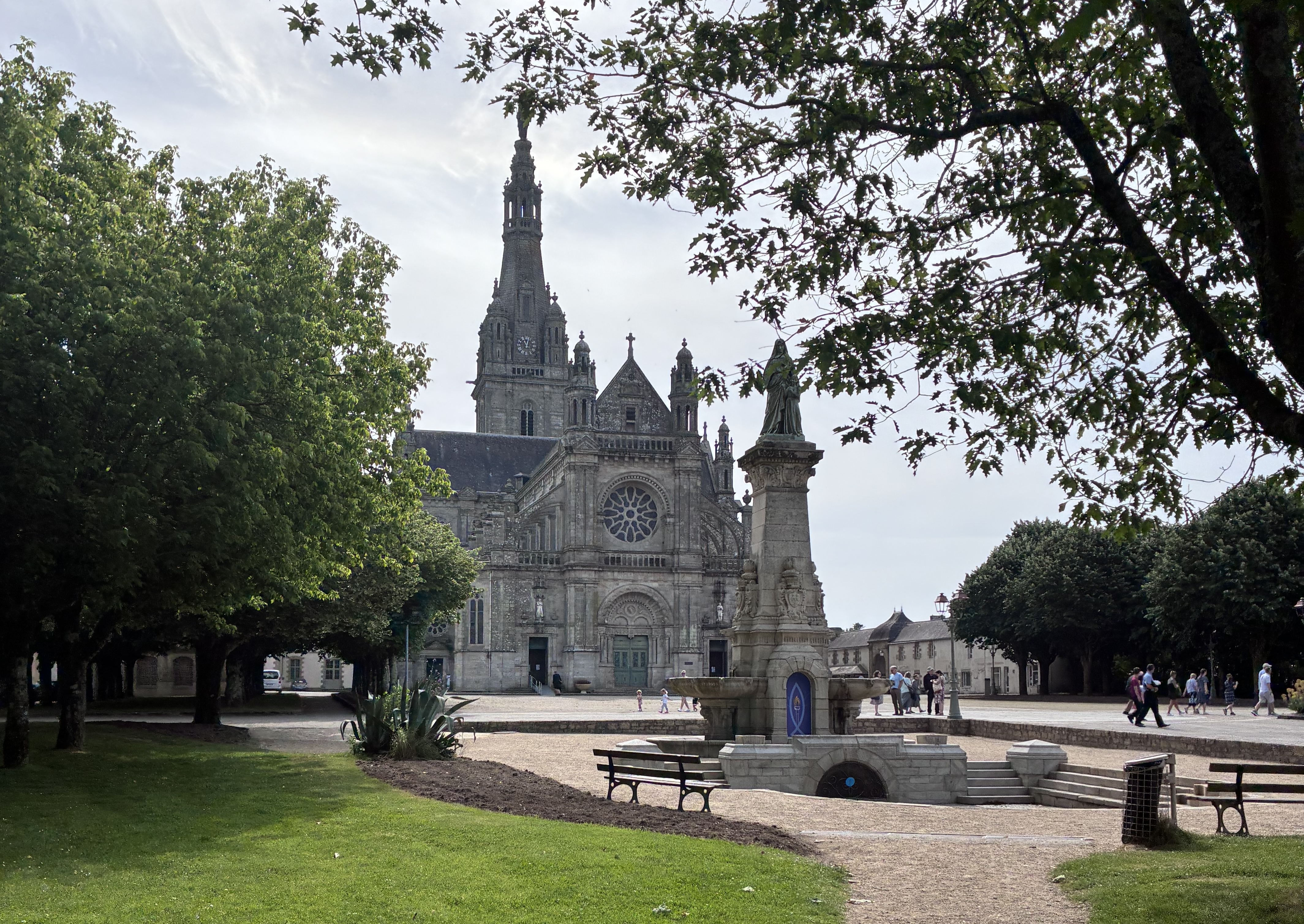

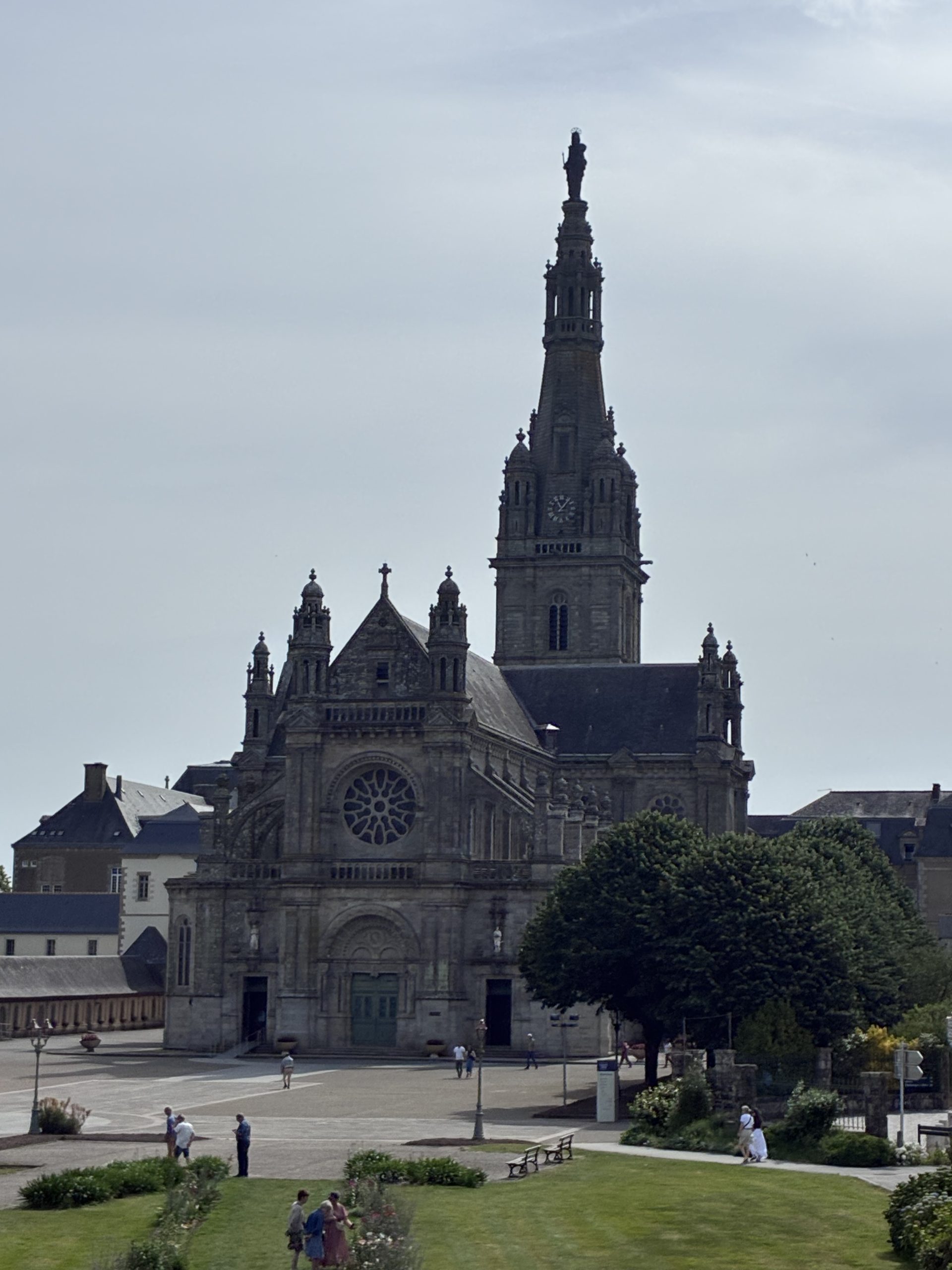
On the evening of July 25, 1624, a Breton farmer, Yves Nicolazic, followed an unexplained light through the countryside of Brittany, France. What he discovered would transform a quiet village into the third-most-visited pilgrimage site in France and establish the only Church-approved apparition of St. Anne.
According to historical accounts, Nicolazic, a deeply religious farmer from the village of Keranna, began experiencing a series of extraordinary events in August 1623. He reported seeing mysterious lights and hearing voices near his home. Eventually, he said the figure speaking to him identified herself as St. Anne, the mother of the Blessed Virgin Mary.
St. Anne told Nicolazic that an ancient chapel dedicated to her had once stood in the area but had fallen into ruin centuries earlier. She asked that the sanctuary be rebuilt so that people could once again come there to honor God and seek her intercession.
According to tradition, the first chapel had been built nearly nine centuries before Nicolazic’s visitations. However, the original chapel was destroyed at the end of the seventh century. Still, the memory of it was kept alive by tradition, and the hamlet was called “Keranna”; i.e., “Village of Anne.” The visions culminated on the night of July 25, 1624, when Nicolazic followed a brilliant torch-like light to a field where workers later uncovered an old statue of St. Anne. The discovery was viewed as confirmation of Nicolazic’s claims and sparked widespread interest throughout Brittany.
Church authorities investigated the reported apparitions and eventually approved devotion at the site. Construction of a new chapel soon began, laying the foundation for what would become the Shrine of St. Anne d’Auray.
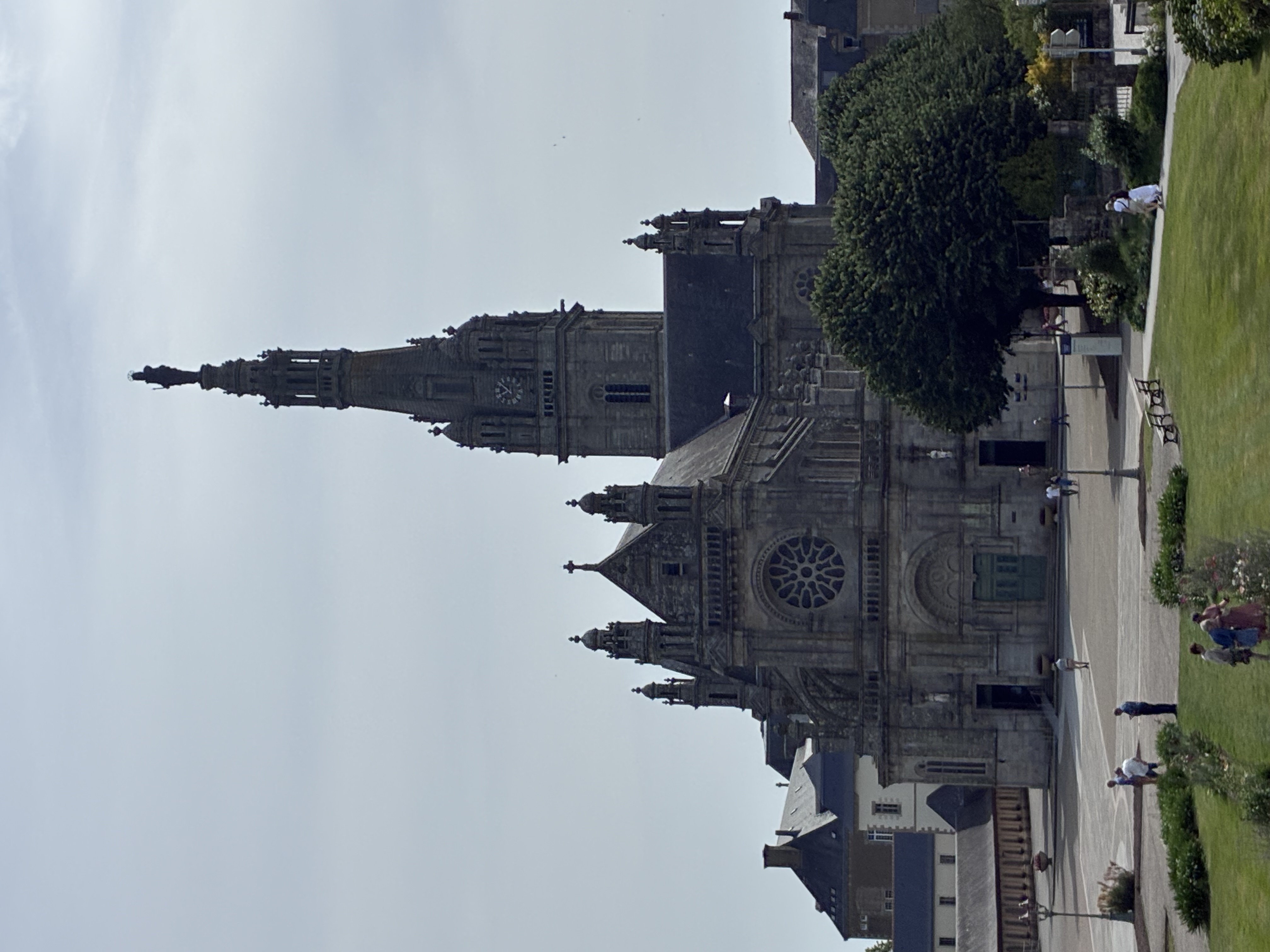
A center of Breton faith
The shrine quickly became a focal point for Catholic life in Brittany, a region known for its strong religious traditions and distinctive Catholic identity.
Pilgrims traveled long distances on foot to visit the sanctuary, seeking healing, spiritual renewal, and the intercession of St. Anne. Over time, annual pilgrimages grew into major religious gatherings that attracted thousands of faithful.
As devotion spread, St. Anne came to be regarded as a special patroness of Brittany. Families entrusted children to her care, sailors sought her protection before voyages, and generations of Catholics turned to her as a model of faith and family life.
Surviving revolution and conflict
The shrine’s history has not been without challenges.
During the French Revolution, Catholic churches and religious institutions across France faced suppression, confiscation, and destruction from revolutionists. Like countless Catholic sites throughout the country, St. Anne d’Auray experienced the same persecution. The original statue, which had lasted over nine centuries, was tragically destroyed by anticlerical forces. Today, a surviving, blackened fragment of the original head is securely preserved and venerated within a dedicated reliquary. Despite the revolution, devotion to St. Anne endured.
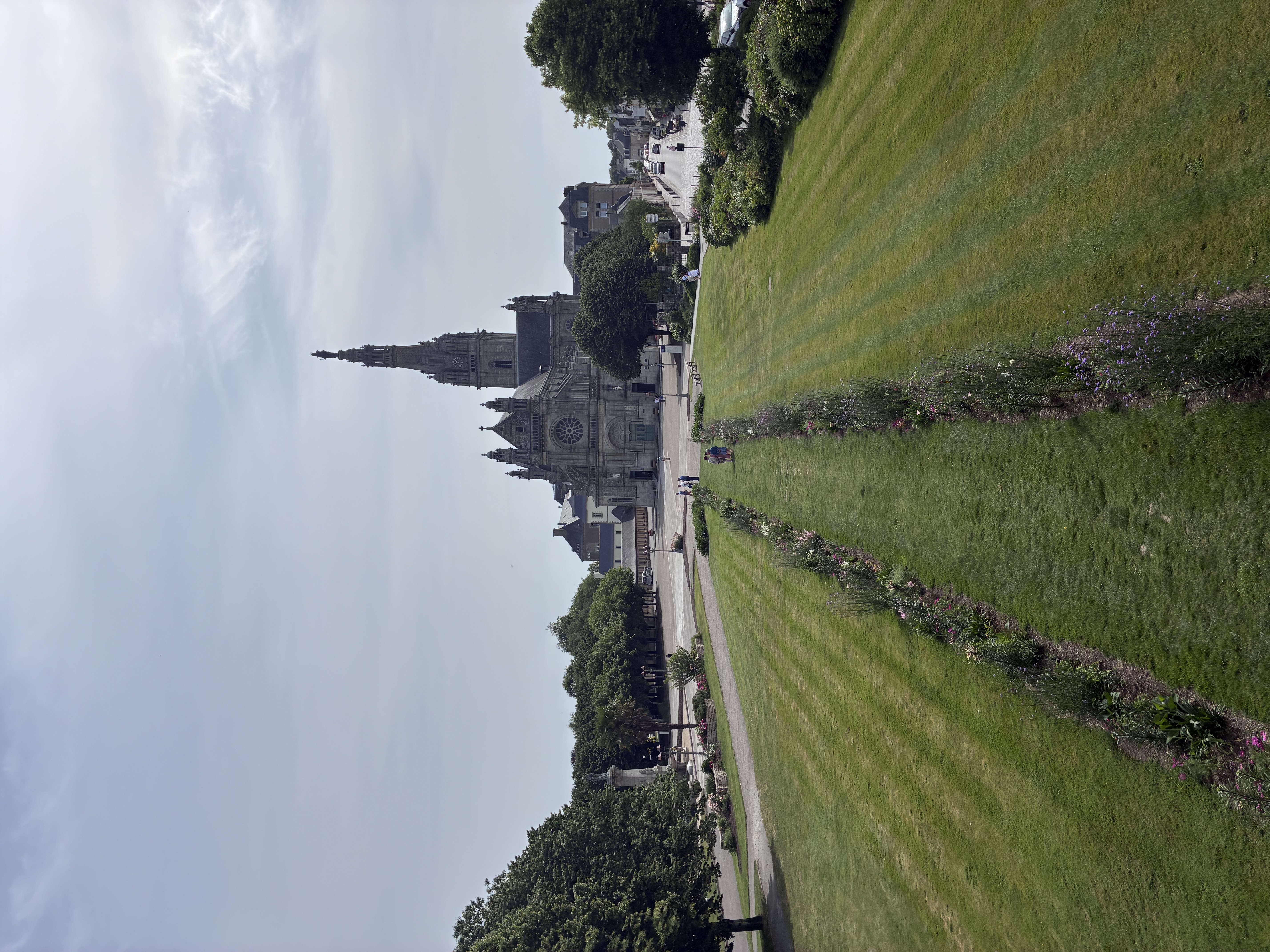
The sanctuary eventually recovered and entered a new period of growth during the 19th century. A larger basilica was constructed from 1865 to 1872 to accommodate increasing numbers of pilgrims.
Papal recognition
The significance of St. Anne d’Auray has been recognized repeatedly by the universal Church.
In 1996, Pope John Paul II visited the shrine during his apostolic journey to France. During the visit, he prayed with pilgrims and highlighted the importance of family life, a theme closely associated with devotion to St. Anne and the Holy Family.
The papal visit marked a milestone in the shrine’s history and underscored its importance not only to Brittany but also to the broader Catholic world.
Today, the sanctuary remains one of the most visited pilgrimage destinations in France, behind Lisieux and Lourdes. Pilgrims arrive for major feast days, organized diocesan pilgrimages, and personal spiritual retreats.
A legacy that endures
Four hundred years after Nicolazic first reported seeing a mysterious light in the Breton countryside, the message associated with St. Anne d’Auray continues to resonate.
The bells that ring across the sanctuary grounds today echo a history stretching back centuries. They tell the story of a farmer who was entrusted with a mission, a community that responded in faith, and a shrine that remains a living witness to one of Catholicism’s most enduring traditions.