

Coakley noted that the dedication of the new shrine — which involves, among other things, the anointing of the walls with oil and the sprinkling of holy water — serves as a reminder to Christians of the dignity they have as baptized people.
“God desires that each and every one of us become a saint,” he said.
The archbishop encouraged everyone present to strive to increase devotion to Rother, “a very attractive and relatable figure,” especially for young men in Oklahoma considering the priesthood.
“At a time when the priesthood of Jesus Christ is so little understood, or so little valued — due in no small part, admittedly, to the sins of some of our brothers — we need heroic, faithful, generous witnesses to remind us of the dignity of our vocation,” Coakley said.
‘Padre Apla’s’
Rother was born in 1935 in Okarche, Oklahoma, about 40 miles northwest of Oklahoma City. He attended Holy Trinity Catholic Church and School before joining the seminary, where he struggled academically. He persisted in his studies, despite the challenges, and eventually graduated from Mount St. Mary’s Seminary in Maryland. He was ordained a priest of the then Diocese of Oklahoma City and Tulsa in 1963.
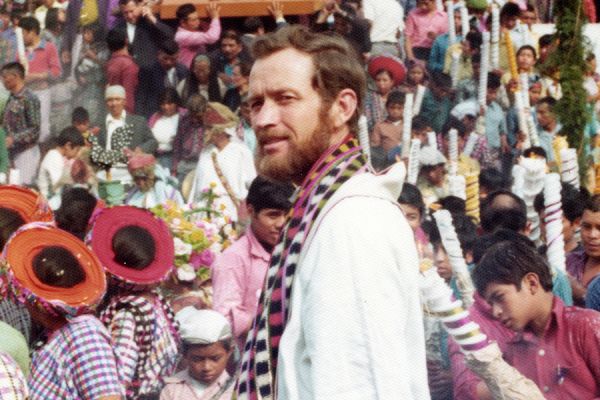
While Rother was in seminary, St. John XXIII asked the Churches of North America to send assistance to and establish missions in Central America. Soon after, the Oklahoma Diocese established a mission in Santiago Atitlan, Guatemala, a poor rural community of mostly Indigenous people, a group called the Tz’utujil, descendants of the Mayans.
Rother accepted an invitation to join the mission team five years after his ordination and would spend the next 13 years of his life in Guatemala, serving the people of the parish during the country’s civil war (1960–1996). While there, despite his academic struggles in seminary, he managed to learn both Spanish and Tz’utujil and even translated the entire New Testament into the Tz’utujil language. The locals called him “Padre Apla’s,” which means “Father Francis” (Rother’s middle name) in Tz’utujil.
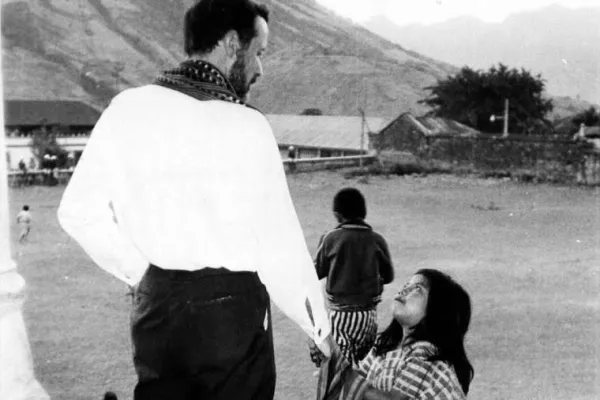
Throughout the country’s civil war, fought between government militants and rebel guerillas, many Catholics were killed amid the Church’s insistence on continuing to educate and assist the poor. Rother briefly returned to his home state of Oklahoma after his name appeared on a right-wing death list but soon returned, knowing full well the dangers of doing so.
(Story continues below)
A famous quote is attributed to him: “The shepherd cannot run at the first sign of danger.”
Just a few months later, in the early morning hours of July 28, 1981, three ski-masked men broke into the rectory of the mission where Rother was living. The men attempted to kidnap Rother at gunpoint, but he refused and resisted, struggling but refusing to call for help so as not to endanger the others in the parish mission. Within 15 minutes, the men had shot the priest twice and fled. No one has ever been prosecuted for Rother’s murder. He was 46 years old.
The Oklahoma City Archdiocese opened Rother’s cause for canonization in 2007, and nine years later, Pope Francis recognized Rother as a martyr. More than 20,000 people attended Rother’s beatification Mass in Oklahoma City on Sept. 23, 2017, whereby he received his present title of “Blessed.”
In 2019, Gov. Kevin Stitt proclaimed July 28 as “Blessed Stanley Rother Day” in Oklahoma.
‘Where he is now’
Located just off I-35 in south Oklahoma City, the architecture of the new shrine — which sits on a former golf course — is designed in a similar style to the church at Santiago Atitlan, where Rother served in Guatemala. Construction on the shrine began in November 2019. Its first rector, Father Don Wolf, is a cousin of Rother’s.