
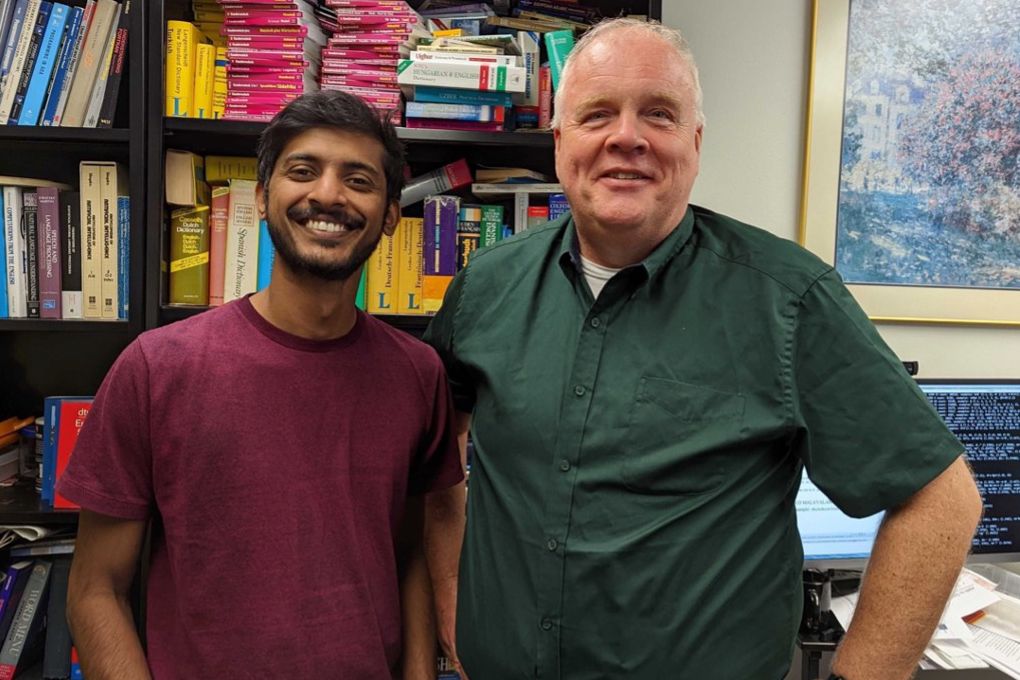
Hermjakob, a lifelong Lutheran, said despite the Bible being the world’s most translated book, it has so far been translated into only about 700 of the world’s 7,000 languages, which excludes many languages that have several thousand speakers — rare, yes, but far from tiny.
“The main target we have is a community of maybe 100,000 speakers. It could be somewhat less, it could be somewhat more, but typically it’s not languages that are going to die out within the next 10 years where there’s like 10 octogenarians left — that’s typically not the target group,” he explained.
Mathew, an engineer who works mainly in the field of natural language processing, was born to Christian parents in India and came to California to obtain his master’s degree. Mathew identifies as a nondenominational Christian and remains active in his church community. He told CNA the importance of having a Bible for speakers of relatively rare languages can’t be overstated, as he has seen it firsthand among Christian communities back home in India.
“It’s life-altering for communities — the joy and tears that it brings to people to have printed book in their ‘heart language,’” he said, referring to the language that people speak at home and most identify with.
“Having the word of God in your own heart language is very meaningful. And unlike in the past, where Bible translation was more of an agenda of a bigger agency, there is the local church now taking the initiative and saying, ‘We want the Bible in our heart language, because we are a bunch of believers here in this small language group, and we are now excited to have the Bible in our language.’ So that’s kind of shifted the model.”
(For Catholics, translations of the Bible must be approved by the Vatican or the appropriate bishops’ conference before they can be published.)