

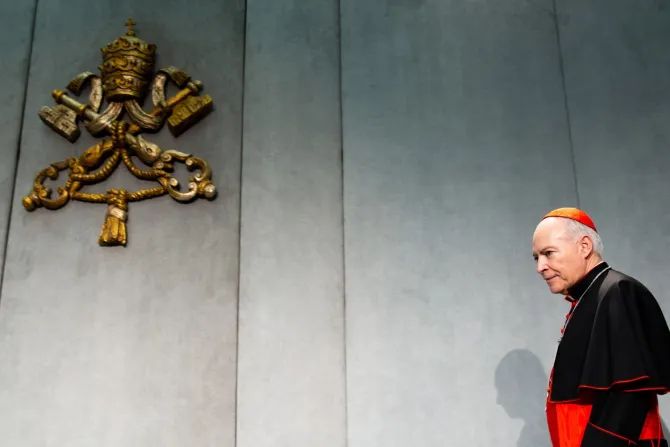
He also emphasized that the controversial topics surrounding the Synod on Synodality — such as the female diaconate, priestly ordination for married men, or issues related to the LGBT community — “have not been a central issue” but rather “they have appeared peripherally, without any consequence.”
He stressed that, in his opinion, the synod “will not enter into specific proposals on these topics, but rather they will continue to be studied in more depth by specialists in each subject.”
During the third week of the synod, topics such as pastoral ministry to LGBT people and the female diaconate were addressed. During the meetings, the structure of the Church was also discussed, with the aim of giving form to a “more synodal” future.
The president of the synod’s information commission and prefect of the Dicastery for Communication, Paolo Ruffini, downplayed the debate on the inclusion of LGBT issues, stating that “the blessing of homosexual couples is not the topic of the synod.”
In addition to these issues, the synod has also addressed debates related to the female diaconate and the possibility of women giving homilies. Regarding the fact that one of the topics discussed in the synod is the “revision of the structure of the Church,” Aguiar told ACI Prensa that it is fundamentally about “raising our awareness of the need to train priests who assume authority as a service and not as command exercised in a pyramidal manner.”
The cardinal emphasized that “we must promote pastoral units: that is, the joint leadership of neighboring parishes, which assume a single pastoral coordination.”