

Older writings often refer to Zervas as “Servant of God,” a title given to a candidate for sainthood after a cause has been opened and is under investigation prior to being declared “Venerable.” (Venerable is the title given to a candidate whose cause has not yet reached the beatification stage but whose heroic virtue has been declared by the pope.)
“That is one of the things that needs to be investigated,” Zurface told CNA at the cemetery prior to the reading of the letter. She credited Norton with resurrecting an interest in Zervas’ life.
According to Norton, 100,000 copies have been distributed of the booklet “Apostles of Suffering in Our Day.”
People have also learned of Zervas through an interview Norton did in a video titled “The Sanctity of Two Hearts.”
Those praying for the Benedictine sister’s intercession have reported miracles and answers to prayers. But the Church is always cautious about such things, Zurface said, so it’s premature to say any more than is in the letter.
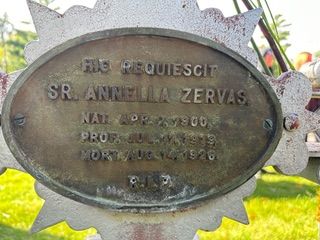
Monsignor David Baumgartner, rector of the Cathedral of the Immaculate Conception in Crookston and the other canon lawyer preparing the groundwork for the cause, noted in a phone interview that the main tasks right now are to work on bylaws to form a guild and to establish it as a nonprofit organization.
A “guild” is the traditional association formed to support, through prayer and promotion, a candidate for sainthood.
“When the guild is established, they will be the ones to petition for a cause to open,” he explained. “The letter was presented at this time, so people will be aware of what the diocese is doing in regard to Sister Annella.”
After the reading of Cozzens’ letter, Norton shared with the group his own story of how he came to know Zervas. And Rose Lindgren from Sartell, about 10 miles from St. Joseph, told the group she was healed of bladder cancer five years ago without treatment after praying to Zervas.
A life of suffering
(Story continues below)
Subscribe to our daily newsletter
Zervas was born Anna Cordelia Zervas in Moorhead, Minnesota, on Palm Sunday, April 7, 1900. Even as a young girl, she had a deep interior life, taking great pains to prepare for her first holy Communion and walking a mile daily to attend Mass.
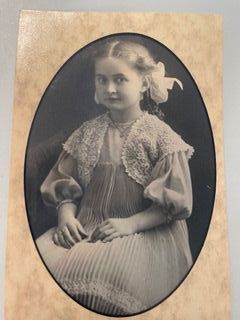
She left home for the Order of St. Benedict in St. Joseph at age 15 in August 1915. Her letters home reflect her happiness, but she also battled with terrible homesickness. When she made her perpetual vows in 1922, she said that any doubts as to her vocation vanished. But by the following year, a peculiar skin disease attacked her body, which included terrible itching day and night.
Zervas continued her work as a music teacher at St. Mary’s School in Bismarck, North Dakota, until eventually her condition made it impossible. Her body began to swell, her skin turning a deep red and burning. Her swollen limbs oozed and developed sores; her skin sloughed off in chunks and strips; thornlike stickers developed within her pores and had to be painfully removed.
Zervas was diagnosed in 1924 at the University of Minnesota with pityriasis rubra pilaris, a chronic skin disease that had no medical treatments at the time. With the consent of her superiors, she was transferred to her parents’ house in Moorhead, Minnesota, where her mother cared for her for two years until her death.
“The pains became more intense; the patient’s cheerfulness remained the same,” Father Kreuter wrote in “An Apostle of Suffering in Our Day.” “’Yes, Lord, send me more pain, but give me the strength to bear it,’ is a prayer that was repeatedly uttered by Sister Annella in the midst of excruciating pains of body and anguish of soul which lasted almost continually for two long years.”