
A major topic in Canada is the legacy of the country’s now-closed residential schools. Though the schools were government-funded, they were administered and run by local churches and religious groups, the majority of which were Catholic.
The schools broadly worked to strip away Indigenous students’ native identities, practices, and languages, often against the will of the children’s tribes. Former students at the schools have described mistreatment and even abuse within their walls, and criticized the quality of the education they received, psychological damage, and other problems such as malnutrition and unsanitary conditions.
The Canadian government’s Truth and Reconciliation Commission in a 2015 report characterized the system as part of a policy of “cultural genocide.” It is estimated that 4,100 to 6,000 students died as a result of disease, injury, neglect, or abuse over the decades. Tuberculosis was a major killer, as was influenza.
In 2021, preliminary reports of possible unmarked graves at former residential school sites caused intense controversy and grief. While it was unclear whether the alleged graves were anything more than simply graves, some churches were vandalized or burned in the resulting controversy, including churches that serve Indigenous Canadian congregations.
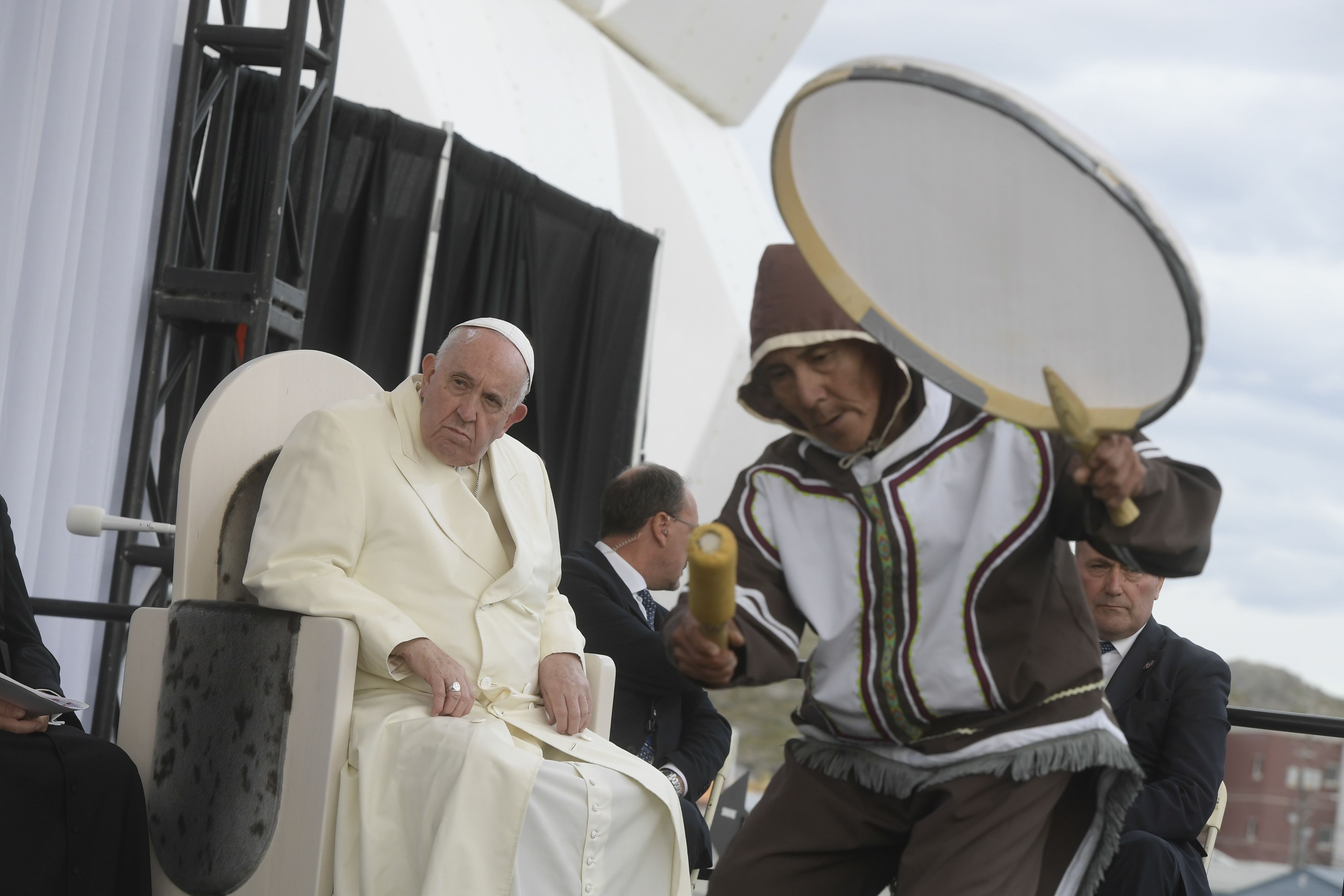
In the wake of the reports, various delegations of Indigenous Canadians visited the Vatican and requested a papal visit. In response, Pope Francis made a “penitential pilgrimage” to Canada, visiting Alberta, Quebec, and the far northern territory of Nunavut from July 24–30, 2022, to apologize to Indigenous Canadians.
The bishops’ conference cited Pope Francis’ remarks at Maskwacis, Alberta, on July 26 of last year.