
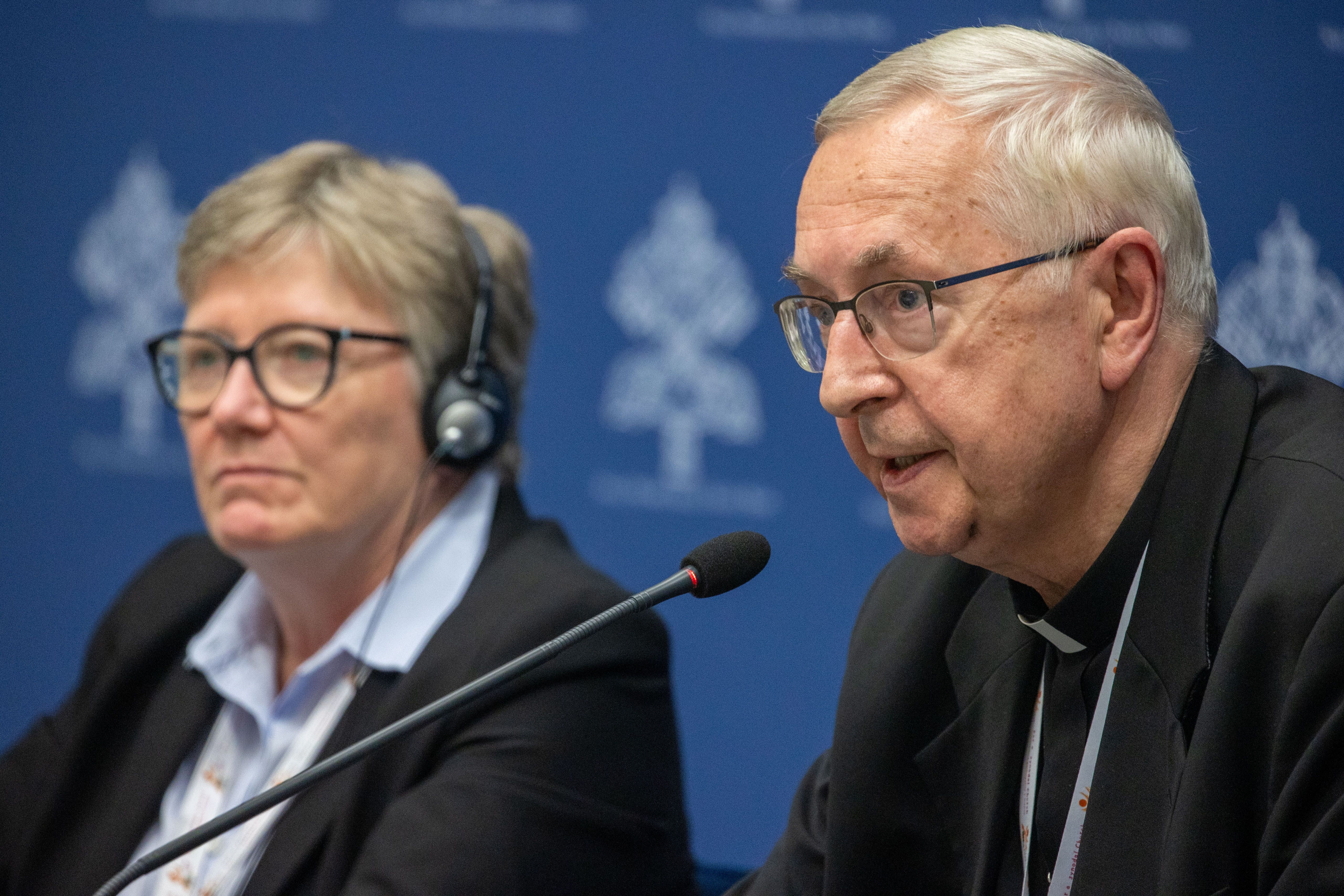
He said the method of this synod brings both differences and agreements, and participants are not hiding the challenges.
“It would be useless to get together for a month and hide difficulties that exist in different situations or in connection with different issues that require an answer,” he said.
On pastoral practice versus doctrine, Gadecki underlined that “countries have their own histories and they must also be in tune with that history” — including negative responses to the Church’s actions.
He said different pastoral expressions do not influence Christian doctrine, the magisterium, holy Scripture, and sacred tradition.
“As far as the essential things are concerned, there cannot be a development of Christian doctrine, but in the things that are not essential, there can always be a change as long as that change is a true development,” he said, referencing the theological concept of the development of doctrine.
A Romanian Orthodox bishop, who is taking part in the synod as a fraternal delegate, a participant without a vote, said one challenge in the Orthodox understanding of synodality is in reaching a consensus among bishops.