
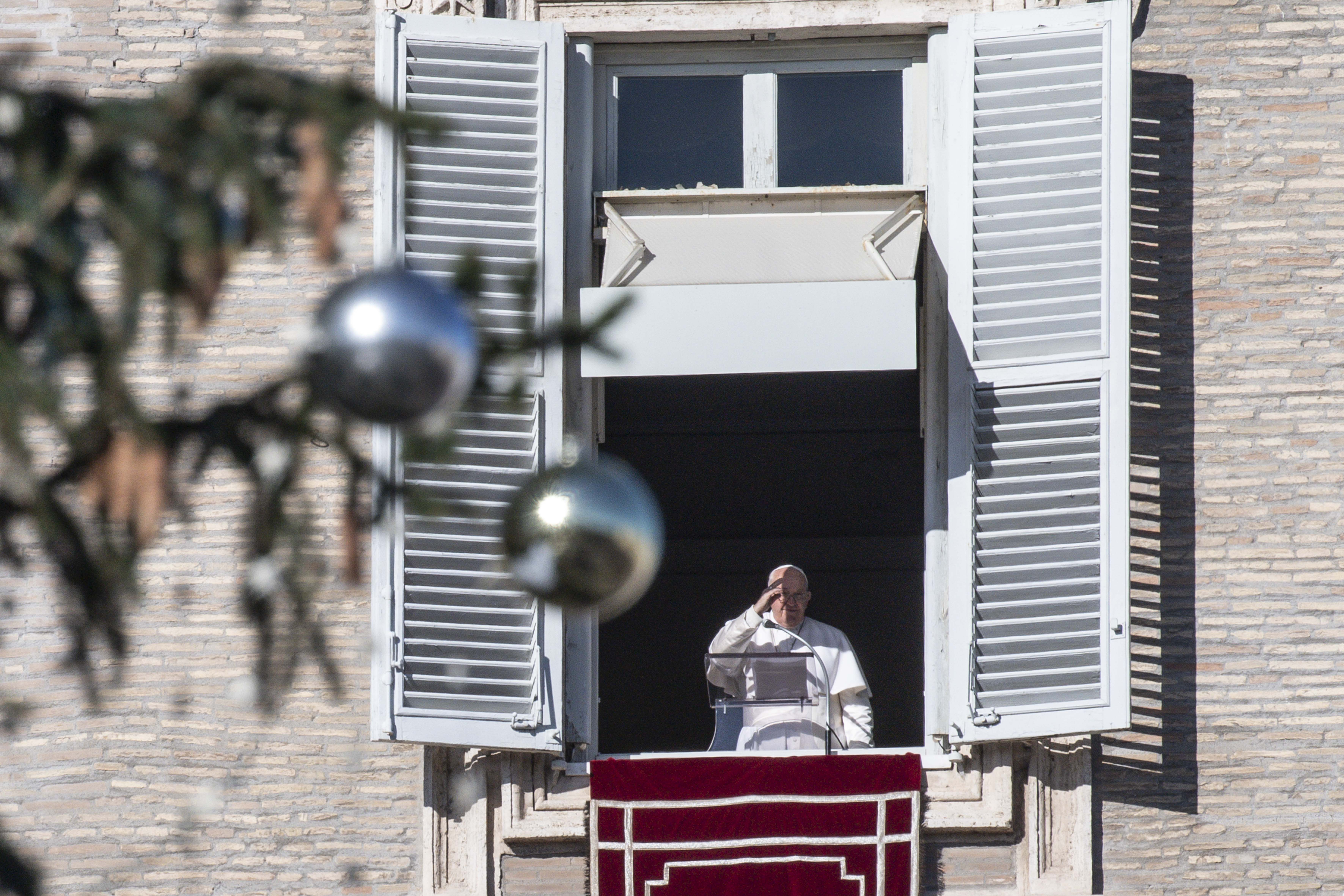
The desert does not hold a central place in the biblical context, he said, but it is an allegory for us today as a place of contemplation and encounter with God and provides an example for living a good life.
“To proceed on the journey of life, we need to be stripped of the ‘more,’ because to live well does not mean being filled with useless things, but being freed from the superfluous, to dig deeply within ourselves so as to hold on to what is truly important before God.”
“Only if, through silence and prayer, we make space for Jesus, who is the word of the Father, will we know how to be freed from the pollution of vain words and chatter,” Francis observed.
Following the recitation of the Angelus prayer, the Holy Father commemorated the anniversary of the signing of the United Nations Universal Declaration of Human Rights on Dec. 10, 1948.
Noting that the 30-article document was a watershed moment that ushered in new norms and a universalized set of fundamental rights, he warned that there was a risk of going “backwards.”
“The commitment to human rights is never finished! In this regard, I am close to all those who, without proclamations, in concrete everyday life, fight and pay personally to defend the rights of those who do not count,” the pope exclaimed.