

He added, in unscripted remarks: “I see this in some new movements that are arising: They talk about their vision of humanity, they talk about their spirituality and they feel they are on a new path… But why don’t you talk about Jesus? They talk about many things, about organization, about spiritual paths, but they don’t know how to talk about Jesus.”
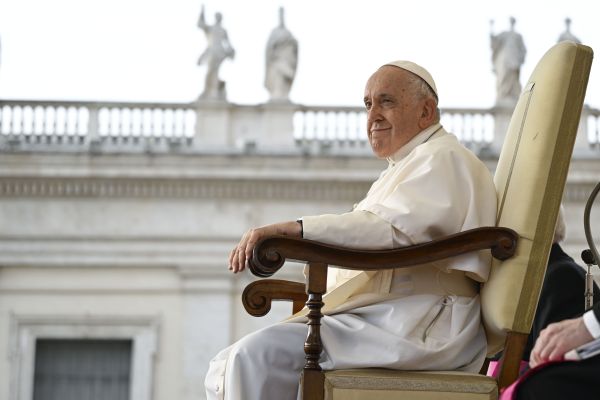
Epitomizing this love for the Eucharist was St. Charles de Foucauld, who was canonized by Pope Francis in 2022. Born in 1858, he dedicated his life to missionary work in the Sahara, living and working among the Tuareg people (a subgroup of Berber people).
After serving in the French cavalry, he went on to become a Trappist, going to serve the poor in Syria, an experience that had a profound impact on him and helped define his understanding of poverty. He later discerned out of the Trappists and went to Palestine, where he went to live close to the Poor Clares.
“It is in Nazareth that he realizes he must be formed in the school of Christ. He experiences an intense relationship with him, spends long hours reading the Gospels, and feels like his little brother. And as he gets to know Jesus, the desire to make Jesus known arises in him,” the pope said.
It was this time in Palestine that provided him with the inspiration to write his prolific works, including “Letters from the Desert,” “Hope in the Gospels,” and “Meditations of a Hermit.” These writings became the essence of his spiritual legacy, inspiring the formation of numerous future religious congregations. He was assassinated in 1916 at his hermitage in Tamanghasset in southern Algeria after being kidnapped by an armed tribal group associated with the Senussi Bedouins.