
MADRID — Pope Leo XIV told government leaders in Spain on June 6 that he came to the country “to confirm, encourage and inspire a renewed loyalty of believers to the Gospel, as well as a deeper reconciliation and cooperation between the different forces of this Nation.”
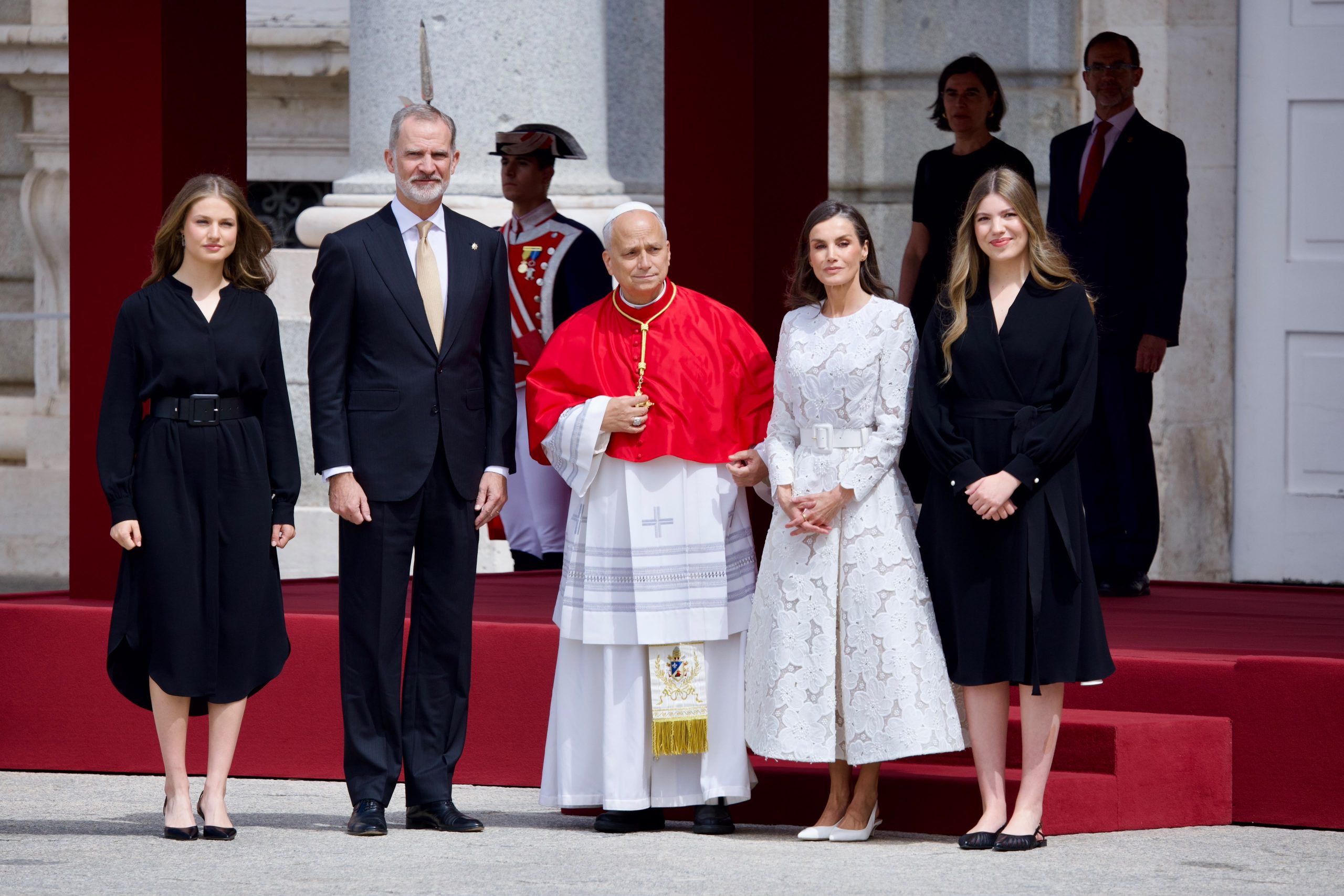
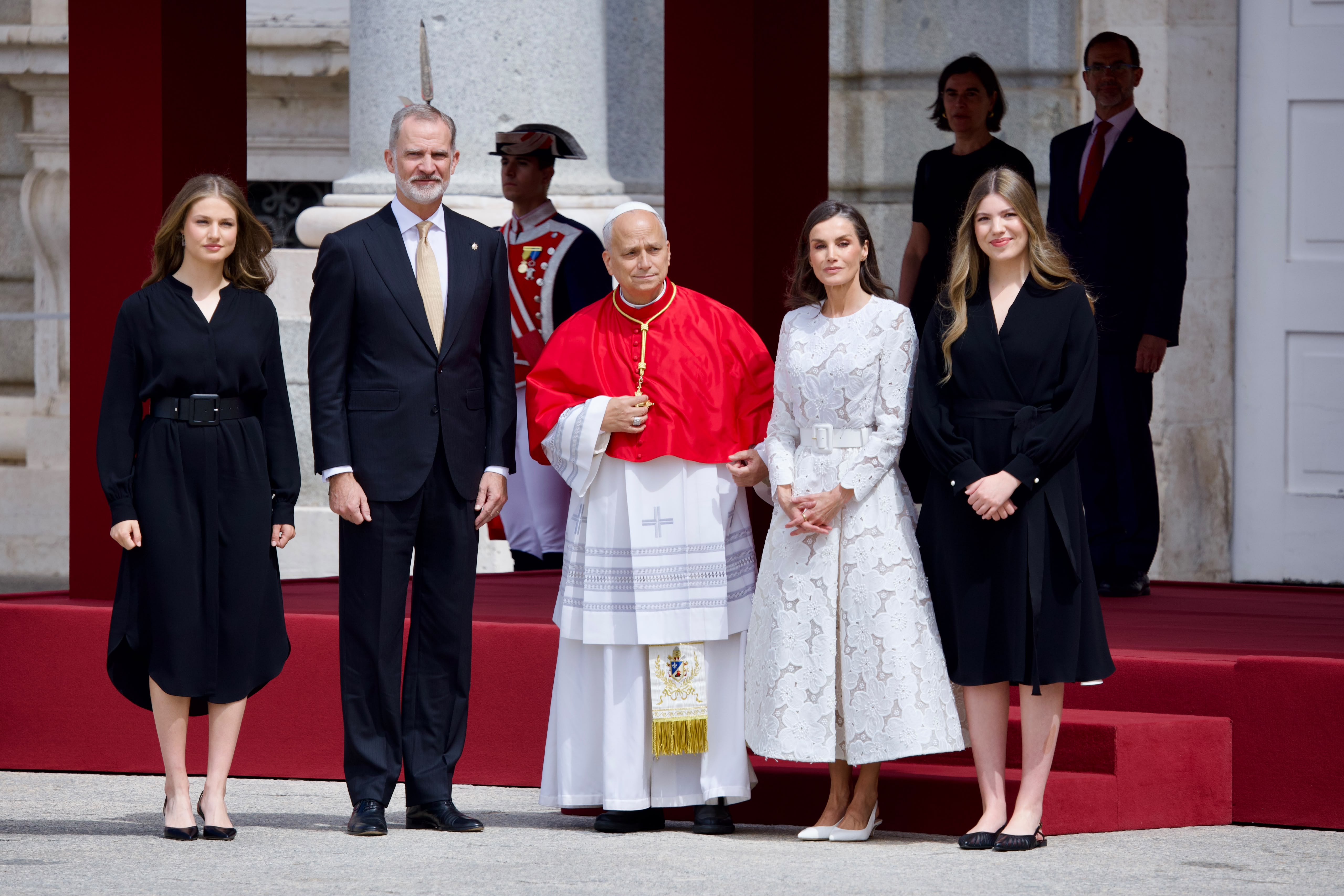
The Holy Father landed at Adolfo Suárez Madrid-Barajas Airport after which he moved directly to the royal residence. There he was received with honors by King Felipe VI, Queen Letizia and their daughters Princess Leonor and Infanta Sofía.
The pope warned that his message of reconciliation “resonates for some as naive and for others as provocative,” but he said it is “welcomed in those who do not close themselves in prefabricated ideologies, but who open up to the truth.”
“The truth is always greater than us and that is why it surprises us and attracts us to paths of purification and reconciliation, in which dialogue with others — and with the Other with capital letters — becomes fundamental,” he added.
In his speech, the pope cited two great Spanish mystics of the sixteenth century, Saint John of the Cross and Saint Teresa of Jesus, both of whom he said are united by their “passion for the divine Mystery.”
He presented them as examples of “mystics with open eyes,” that is, “not alien to history, but, on the contrary, [getting at] the root of the questions, to the heart of reality.”
The pontiff also alluded to contemporary fears caused by “the darkness of reason and the violence of emotions,” and proposed as an antidote the need for men and women capable of “intuiting, in the darkness, the light.”
To illustrate this idea, he evoked the image of the “inner castle” developed by Saint Teresa of Jesus.
Far from proposing an evasive spirituality, the pope stressed that it is not “an intimate flight, but a radical opening” to the totus Alius et semper Novus, a theological expression that refers to the transcendence of God and that “is carried out when we return to ourselves.”
Protecting religious freedom and conscience
“This dimension of the human being is the reason why religious freedom and conscience must be protected,” he said.
He also quoted St. Ignatius of Loyola, who “preferred peace to weapons and saints to the powerful,” and he recalled the work of the School of Translators of Alfonso X the Wise, where specialists from the three religions collaborated in the transmission of classical and medieval knowledge.
He mentioned thinkers such as Averroes (1126-1198) and Maimonides (1138-1204) as examples of the possibility of cooperation between religious traditions for the common good.
“Our era, which apparently is shaken by terrible imbalances and conflicts, cries out in the deepest for peace, for a new knowledge of the human person and his inviolable dignity, for the civilization of love,” he said, alluding to his encyclical Magnifica humanitas, published on May 25.
The pope did not avoid addressing one of the most accentuated features of the current political context in Spain: polarization.
“Today, the temptation to gain popularity by fanning the fire of polarization seems to grow, instead of decreasing; human dignity does not stop being violated,” he lamented.
Aware of the social and political tension, the pontiff urged leaders to “abandon the divisive and polarizing narratives of your social reality and its history, to move from sterile simplifications to the fruitful appreciation of complexity.”
A visit with international implications
Although Leo XIV has already made other trips, this is his first major visit to a major European country. The pope briefly visited the city-state of Monaco in March.
The Holy Fatherʼs visit to Spain — the ninth that a pope has made to the country — transcends the national scope, by constituting a significant step in the pontiffʼs dialogue with the contemporary Western world in which the Catholic Church has a fundamental role.
This was also pointed out by Felipe VI, who took the floor before the pope and underlined his voice as a universal moral beacon, not only for Catholics: “[His voice] is today a source of inspiration for more than 1.4 billion faithful; but it resonates, by its ethical content, far beyond, in all consciences.”
“The Catholic Church is at the service of this thirst of the human heart. Not in an imposing way, but with the evangelical testimony backed by a multitude of martyrs and saints, and today she is willing to put herself at the service of the future of a people who seek reconciliation and peace,” he said.
“Catholic faith is rooted in our country and without it — you well know — our history and our culture would not be understood.”
The pope also had words of recognition towards Spain for its international role: he highlighted “fidelity to international law and multilateralism,” as well as its commitment to peace and solidarity. At the same time, he urged leaders to strengthen internal dialogue, attend to the most vulnerable and “harmonize the demands for autonomy and unity.”
This has not been the first meeting between the Spanish royal family and the pope.
On March 20, Felipe VI and Letizia traveled to Rome, where the monarch was invested in the proto-canon of the Basilica of Santa María la Mayor in a ceremony that highlighted the historical links between the Spanish monarchy and this temple.
Likewise, both the king and queen attended the opening Mass of the pontificate on May 18 of last year.