
On May 8, 2025, white smoke billowed from the chimney on the roof of the Sistine Chapel, signaling that a new pope had been chosen. On that day, the world was introduced to Pope Leo XIV, known just hours before as Cardinal Robert Prevost, prefect of the Vatican’s Dicastery for Bishops.
One year later, Pope Leo has captured the hearts of the faithful through his papal trips, events like canonizations and special liturgies, as well as through his spoken and printed words, including an apostolic letter, and much more.
Here are 10 of the most significant events and moments of Leo XIV’s first year as pope:
The new pontiffʼs inaugural Mass
On May 18, 2025, Pope Leo XIV inaugurated his pontificate with a Mass in St. Peter’s Square calling for a united Church. Addressing approximately 150,000 attendees, he emphasized fraternal communion, servant leadership, and reconciliation, marking the official start of his ministry as the 266th successor of St. Peter.
At the Mass, concelebrated with the members of the College of Cardinals, Leo expressed his intention to “come to you as a brother, who desires to be the servant of your faith and your joy, walking with you on the path of God’s love, for he wants us all to be united in one family.”
Visit to Pope Francis’ tomb
Less than 48 hours after his election, Pope Leo made his first visit outside of the Vatican visiting the Shrine of the Mother of Good Counsel in Genazzano, located about an hour east of Rome and run by the religious of the Order of St. Augustine.
On his way back to the Vatican, the new pontiff stopped at the Basilica of St. Mary Major where he prayed before the tomb of Pope Francis and the icon of the Blessed Virgin Mary there, “Salus Populi Romani.”
Pope Leo left a white rose, which is said to have been Pope Francis’ favorite flower.
Impactful addresses to youth
Throughout his first year as pope, the Holy Father has had powerful experiences with young people. Two in particular that stand out are his addresses to roughly 1 million young adults during the Jubilee of Youth and his live talk with young people gathered at the National Catholic Youth Conference (NCYC).
During the Jubilee of Youth, which took place July 28–Aug. 3 and was part of the yearlong Jubilee of Hope, young adults from around the world filled the streets of Rome. Each day was filled with different opportunities and events for the young people to experience the richness of the Catholic faith.
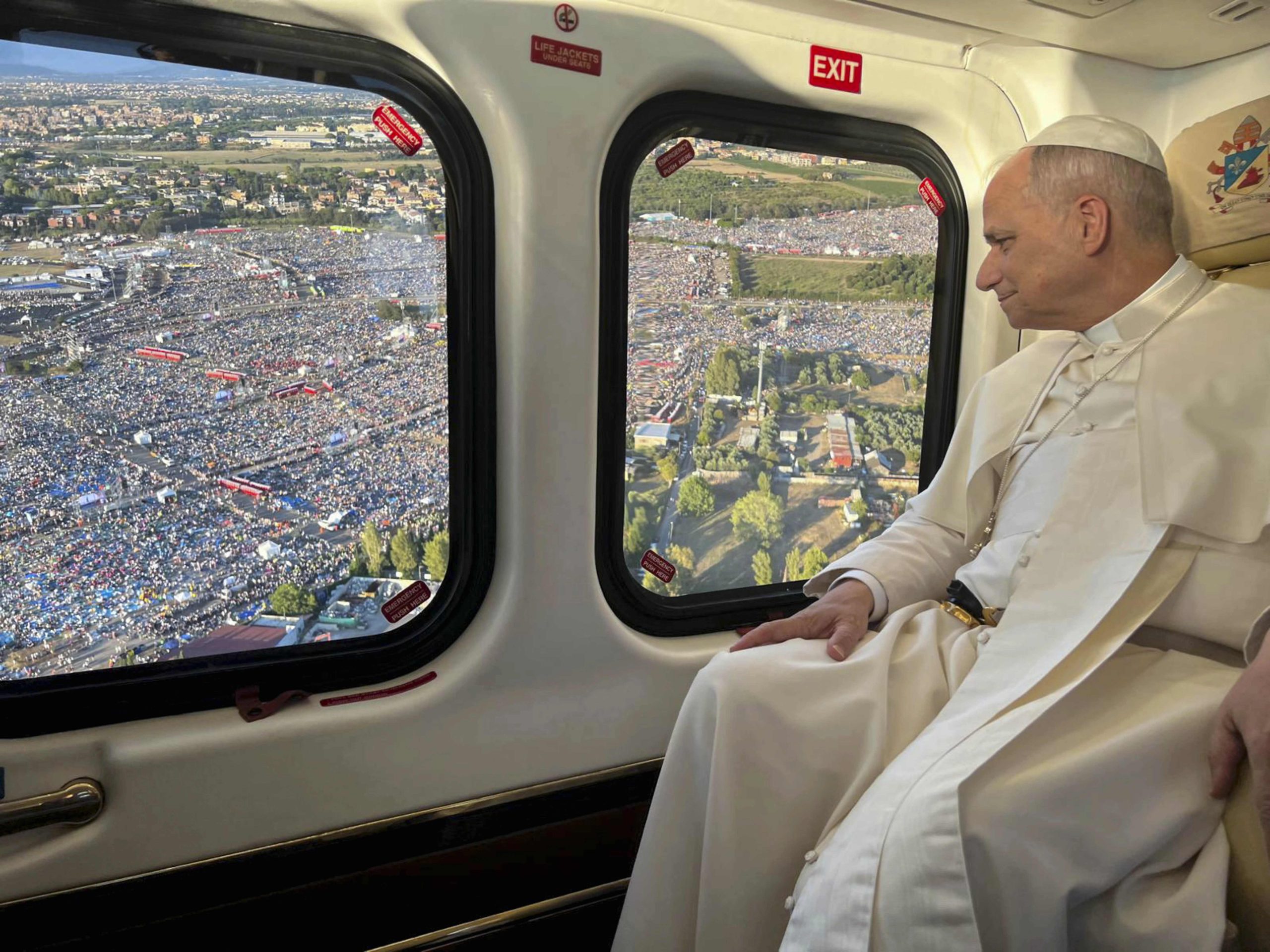
On Aug. 2, Pope Leo was greeted by the largest crowd he had addressed during his pontificate so far for the evening vigil at Tor Vergata, an outdoor venue 10 miles east of Rome. An estimated 1 million people were in attendance. The Holy Father arrived by helicopter and then drove through the grounds on the popemobile, waving to the cheering young people before the prayer service began.
The Jubilee of Youth concluded on Aug. 3 with a Mass celebrated by Pope Leo on the 237-acre grounds of Tor Vergata, where more than a million young pilgrims had spent the night following a prayer vigil and Eucharistic adoration.
In his homily, Pope Leo invited the pilgrims to open their hearts to God and venture with him “towards eternity.”
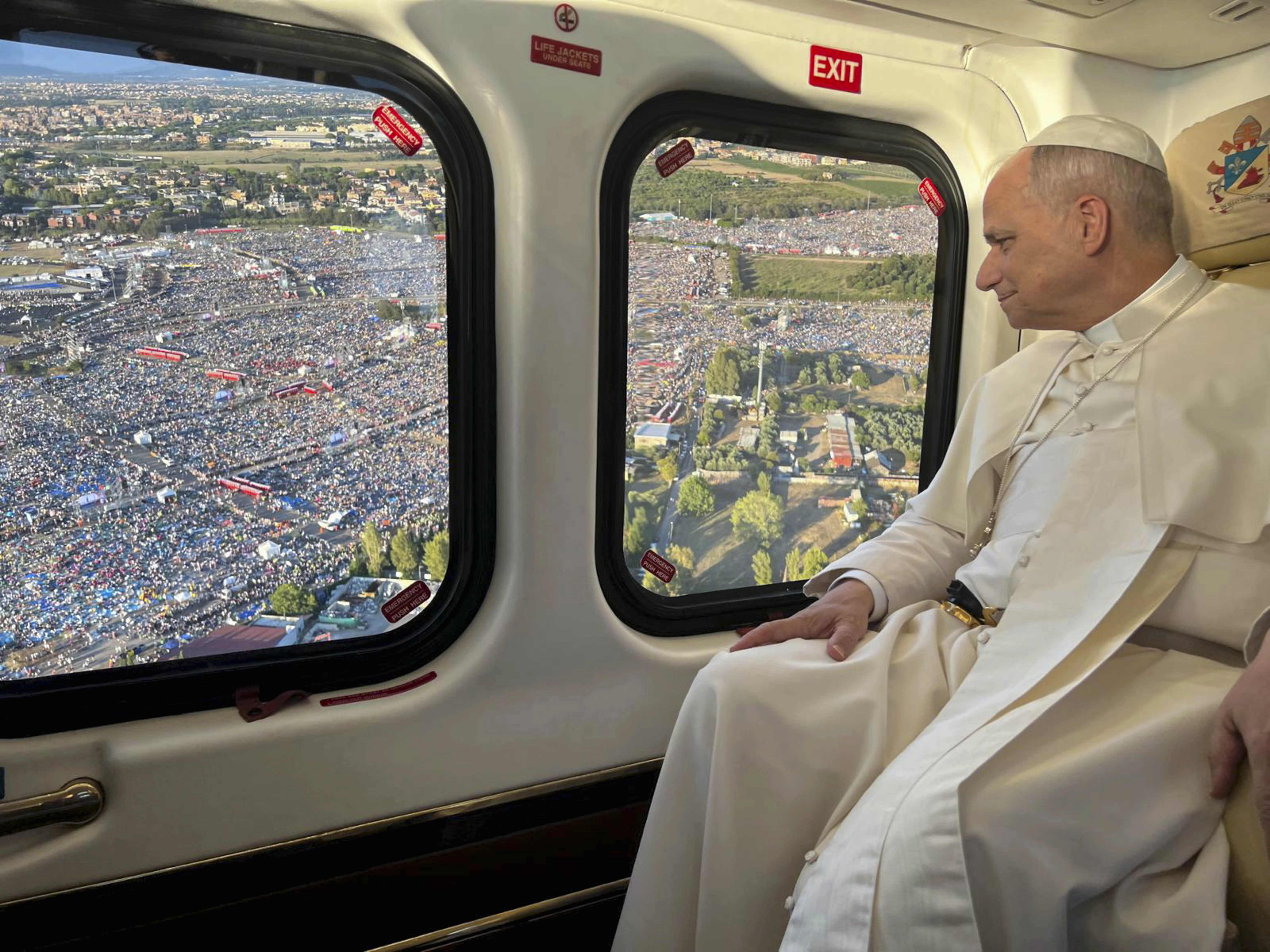
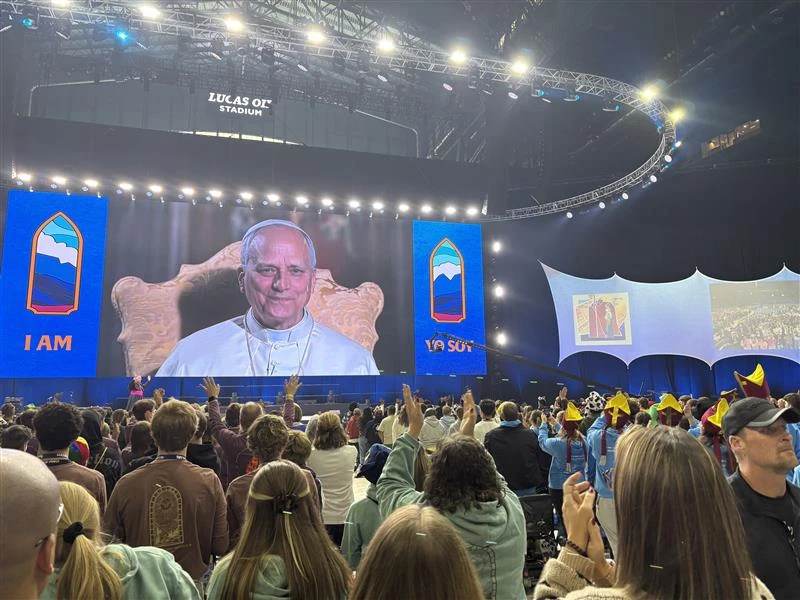
NCYC took place in Indianapolis at Lucas Oil Stadium from Nov. 20–22. On Nov. 21, Pope Leo held a historic digital encounter with American teenagers.
During this live conversation, five teenagers asked the pope questions regarding using technology, recovering from mistakes, giving worries to Jesus, avoiding distractions, and preparing for the future of the Church. The pope gave guidance to the young crowd with words applicable to both teenagers and the universal Church.
Canonizations of Pier Giorgio Frassati and Carlo Acutis
On Sept. 7, 2025, Pope Leo canonized Pier Giorgio Frassati and Carlo Acutis in his first canonization ceremony before an estimated 70,000 people in St. Peter’s Square.
“Today we look to St. Pier Giorgio Frassati and St. Carlo Acutis: a young man from the early 20th century and a teenager from our own day, both in love with Jesus and ready to give everything for him,” he said during his homily.
He added: “Dear friends, Sts. Pier Giorgio Frassati and Carlo Acutis are an invitation to all of us, especially young people, not to squander our lives but to direct them upwards and make them masterpieces.”
Release of his first apostolic letter
Pope Leo XIV released his first apostolic letter, Dilexi Te, on Oct. 9, 2025. The document emphasizes the idea that the poor are not simply objects of charity but also evangelists who can prompt us to conversion through their example of weakness and reliance on God.
“The poor can act as silent teachers for us, making us conscious of our presumption and instilling within us a rightful spirit of humility,” Leo writes in Dilexi Te (“I Have Loved You”). “The elderly, for example, by their physical frailty, remind us of our own fragility, even as we attempt to conceal it behind our apparent prosperity and outward appearance. The poor … remind us how uncertain and empty our seemingly safe and secure lives may be.”
The pontiff quotes his predecessor throughout the document, which was first drafted during Pope Francis’ pontificate and draws heavily on the late popeʼs first apostolic exhortation, Evangelii Gaudium, on the joy of the Gospel.
First major international trip: Turkey and Lebanon
Pope Leo made his first international papal trip to Turkey and Lebanon Nov. 27–Dec. 2, 2025. The wide-ranging international visit included historic ecumenical encounters, deeply symbolic gestures of prayer, and pastoral visits to Christian communities under pressure. Pope Leo highlighted the importance of unity, peace, and fraternity, and brought encouragement to a region marked by ancient faith and present suffering.
One highlight from his time in Turkey included the commemoration of the 1,700th anniversary of the Council of Nicaea alongside Ecumenical Patriarch Bartholomew I of Constantinople in the Turkish city of Iznik, the site of the Council of Nicaea, historically known as the birthplace of the Nicene Creed.
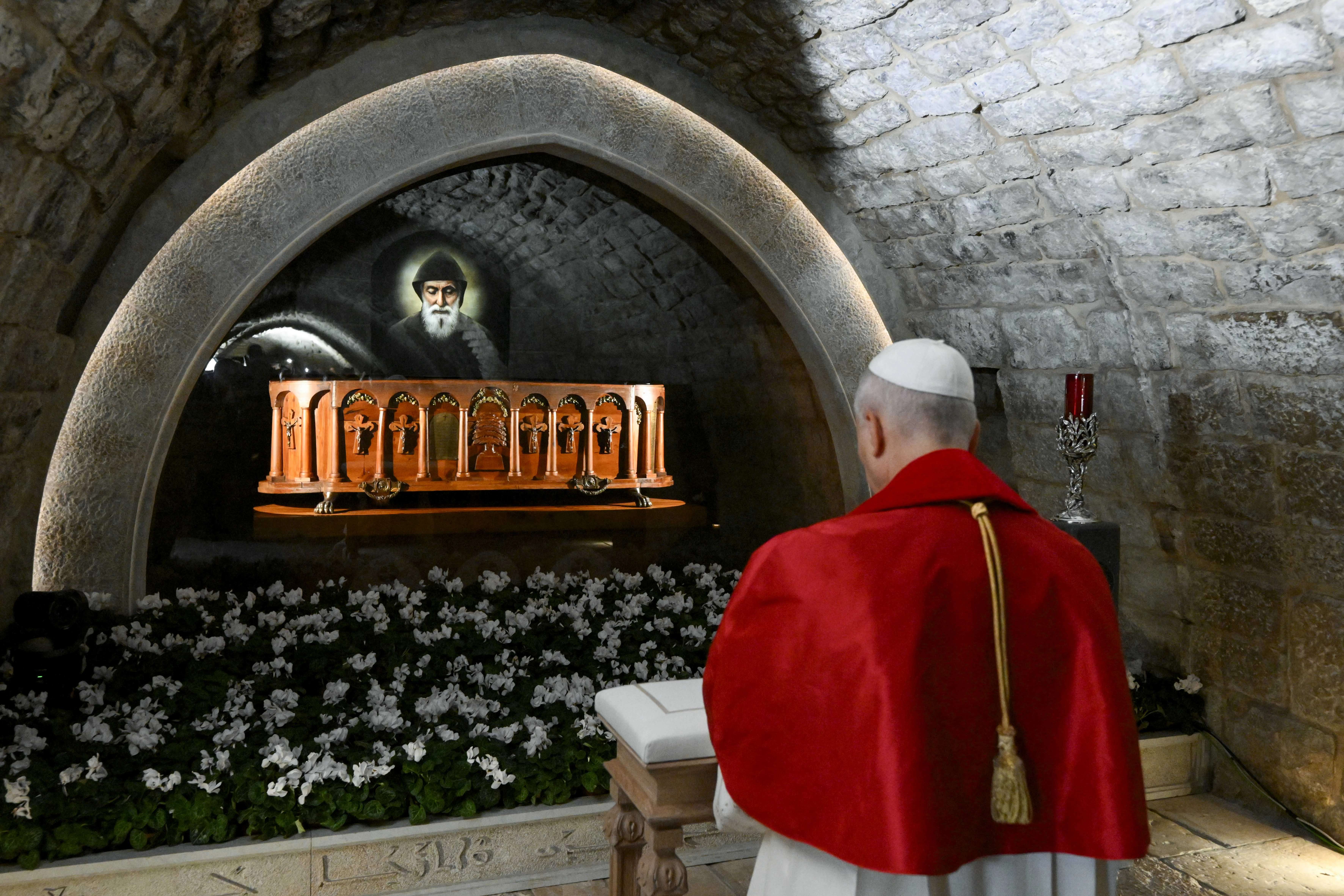
In Lebanon, Pope Leo became the first pope in history to visit the tomb of St. Charbel Makhlouf when he arrived at the Monastery of St. Maron in Annaya.
An extraordinary consistory
In his opening address at an extraordinary consistory — which convened from Jan. 7–8 — Pope Leo assured the cardinals from around the world gathered at the Vatican that “I am here to listen.”
This extraordinary consistory — different from the ordinary ones, which are more limited and frequent — was scheduled to take place immediately after the Jubilee of Hope to “offer support and advice to the Holy Father in the exercise of his high and arduous responsibility of governing the Church,” according to a statement from the Holy See.
The consistory was a closed-door meeting to which no media were admitted, and cardinals were asked to keep the proceedings confidential. However, the cardinals were expected to offer the new pontiff their views on two specific topics: the Synod and synodality, and the mission of evangelization and the missionary character of the Church.
First Holy Week and Easter celebrations as pope
During Holy Week and Easter 2026, Pope Leo presided over the Church’s most solemn liturgies in Rome, beginning with Palm Sunday and continuing through the chrism Mass on Holy Thursday, the Mass of the Lord’s Supper, the Good Friday Passion celebration, the Stations of the Cross at the Colosseum, the Easter Vigil at St. Peter’s Basilica, and finally Easter Sunday Mass with the “urbi et orbi” blessing from St. Peter’s Square.
This was the first time in several years that a pope participated in all the liturgies of Holy Week and Easter. Due to Pope Francis’ declining health toward the end of his papacy, he had to scale back his participation in many of these events.
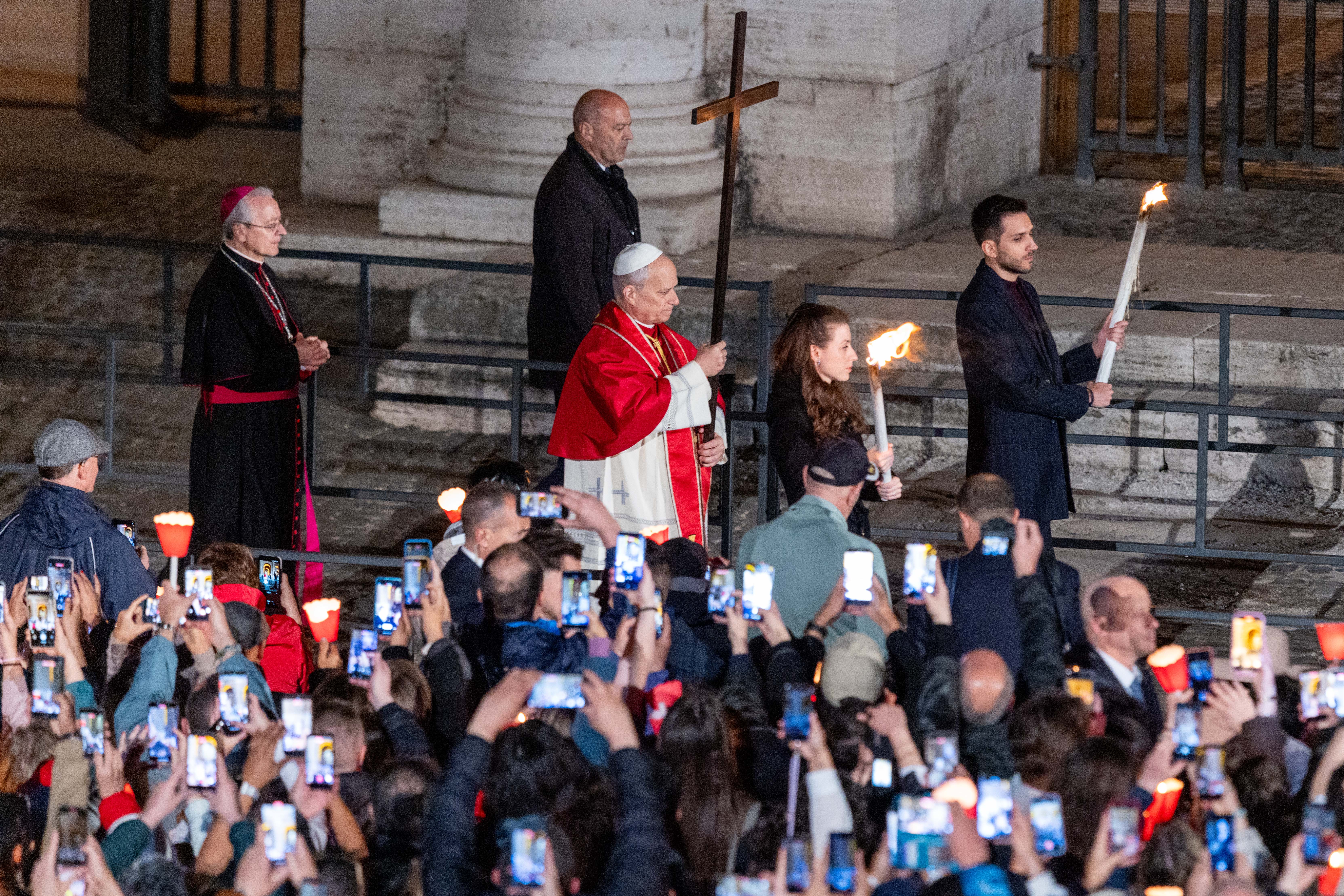
Pope Leo was also the first pope since John Paul II in 1994 to carry the wooden cross to all 14 stations during the Stations of the Cross at the Colosseum on Good Friday.
Historic 11-day trip to Africa
Pope Leo spent 11 days in Africa — from April 13–23 — and visited four countries: Algeria, Cameroon, Angola, and Equatorial Guinea. During this trip, he traveled more than 11,000 miles on 18 separate flights. With stops in 11 cities across those countries, the Holy Father met with the youth, political leaders, prisoners, families, and many more to share the Gospel message.
Throughout his journey, he emphasized themes of peace, reconciliation, and economic justice, meeting with local leaders, clergy, and lay faithful. Large crowds gathered for outdoor Masses, reflecting the vibrancy and rapid growth of Catholicism in many African communities.
One of the highlights of the trip was Pope Leo’s visit to Annaba — ancient Hippo — in what for the Augustinian pontiff amounted to a return to the roots of his faith and vocation. Despite pouring rain, the pope walked through the ruins and, at the end of the route, laid a wreath of flowers and stopped for a moment of prayer, visibly moved.
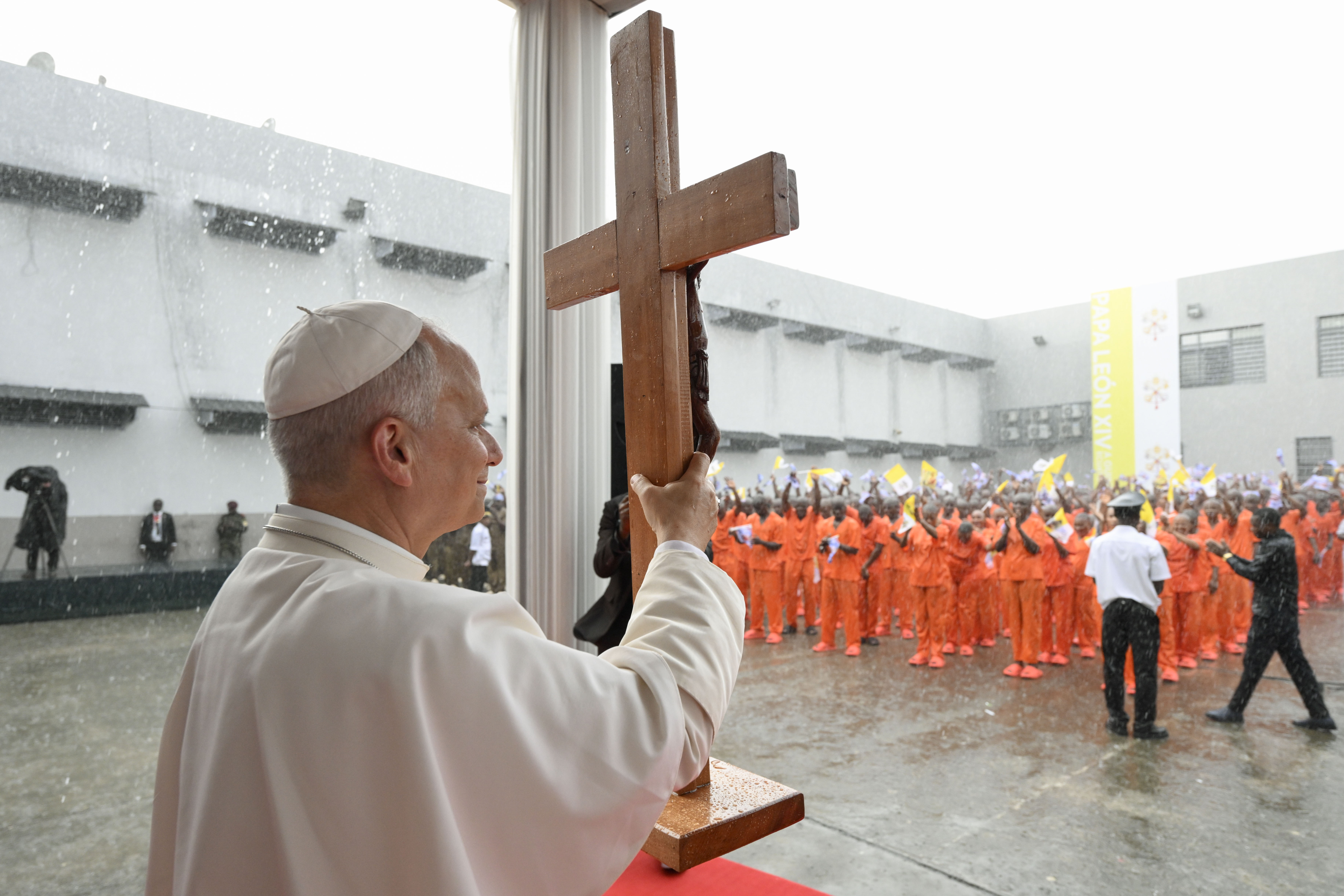
The pope also paid a visit to the Bata penitentiary in Equatorial Guinea and told inmates that “no one is excluded from God’s love” and urged them to see that even behind bars, there remains the possibility of change, reconciliation, and hope. This prison is one of the country’s harshest, known for its difficult conditions.
Strong messaging on war and peace
The Holy Father has made peace a defining theme of his pontificate from the very beginning, opening his first public remarks with the words “Peace be with you.” That simple greeting set the tone for a broader vision — one rooted in the Gospel but directed squarely at a world marked by conflict and division.
In homilies and international addresses, he has consistently framed peace not as the absence of war but as an active, daily commitment grounded in justice, reconciliation, and respect for human dignity.
The pope has urged world leaders to reject cycles of violence and instead foster what he has called a “culture of peace.” Speaking in the context of ongoing global tensions, he has warned against the normalization of war as a tool of policy, insisting that lasting solutions can only come through dialogue and mutual understanding.
The pope has also addressed the dangers of modern warfare, including the threat of nuclear escalation. He has called for renewed international efforts toward disarmament and de-escalation, emphasizing that the destructive power of nuclear weapons demands a moral as well as political response.
Reiterating the Church’s long-standing teaching, Pope Leo has encouraged nations to pursue diplomacy over aggression, presenting dialogue not as weakness but as the strongest and most enduring path to peace.