


ACERRA, Italy — Pope Leo XIV will spend Saturday morning in Acerra, Italy — one of three “corners” of the so-called “triangle of death” and the epicenter of a dramatic health and environmental crisis caused by the local Mafiaʼs illegal disposal of toxic waste.
To mark the anniversary of Laudato Si’, Pope Francis’ encyclical on care for creation, Leo will meet May 23 with the community of Acerra and the surrounding area, including those who have prematurely lost loved ones due to the pollution.
“The pope’s visit certainly represents a moment of great courage and strength for a population that often feels alone in the face of a problem of enormous proportions,” local attorney Valentina Centonze told EWTN News.
Centonze, who monitors compliance to judicial decontamination orders for the area, said: “No one can imagine resolving this situation on their own. The Holy Father’s closeness to our land is therefore a source of comfort and support but also a warning to the authorities, urging them to fully understand the suffering of this people and to deploy all necessary means to seriously address the issue.”
The Land of Fires
Acerra and the surrounding roughly 400 square miles — dubbed the “Land of Fires” (“Terra dei Fuochi” in Italian) — lie just northeast of the city of Naples, about 140 miles south of Rome.
The territory has a higher-than-average incidence of cancerous tumors and congenital malformations, which studies have linked to the dumping of millions of tons of toxic waste from northern Italian factories — at the hands of organized crime groups like the Camorra clans — and garbage fires that released highly toxic dioxins and PCBs into the air and food chain of the highly-agricultural region.
“We are in southern Italy, a region historically plagued by social problems, unemployment, crime, and a fragile economy. Added to this is the environmental disaster, which has caused illness and death,” Bishop Antonio Di Donna, bishop of Acerra since 2013, told EWTN News.
“The greatest challenge,” he said, “is coping with a precarious situation, especially from a health perspective. We are dealing with families marked by bereavement, with young people and children who fall ill and die. This is an additional burden on top of an already difficult situation.”

During his roughly three-hour visit to Acerra, Pope Leo will visit the cathedral, where he will address bishops, priests, and religious alongside families who have lost loved ones or are currently suffering from illnesses related to the environmental crisis.
“We were deeply committed to ensuring that he could offer them a word of comfort,” the bishop said.
Afterward, the pontiff will make his way to the city’s main square, where he will address mayors and residents from across the territory before leaving by helicopter to return to Rome.
“I hope that the pope’s visit will provide further impetus to keep the issue in the spotlight and to strengthen our commitment,” Di Donna added.
A poisoned land
Angelo Venturato, whose daughter Maria Venturato died in 2016 at the age of 25 from a rare leg tumor, will be among the crowd in the cathedral on May 23.
“After Maria’s death, I fell ill too: I had a tumor, fortunately benign,” Venturato told EWTN News. “But without faith, I wouldn’t be here today. Faith helped me not to shut myself away in my grief. It gave me the strength to keep bringing smiles to others.”
“The positive thing today is that people have become aware of what happened in Acerra. There are associations, volunteer groups, mothers, and citizens who work every day to defend the area. We know this land has been poisoned, but we won’t give up,” he said.
Following his daughter’s death, Venturato formed an association to help others living through the same thing he and his family experienced.
The name, “Se Allunghi la Mano Troverai la Mia,” (“If you reach out, you will find my hand”) was inspired by his daughter, who encouraged him with the phrase before she died.
“Today, we provide free transportation to help sick people get to hospitals and treatment centers, especially cancer patients and children. We never leave anyone alone: We accompany them, wait with them during their treatments, and take them home,” Venturato said.
Acerra’s diocesan Catholic charity, Caritas, is also supporting the local community with free diagnostic tests and other general and pediatric medical care in addition to psychiatric support and general financial assistance. It also runs a community center and a day center for at-risk youth.
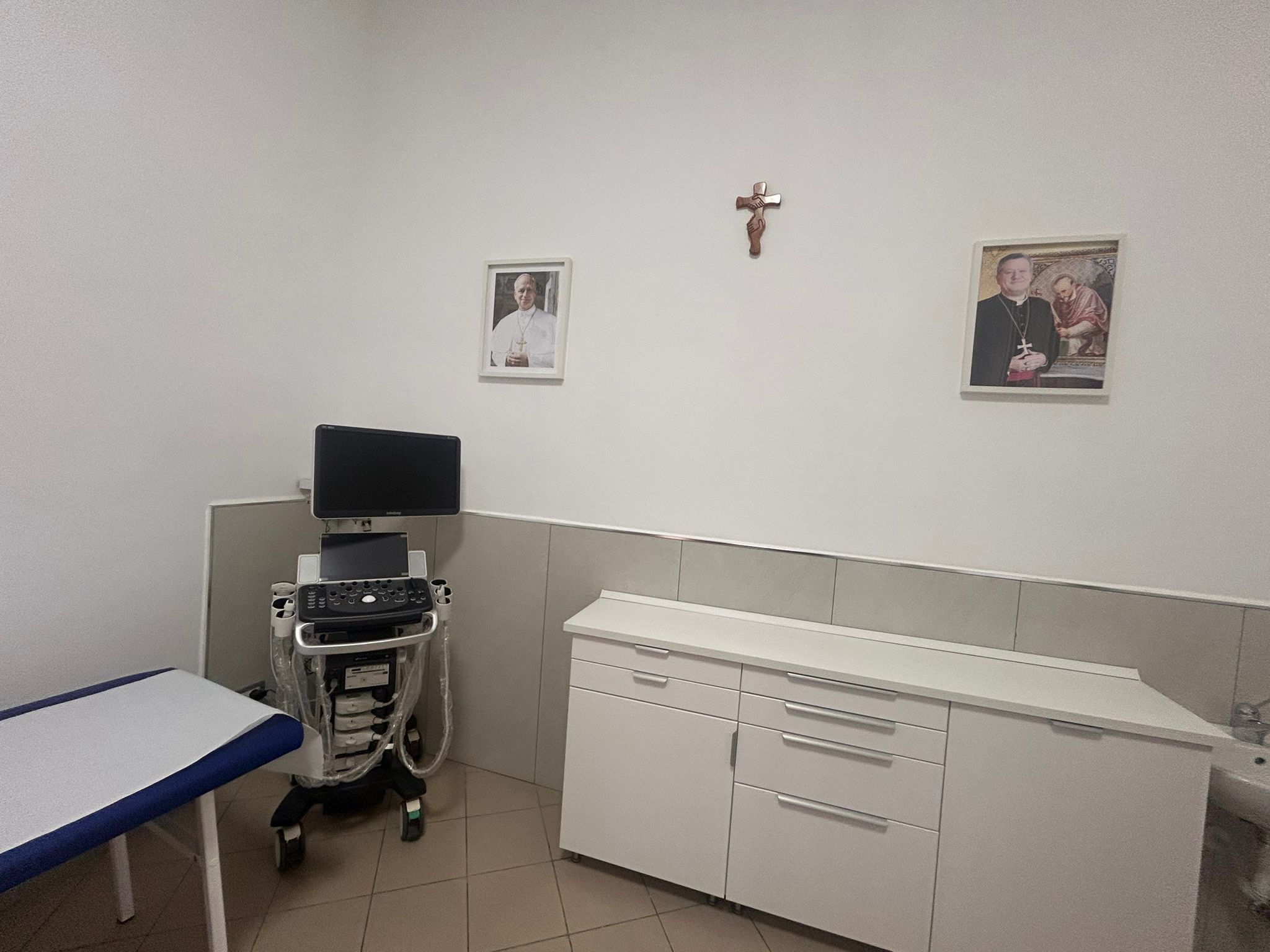
“In this region, people are even more afraid of getting sick. They feel this fear deeply, and sometimes they’re even afraid to get checked,” Caritas Director Vincenzo Castaldo told EWTN News. “They often tell us: ‘It’s better not to know; we’re going to die anyway.’ It’s hard to hear those words.”
The clinic was founded “to provide a free opportunity, to simplify access to care, and to offer a sense of closeness — a comforting touch from the Church in matters of health, a presence that helps people recognize their problems and face them,” he explained.
Di Donna drew attention to the more than 50 sites across Italy designated “contaminated sites” — in Italy, “there are many ‘lands of fires,’” he said.
The Diocese of Acerra is one of about 10 dioceses in the area that for over 30 years have “heard the cry of the earth and of the poor,” the bishop said. “We have embarked on a journey focused first and foremost on raising awareness: against pollution and for the care of creation.”