

Bouvette said his “grandmother was not tricked into becoming something that she didn’t want to be, and then tricked into staying that way for 99 years and 11 months of her life. She was a Christian from the day of her birth, and she remained a Christian until the day of her death. And so that was not by the consequence of some imposition.”
Nevertheless, Canadians continue to labor under a prejudice holding the opposite view. “I do believe that probably the majority of Canadians at this time, out of some mistaken notion of guilt for whatever their cultural or ethnic background is, think they are somehow responsible for Indigenous people having had something thrust upon them that they didn’t want,” Bouvette said.
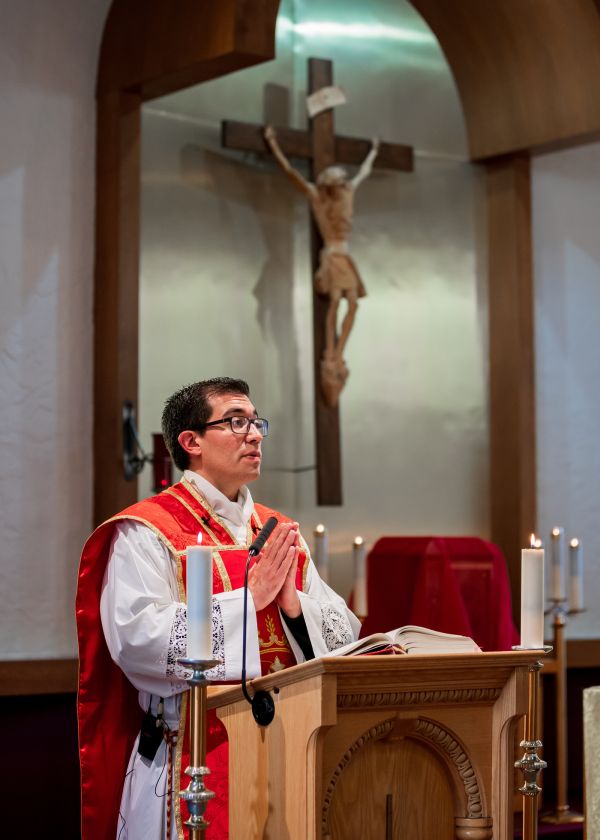
“But I would say, give us a little more credit than that and assume that if there is an Indigenous person who continues to persevere in the Christian faith it is because they want to, because they understand why they have chosen to in the first place, and they remain committed to it. We should be respectful of that.”
The executive director of the Catholic Civil Rights League, Christian Elia, agrees and says society should grant Indigenous Catholics the respect and personal agency that is due all Canadians.
“Firstly, I am not an Indigenous person, so I cannot speak for our Indigenous brothers and sisters, but neither can non-Indigenous secularists who choose to ignore that Indigenous people in Canada continue to self-identify as Christian, the majority of these Catholic,” Elia said in an interview with The B.C. Catholic.
He said his organization has heard from many Indigenous Catholics who are “growing weary of the ongoing assumption that somehow they have been coerced into the faith, that it is inconceivable that they wish to be Catholic. This condescending attitude must stop.”
Deacon Rennie Nahanee, who serves at St. Paul’s Indian Church in North Vancouver, was another of the 12 whom Bennett interviewed. A cradle Catholic and member of the Squamish First Nation, Deacon Nahanee said there is nothing incompatible with being both an authentic Indigenous person and a Catholic.
“I’m pretty sure we had a belief in the Creator even before the missionaries came to British Columbia,” he said. “And our feelings, our thoughts about creation, the way that we lived and carried out our everyday lives, and the way that we helped to preserve the land and the animals that we used for food, our spirituality and our culture, were similar to the spirituality of the Catholic Church.”
“I believe that’s why our people accepted it. I don’t think anybody can separate themselves from God, even though they say so.”
Interviewed later by The B.C. Catholic, Nahanee said he is not bothered by the sort of prejudice outlined by Bouvette. “People are going to say or do what they want,” he said.
(Story continues below)
Voices of Indigenous Christianity
Bennett, program director of Cardus Faith Communities, interviewed 12 Indigenous Canadians, most of them Christian, about their religious commitments, “which often clash with the typical public presentation of Indigenous spirituality.” Here is a selection of some of their comments:
Tal James of the Penelakut First Nation in Nanaimo spoke about the relationship between Indigenous culture and his Christian faith:
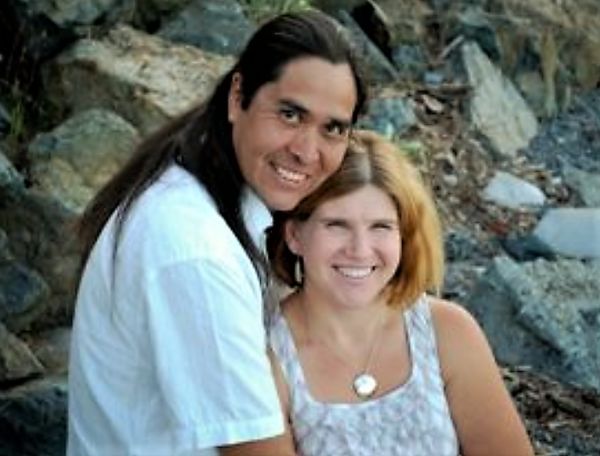
“I think … that our [Indigenous] cultures were complete, and in Jesus they’re more complete. I think that’s a big thing and a big step for a lot of us. You’re going to have a lot of non-Indigenous people look at you and question your actions based on your Aboriginal heritage. Don’t take that to heart. They’re the ignorant ones who don’t want you to flourish. Those of you who are Christians, First Nations Christians, you come to the table with the same gifting that non-Aboriginal people have. For them to say, ‘We want to make room for you at the table,’ correct them. You are already at the table, and encourage them to step back and allow your gifts to flourish. Because it’s one in the same spirit.”
Rose-Alma McDonald, a Mohawk from Akwesasne, which borders New York, Ontario, and Quebec, talked about re-embracing her Catholic faith: