

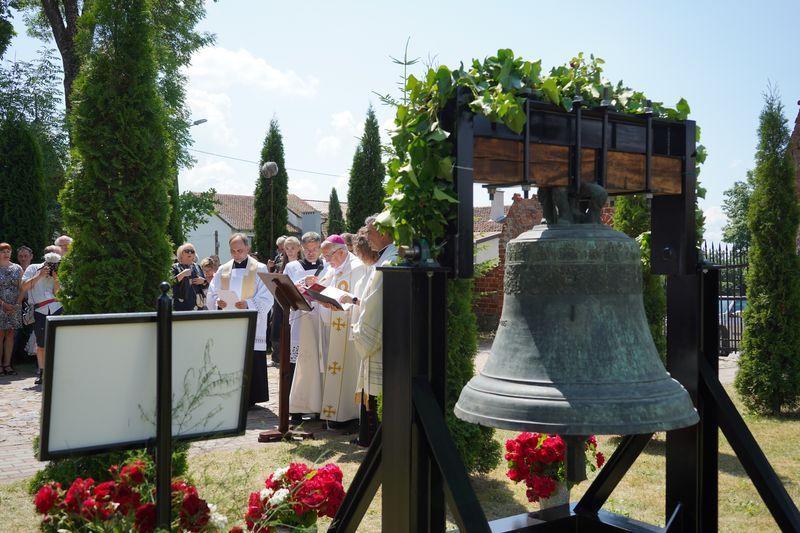
At a service marking the return of the bells, Bishop Jacek Jezierski of the Diocese of Elbląg reflected on the historic and symbolic significance of the bells: “The bell bore witness to a difficult history but also to peace and hope.”
The Polish prelate also expressed gratitude to his German counterpart for initiating this project. In response, Fürst said: “The bell has experienced and helped shape the shared history of both nations.”
The bells, once symbols of conflict and dispossession, are now symbols of unity and reconciliation between Germany and Poland, both sides affirmed.
Among the bells returned through the “Peace Bells for Europe” project was one that Fürst personally blessed in Żegoty following a traditional Sacred Heart devotion. This bell had been earmarked by the Nazis for the armaments industry during World War II but had evaded melting down.
During World War II, an estimated 100,000 bells were seized from communities in the former German Eastern territories and occupied countries, with the intention of repurposing them for the armaments industry. Postwar, the remaining 16,000 bells were mostly restored to their original locations. However, approximately 1,300 found their way to the “Bell Cemetery” in Hamburg, from where they were then distributed to West German church communities from the 1950s onward.
During the course of their visit, Fürst also visited a refugee shelter in the region, where the delegation became acquainted with the work of the local Caritas organization. The Church in Poland has been at the forefront of providing assistance to individuals fleeing the ongoing unrest in Ukraine.