
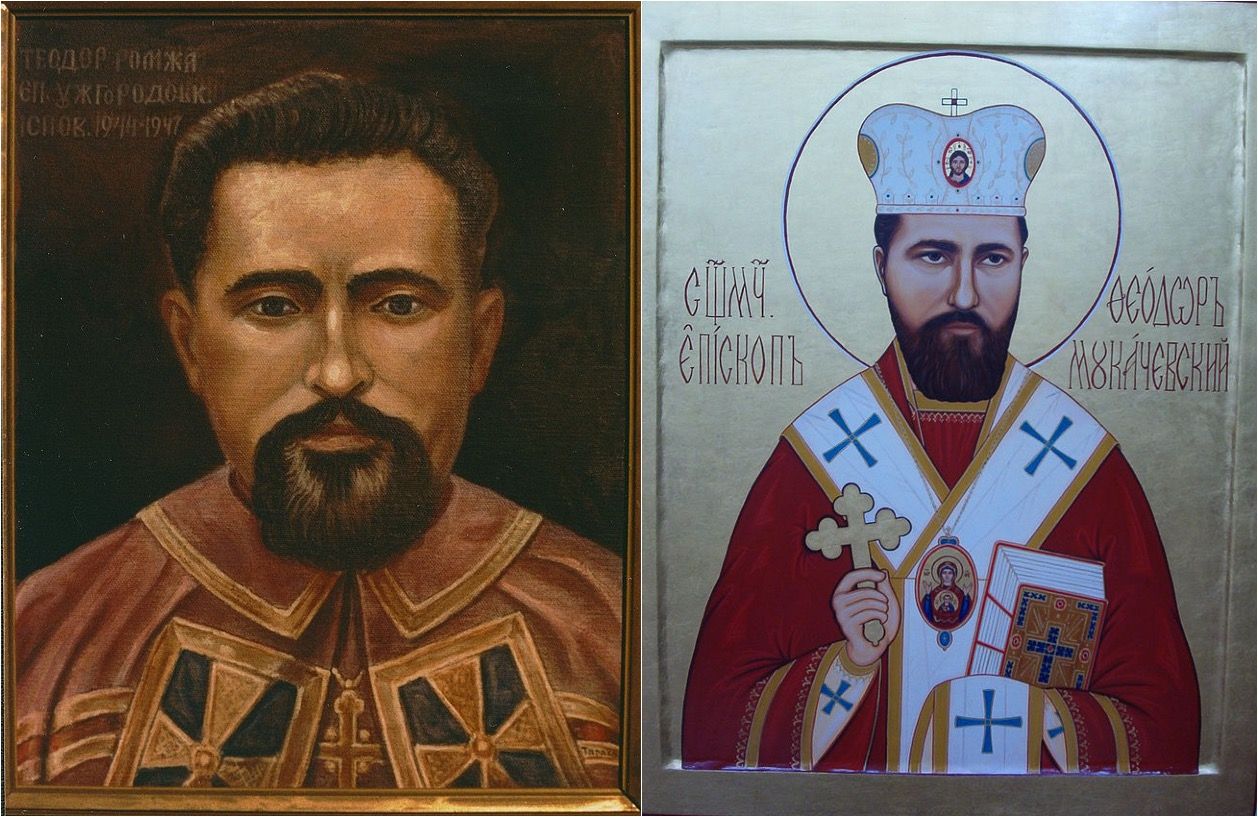
Auxiliary Bishop Milan Lach of Slovakia recalled that Romzha was sent to a small parish in the Carpathian Mountains. “But God had a mission prepared for him: to become a shepherd bishop in the most difficult time,” he told CNA.
At the age of 33, Romzha was ordained bishop of Mukachevo in eastern Ukraine during the Nazi occupation in 1944. He chose for his episcopal motto: “I love you, O Lord, my strength; you are my stronghold and my refuge!”, which is taken from Psalm 18.
Reflecting on the martyr’s legacy, Lach — who recently served as bishop of the Ruthenian Greek Catholic diocese based in Parma, Ohio — said: “Romzha knew Marxism and Leninism very well, because he studied them in detail. Already as a seminarian, he was preparing for a mission to Russia. This is evidenced by his presence in the papal Russian college in Rome. God changed his plans through his bishop.”
Soon after, Soviet troops invaded and occupied that region. Lach said that this meant “the end of freedom and democracy and the rise of dictatorship and communism, which had no mercy on its enemies. Not even with the Greek Catholic Church, of which he was a bishop.”
The Second World War ceded to a “cold” war pitting the United States and NATO countries against the Soviet Union. Communists of the Soviet-bloc countries waged war internally against political and religious dissidents, sometimes with the cooperation of the Russian Orthodox Church.
But Romzha was implacable in defending the Catholic Church in Ukraine. Soviet authorities seized churches and seminaries, turning them over to the Russian Orthodox Church and demanding Catholic clergy should abjure the pope. In the presence of Soviet Gen. Ivan Petrov in 1947, Romzha refused to break communion with Rome. This would cost him his life.