

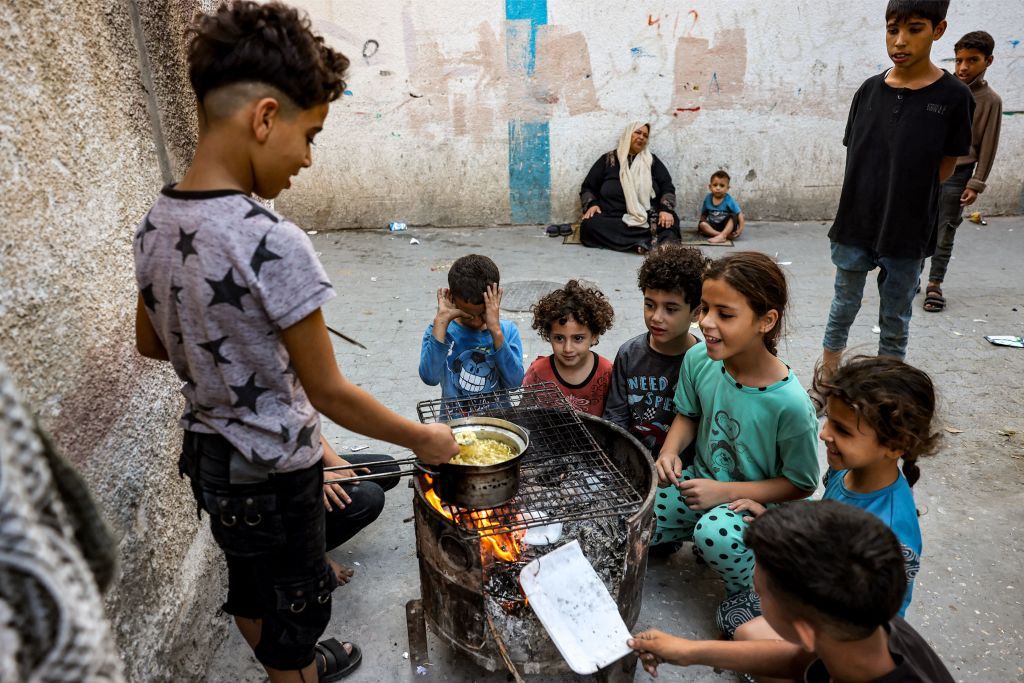
Noting the resulting damage done to “civilian infrastructure,” including hospitals, UNICEF’s Russell said that “what little clean water remains in Gaza is quickly running out, leaving more than 2 million people in dire need” amid the war.
“We estimate that 55% of the water supply infrastructure requires repair or rehabilitation,” she said. “Only one desalination plant is operating at just 5% capacity, while all six of Gaza’s water-waste treatment plants are now nonoperational due to a lack of fuel or power.”
The director said the “lack of clean water and safe sanitation” in Gaza “is on the verge of becoming a catastrophe.”
“Unless access to clean water is urgently restored, more civilians, including children, will fall ill or die from dehydration or waterborne diseases,” she said.
Russell said UNICEF, which works to bring humanitarian aid to children across the globe, is working to “reach all children in need” but that the delivery of aid in Gaza is currently “extremely challenging.”
“This is due to both the current siege conditions imposed on Gaza and the highly dangerous circumstances under which our staff are operating,” she said.