

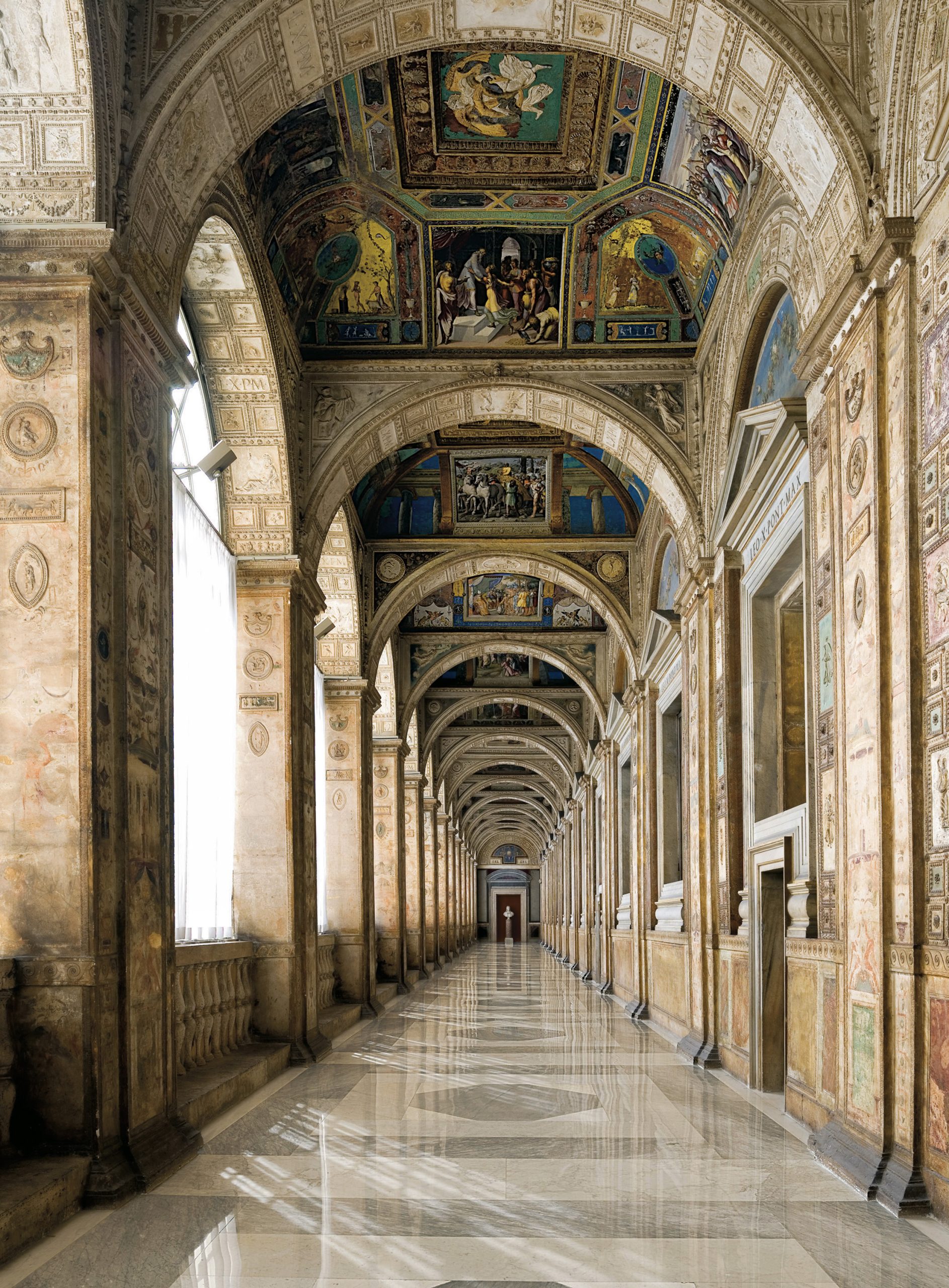
The Vatican Museums has launched an ambitious restoration to the frescoes of the Hall of Raphael in the Apostolic Palace, expected to take five years and to cost 5.5 million euros (around $6.3 million).
The Renaissance frescoes — which date to the early 16th century and have been virtually untouched since their creation — are in dire need of cleaning and repairing, according to the Vatican Museums.
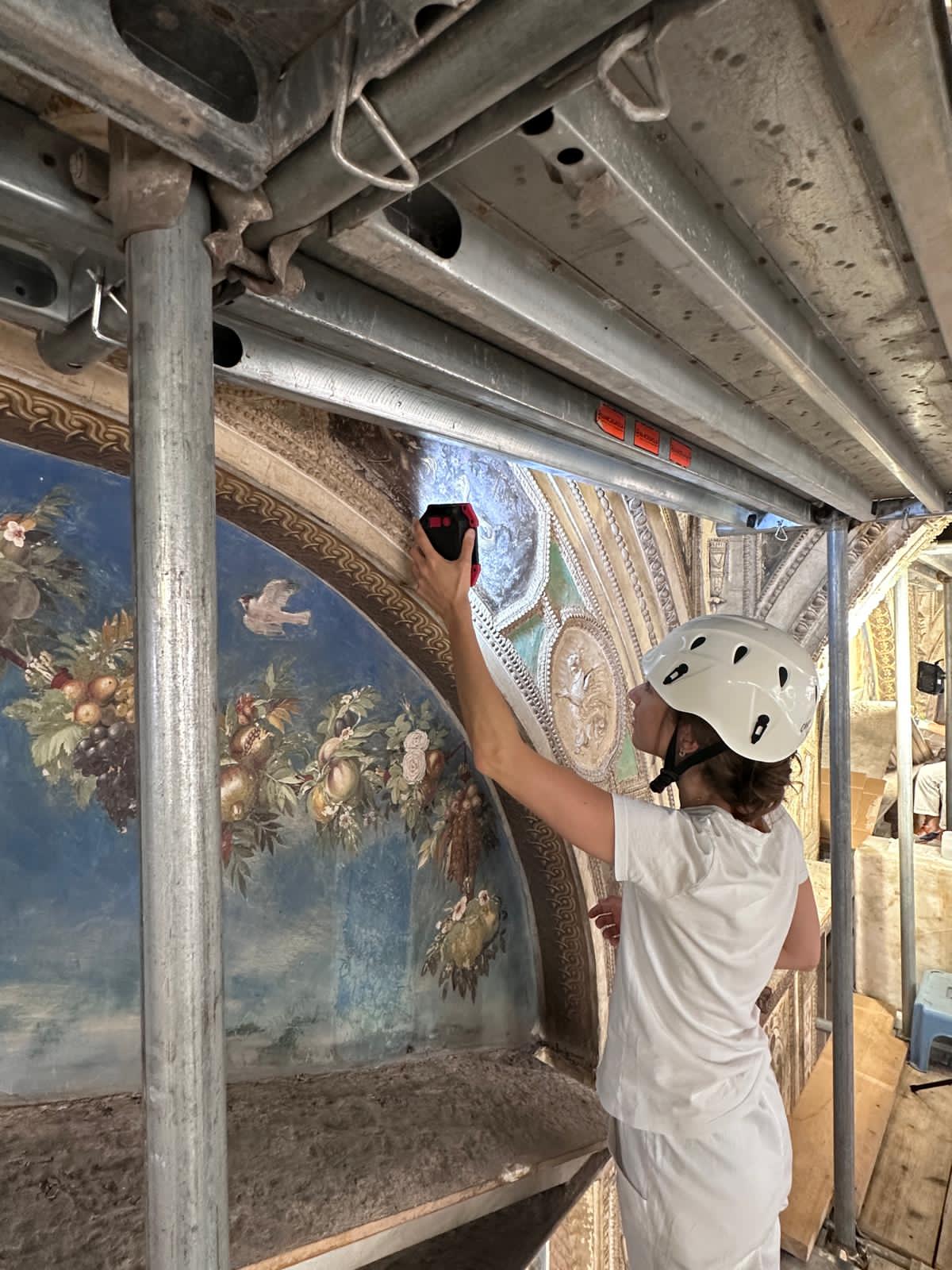
A team of over 20 conservators began the delicate work, utilizing laser technology, on April 15. The process is expected to conclude in 2031.
The corridor, which is 210 feet long and 13 feet wide, boasts nearly 14,000 square feet of frescoes and stucco work designed by Raphael and executed between 1517 and 1519 by Raphael’s assistants, Giulio Romano, Giovanni da Udine, and Perin del Vaga. The designs include scenes from the Old Testament, botanical designs, and grotesques.
Raphael, a prominent artist and architect of the High Renaissance, had been commissioned by Pope Julius II to decorate the papal apartment of the Apostolic Palace in the Vatican. Pope Leo X brought the artist back to decorate one of the loggias, a hall on the west wing of the second floor, overlooking the Courtyard of St. Damasus.
The decorated hall, also known as the Loggia of Raphael, was “immediately considered one of the highest expressions of Renaissance art applied to architecture,” per a June 24 press release from the Vatican Museums. “It is still today one of the most refined testimonies of the figurative language of the early 16th century.”
The hall is “a passageway long traversed by cardinals, high prelates, and ambassadors visiting the pope, admired and copied by the greatest Italian and foreign artists and an essential destination of the Grand Tour,” said Barbara Jatta, director of the Vatican Museums, quoted in the statement.
The conservation work “will mark a pivotal moment both in the history of restoration and in the history of Italian Renaissance art,” she said.
The cost of the project, which is the first-ever major restoration of the frescoes, is sponsored by the World Monuments Fund and the Stephen A. Schwarzman Foundation.
Delicate restoration process
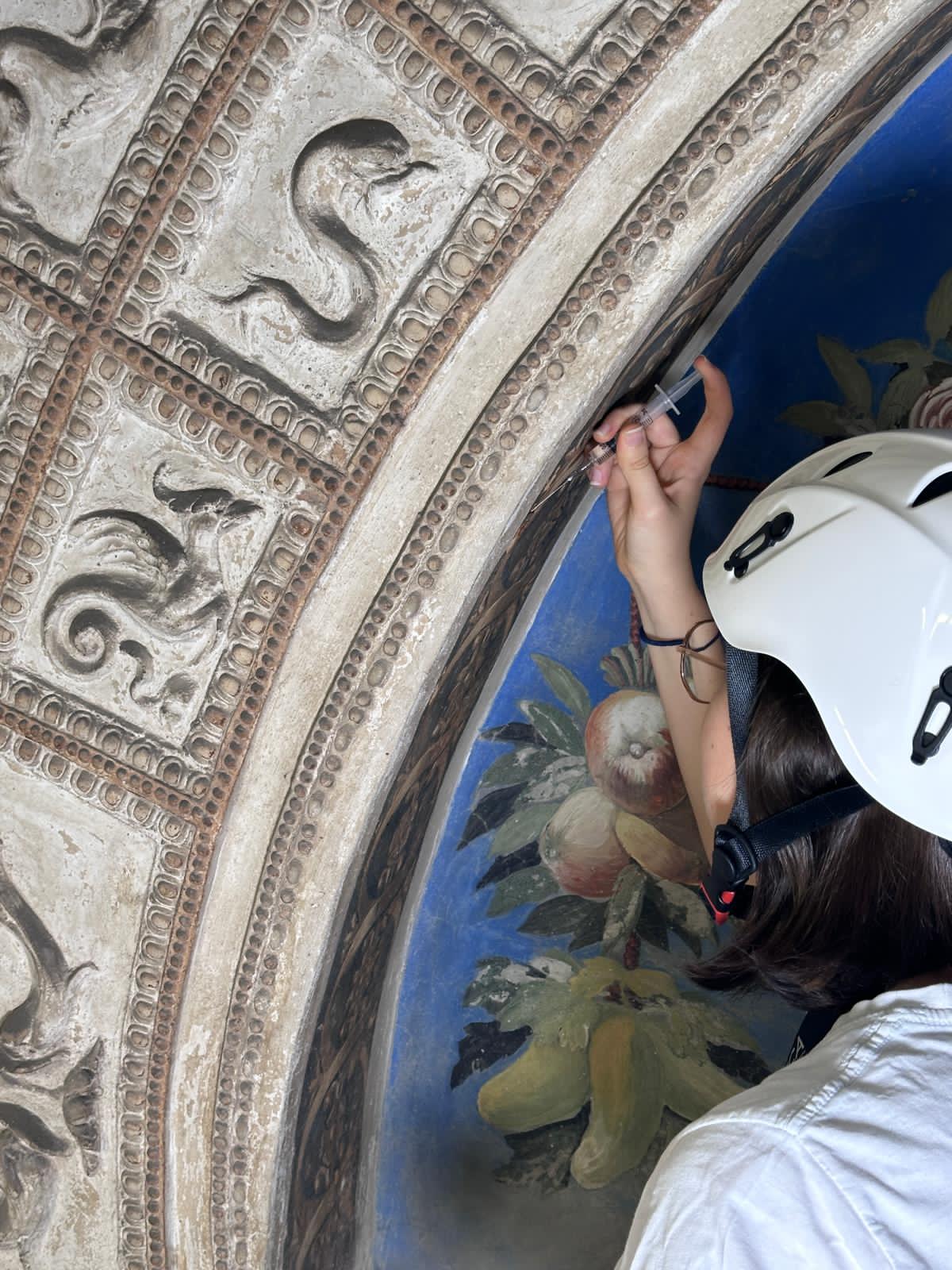
Angela Cerreta, the director of the restoration, told the Spanish news outlet ABC in June that the paintings are not in a good condition: “It’s a very delicate surface and has been exposed to the elements for centuries. For many years, it was copied for fear of its loss.”
“We are meticulously analyzing the engravings to observe all the phases prior to the losses,” he said, explaining that in the 1970s, the Vatican attempted to restore the hall using inorganic products, but the result did not turn out well.
“Since then, a kind of negative legend has arisen about this hall, suggesting it was best left untouched,” Cerreta told the Spanish news outlet. But between 2019 and 2023, conservators carried out additional restoration tests to find the right technology.
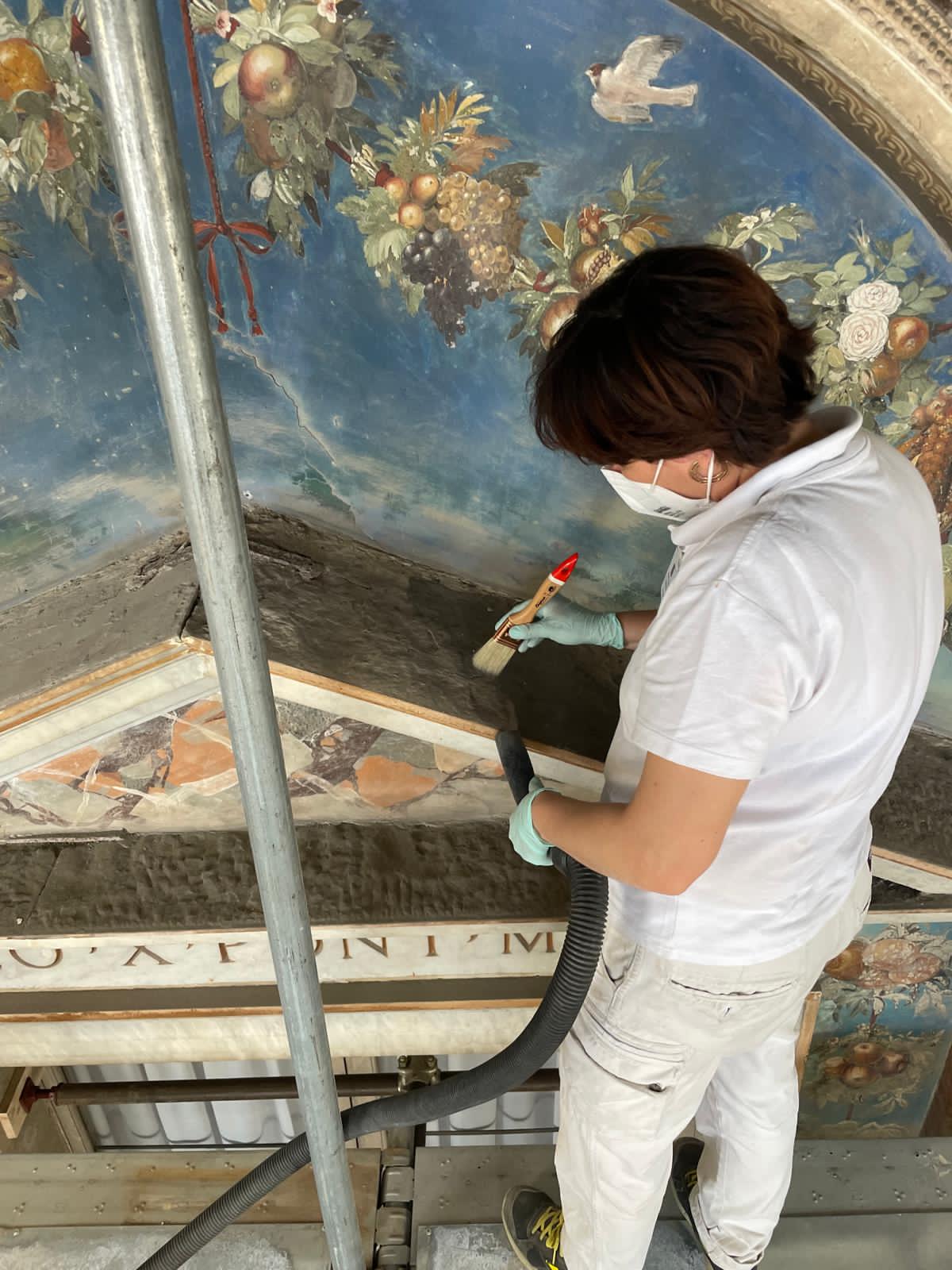
The Vatican Museums’ chief restorer of paintings and wood materials, Paolo Violini, said that “Examination of the surface revealed the need to adopt a ‘dry’ cleaning method in order to preserve the delicate original layers and their fragile surviving traces, which are highly sensitive to the action of chemical procedures. Laser technology proved exceptionally effective in meeting this requirement.”
“Following a series of tests employing different systems and operating modes, an ‘active fiber’ model was selected for its versatility in managing the degree of cleaning, allowing for highly accurate and detailed control,” he said, per the statement.
Part of the restoration process will be the installation of a new lighting system and new filtered windows to protect the frescoes from ultraviolet radiation and to reduce solar heat. The cost of the lighting and windows is supported by the Patrons of the Arts in the Vatican Museums.
After the restoration concludes, the Stephen A. Schwarzman Foundation will cover the cost of digitizing the artwork, and the Vatican Museums is also weighing the possibility of opening the hallway to the public on specific dates.