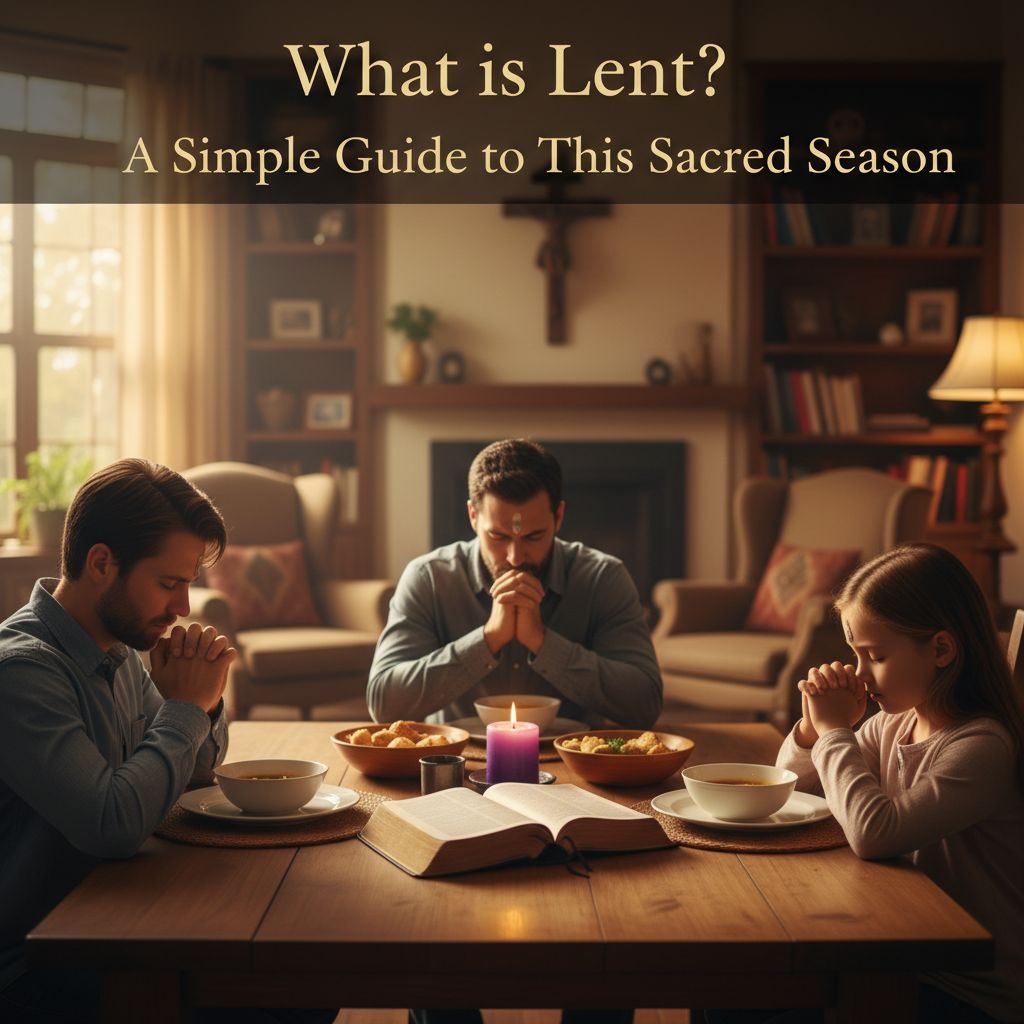
During Lent, Christians worldwide commemorate Jesus Christ’s 40-day fast in the wilderness and prepare their hearts for the celebration of His resurrection at Easter. This sacred season serves as a time for spiritual reflection, repentance, and renewal. Specifically, it invites believers to examine their lives, strengthen their faith through sacrifice, and grow closer to God through intentional practices.
This guide explores everything you need to understand about Lent—from its biblical origins and historical development to the various ways different Christian denominations observe this meaningful season in 2026.
What is Lent and Why is it Observed?
Lent represents one of the most profound spiritual seasons in the Christian calendar, offering believers a dedicated period for reflection, repentance, and renewal. This sacred time carries deep significance that extends beyond its outward practices.
The meaning of Lent in Christianity
The term “Lent” comes from an Anglo-Saxon word meaning “spring,” symbolizing the season when days lengthen and more sunlight fills our days [1]. In Latin, it’s called “Quadragesima,” which literally means “Fortieth,” highlighting its duration [2].
Essentially, Lent serves as a solemn religious observance in the liturgical year that prepares Christians for Easter [2]. This 40-day season begins on Ash Wednesday and concludes at sundown on Holy Thursday [2]. For Eastern Orthodox Christians, however, Great Lent starts on Clean Monday and runs continuously for 40 days until Lazarus Saturday [2].
Throughout this period, Christians focus on three core spiritual disciplines:
Prayer: Deepening their relationship with God through Scripture reading and contemplation
Fasting: Practicing self-discipline and abstinence from certain foods or activities
Almsgiving: Performing acts of charity and giving to those in need [2]
The fundamental purpose of Lent extends far beyond ritual observances. Rather than merely abstaining from luxuries, the season calls believers to a “true inner conversion of heart” as they seek to follow Christ more faithfully [2]. It creates space for Christians to withdraw from routine activities and evaluate their spiritual progress [3].
The symbolism of 40 days
The number 40 holds profound biblical significance, appearing repeatedly in Scripture as a time of testing, trial, purification, and renewal [4]. This symbolic period represents transformation and preparation.
In the Old Testament, Moses spent 40 days and nights on Mount Sinai fasting and praying before receiving the Ten Commandments [2]. Similarly, the prophet Elijah journeyed for 40 days and nights, fasting until he reached Horeb, “the mountain of God,” where “the word of the Lord came to him” [2].
Furthermore, the Israelites wandered in the wilderness for 40 years before entering the Promised Land [4]. This wilderness experience taught them to trust God amid uncertainty and scarcity.
The 40-day period of Lent (excluding Sundays) connects modern Christians to these ancient patterns of spiritual formation. It provides a structured time to recognize our brokenness, cry out to God, and long for renewed relationship [3].
Connection to Jesus’ time in the wilderness
Most importantly, Lent directly commemorates Jesus’ 40-day fast in the desert following his baptism and before beginning his public ministry [2]. During this intense period of solitude, Jesus faced hunger, loneliness, and direct temptation from Satan [1].
All three Synoptic Gospels (Matthew, Mark, and Luke) describe how Jesus was led by the Holy Spirit into the wilderness specifically “so that the devil might tempt him” [1]. There, Jesus fasted completely, eating nothing until the end of his wilderness sojourn [1].
This wilderness experience proved crucial for Jesus’ preparation. Through prayer, fasting, and resisting temptation, he centered his identity as Son of God and clarified his mission as Messiah [1]. Throughout his subsequent ministry, Jesus continued this pattern of withdrawing to solitary places for prayer [1].
By observing Lent, Christians symbolically join Jesus in the wilderness. They create intentional space for simplifying life, focusing on spiritual essentials, and confronting temptations that distract from faithful living. Consequently, Lent invites believers to “escape from the life of flesh and into the life of the Spirit” [3].
The Historical and Biblical Origins of Lent
The origins of Lent stretch back through centuries of Christian history, but its roots can be traced to ancient biblical traditions and early church practices. Examining these foundations helps us understand why this sacred season continues to hold such significance today.
Old Testament fasting traditions
Fasting has deep roots in Jewish spiritual tradition, forming the backdrop against which Christian practices later developed. Throughout the Old Testament, periods of fasting marked significant moments of spiritual preparation and repentance.
The biblical antecedents for the 40-day period are numerous. Moses fasted for 40 days and nights on Mount Sinai before receiving the Ten Commandments, consuming neither food nor water during this time. Similarly, the prophet Elijah journeyed through the wilderness for 40 days and nights until reaching Mount Horeb, where he encountered God. Additionally, the Israelites wandered in the desert for 40 years before entering the Promised Land.
Early Christian theologians saw these biblical patterns as prefigurations of Lenten practice. Maximus of Turin wrote that Elijah’s 40-day fast, which ended drought with rain, was “a figure of ourselves so that we, also fasting a total of forty days, might merit the spiritual rain of baptism” [3]. This interpretation connects Old Testament fasting with Christian baptismal preparation.
The Ninevites’ 40-day fast described in the Book of Jonah provides another important precedent. Their collective repentance, accompanied by sackcloth and ashes, averted divine judgment—a powerful model for communal fasting that influenced later Christian practice.
Jesus’ 40-day fast and temptation
Central to the establishment of Lent is Jesus’ 40-day fast in the wilderness following his baptism. Matthew’s Gospel recounts: “Then Jesus was led by the Spirit into the wilderness to be tempted by the devil. After fasting forty days and forty nights, he was hungry” [2]. This period of intense spiritual preparation preceded Jesus’ public ministry.
Throughout this wilderness sojourn, Satan repeatedly tempted Jesus, first challenging him to turn stones into bread, then to throw himself from the temple pinnacle, and finally offering him worldly power in exchange for worship. Each time, Jesus responded with Scripture, ultimately declaring, “Away from me, Satan! For it is written: ‘Worship the Lord your God, and serve him only'” [2].
This pivotal event became the primary inspiration for Lent. As Tertullian noted around 200 AD, Jesus’ post-baptismal fast established a pattern for early Christians, particularly those preparing for baptism [3]. The wilderness experience represented spiritual preparation through self-denial and resistance to temptation—precisely what Lenten observance aims to cultivate.
Early Church practices and the Council of Nicaea
Fasting before Easter emerged quite early in Christian history. Saint Irenaeus (c. 130-202 AD) mentioned disputes about pre-Easter fasting in a letter to Pope Victor, noting such “variation in observance did not originate in our own day, but very much earlier, in the time of our forefathers” [3]. This indicates the practice likely dated back to apostolic times.
These early fasting practices varied considerably:
Some Christians fasted for one day
Others for two days
Some observed a 40-hour fast
Some locations practiced longer periods
Initially, these fasts primarily prepared catechumens (new converts) for baptism at Easter. The Didache, possibly dating to the first century, instructed: “before the baptism let the baptizer fast and the baptized and whatever others can, but you shall order the baptized to fast one or two days before” [3].
The Council of Nicaea in 325 AD marked a turning point. While it didn’t establish Lent directly, the council standardized the calculation of Easter’s date, declaring it should be celebrated “on the Sunday following the first full moon after the vernal equinox” [2]. This standardization helped unify Lenten observances across Christianity.
By 339 AD, Athanasius of Alexandria wrote that the Lenten fast was a 40-day fast that “the entire world” observed [3]. Eventually, Pope Gregory I (590-604 AD) standardized the Lenten period churchwide, establishing Ash Wednesday as the beginning, 46 days before Easter (with Sundays excluded from fasting) [3].
The development of Lent thus reflects both biblical foundations and the early Church’s practical need to prepare converts for baptism while commemorating Christ’s sacrifice through communal spiritual disciplines.
How Lent is Observed Across Denominations
Lent’s observance varies dramatically across Christian denominations, with each tradition developing distinctive practices based on theological emphasis and historical development.
Catholic traditions and fasting rules
Catholics structure Lent around three foundational pillars: prayer, fasting, and almsgiving [3]. Regarding fasting, Roman Catholics must observe strict rules on Ash Wednesday and Good Friday, including one full meal and two smaller meals that together do not equal a full meal [3]. Moreover, Catholics aged 14 and older must abstain from meat on all Fridays during Lent [3].
These obligations apply to Catholics ages 18-59, though certain exceptions exist for pregnant women, nursing mothers, and those with medical conditions [3]. Beyond mandatory practices, many Catholics embrace additional personal sacrifices, such as giving up specific foods or activities, though these remain customary rather than prescribed by Church law.
Eastern Orthodox and Great Lent
Great Lent in Eastern Orthodoxy follows a notably stricter regimen. Unlike the Roman tradition, Orthodox Great Lent begins on Clean Monday and continues for 40 days until Lazarus Saturday, followed by Holy Week [5]. Throughout this period, Orthodox Christians observe a rigorous fasting discipline that prohibits all animal products except invertebrates [3].
Indeed, the fasting protocol eliminates meat, poultry, dairy, eggs, and fish, though shellfish remains permitted [3]. On weekdays, wine and oil are forbidden, with slight relaxations on weekends [3]. Nevertheless, Orthodox practice emphasizes that fasting without prayer brings little benefit, hence the abundance of special Lenten services including Great Compline and the Liturgy of the Presanctified Gifts [3].
Protestant and Anglican observances
Protestant approaches to Lent vary considerably. Anglicans, Lutherans, Methodists, and some Reformed churches observe the season, though practices differ substantially [5]. Many Protestant denominations focus on spiritual reflection rather than prescribed fasting regulations [3].
For instance, Lutherans emphasize remembering Jesus’ path to the cross without requiring specific sacrifices [3]. As one Lutheran congregant noted, “We aren’t against other people giving up stuff during Lent… as long as it’s something that helps you remember what Jesus did for you” [3]. Presbyterians and other denominations likewise observe the season but with greater flexibility in personal practice.
Differences in start and end dates
Starting and ending dates vary significantly between traditions, creating different Lenten calendars worldwide. In the Roman Rite, Lent begins on Ash Wednesday and ends on Holy Thursday evening, comprising 44 days, though the Lenten fast historically continued through Good Friday and Holy Saturday [5].
In contrast, Eastern Orthodox churches following the Julian calendar celebrate Great Lent 2026 from Monday, February 23 until Saturday, April 11 [3]. The Ambrosian Rite presents yet another variation, beginning Lent on the Sunday after what Western Catholics observe as Ash Wednesday [5]. These calendar differences remind us that despite shared spiritual goals, Lent’s observance remains as diverse as Christianity itself.
Key Practices During Lent
The three pillars of prayer, fasting, and almsgiving form the foundation of Lenten observance across Christian traditions, creating a framework for spiritual growth during this sacred season.
Prayer and spiritual reflection
Prayer during Lent focuses on repentance and renewal as Christians recommit to following Jesus. Many utilize structured approaches such as Ignatian contemplation, which encourages imaginative engagement with Scripture. Others practice the Examen, pausing to review their day in God’s presence. Daily spiritual readings drawn from Scripture, saints’ wisdom, and traditional teachings help deepen this connection. Certain communities offer guided resources like “Living Lent Daily” or “From Ashes to Glory” that provide structured reflection opportunities.
Fasting and abstinence from meat
For Roman Catholics, fasting is mandatory on Ash Wednesday and Good Friday for those aged 18-59, permitting one full meal plus two smaller meals that together don’t equal a full meal [5]. Additionally, Catholics 14 and older must abstain from meat on all Fridays throughout Lent [5]. Beyond these requirements, many Christians voluntarily surrender certain foods or activities. Authentic fasting serves as a spiritual exercise that “draws us nearer to God and opens our hearts to receive His many gifts” [3]. It reminds believers that “there are more important things in life than food” [3].
Almsgiving and acts of charity
Often considered the most neglected Lenten practice, almsgiving represents giving that genuinely costs something. It’s both prayer and fasting—prayer because it’s “giving to God,” and fasting because it demands sacrificial giving [3]. Jesus presented almsgiving not as optional but as essential, using “when” rather than “if” [3]. Historically, early Christians sold property to support those in need [3]. Today, many use tithing (giving one-tenth of income) as their guideline [3]. Almsgiving becomes “a witness to fraternal charity” and “a work of justice pleasing to God” [6].
Modern Lenten sacrifices
Contemporary Lenten practices often reflect modern challenges. Many Christians limit screen time, abstain from social media, or practice digital fasting after certain hours [7]. Others give up coffee, alcohol, or streaming entertainment [5]. Some commit to positive practices—waking earlier for prayer, reading Scripture daily, or calling isolated persons [7]. Certainly, parishes frequently hold Friday fish fries, creating community around traditional abstinence [3]. Whatever the sacrifice, effectiveness comes from intentionality: “When you fast, abstain from meat, or ‘give something up,’ make sure you are doing it intentionally” [3].
Important Days and Liturgical Customs
Throughout Lent, several significant days and practices help believers focus on Christ’s journey toward crucifixion and resurrection.
Ash Wednesday and its significance
Ash Wednesday inaugurates the Lenten season with a powerful reminder of mortality. Worshippers receive ashes on their foreheads, typically accompanied by the words, “Remember that you are dust, and to dust you shall return” [3]. These ashes come from burning palm branches saved from the previous year’s Palm Sunday celebrations [3]. Across denominations—Catholic, Lutheran, Anglican, Methodist, and others—this day involves prayer, fasting, and often abstinence from meat [3].
Palm Sunday and Holy Week
Palm Sunday commemorates Jesus’ triumphant entry into Jerusalem, marked by distributing palm branches representing those laid before Christ [8]. This event initiates Holy Week, which encompasses Maundy Thursday (Last Supper), Good Friday, and concludes with Easter [6]. From Palm Sunday onward, liturgical readings increasingly focus on Christ’s passion.
Good Friday and Easter Sunday
Good Friday solemnly remembers Jesus’ crucifixion with special services often using red vestments symbolizing blood [7]. The Easter Vigil afterward begins outside with fire, from which worshippers light candles and process into darkened churches [5]. At Easter, Christians celebrate Christ’s resurrection—the culmination of the Lenten journey.
Veiling of images and liturgical colors
During Lent’s final two weeks, many churches cover crosses and images with plain violet cloths [9]. This practice originated from medieval “hunger cloths” that concealed altars [9]. Liturgical colors change meaningfully: violet (representing penance) predominates in Lent, red appears on Palm Sunday and Good Friday, white signifies Easter’s joy [10].
Conclusion
Lent stands as one of Christianity’s most profound seasons, offering believers a sacred journey of spiritual renewal. Throughout these 40 days, Christians worldwide embrace ancient traditions that connect them directly to Jesus’ wilderness experience. Far beyond merely abstaining from chocolate or meat, genuine Lenten observance transforms hearts through intentional prayer, meaningful fasting, and generous almsgiving.
Different Christian traditions certainly approach this season with unique customs – Catholic fasting regulations differ significantly from Orthodox practices, while many Protestant denominations emphasize personal spiritual reflection. Nevertheless, the underlying purpose remains consistent: drawing closer to God through self-examination and sacrifice.
Lent ultimately prepares believers for Easter’s joyful celebration of resurrection. This preparation happens gradually through significant milestones like Ash Wednesday’s sobering reminder of mortality, Palm Sunday’s commemoration of Jesus entering Jerusalem, and Good Friday’s solemn remembrance of crucifixion. Each observance builds upon the last, creating a powerful spiritual journey.
Whether observed through strict fasting traditions, digital detoxes, increased prayer time, or acts of charity, Lent offers Christians a structured opportunity to examine their relationship with God. Thus, Lent continues to hold profound relevance today, inviting believers to step away from life’s distractions and focus on what matters most – the path toward spiritual transformation that mirrors Christ’s own journey from wilderness to resurrection.