

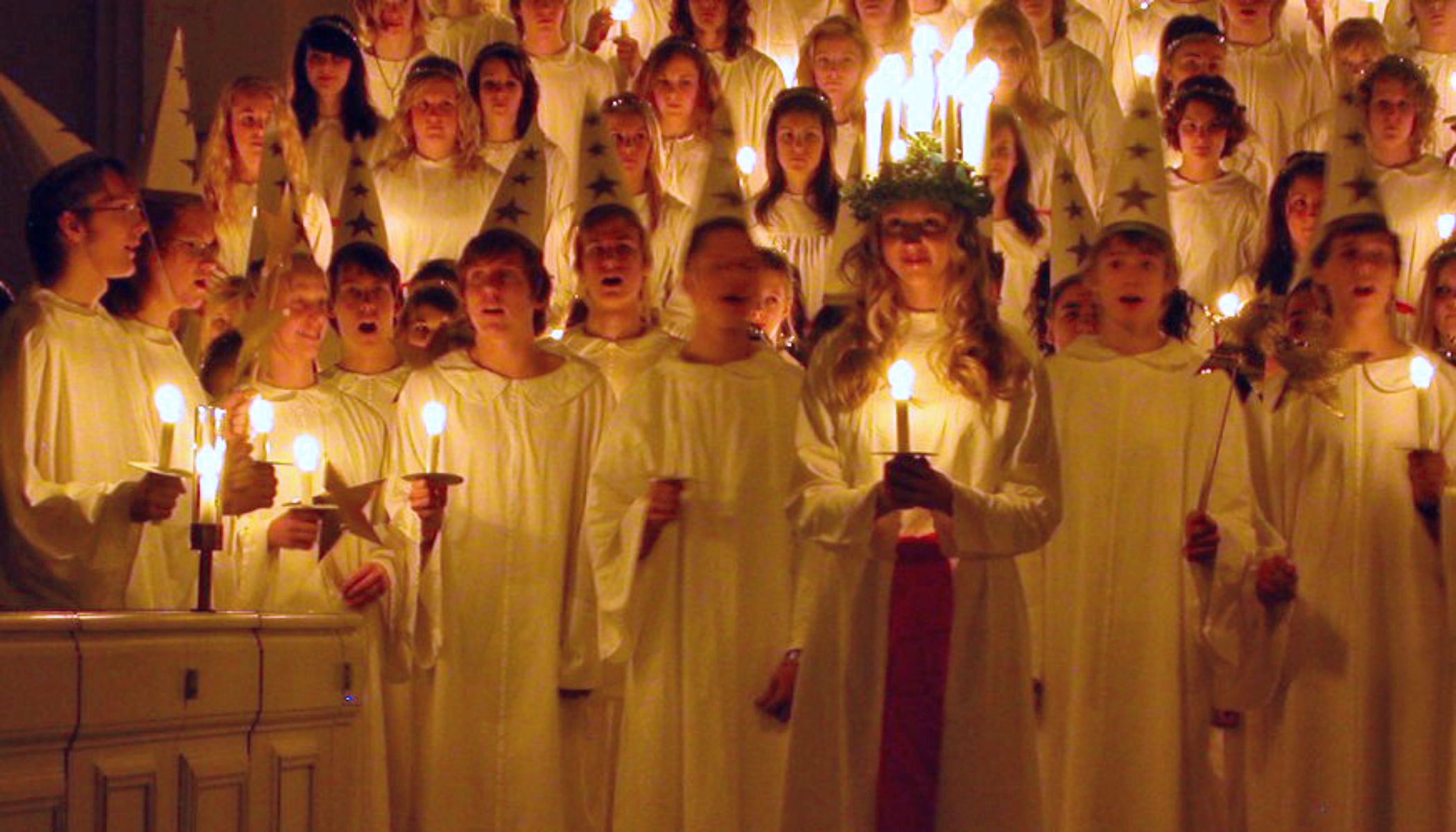
In previous years, the country held a competition on national television to select a woman to be Lucia in the procession. These days, schools and local churches simply choose a girl to be Lucia by random draw. These processions take place across the country in churches, schools, offices, town halls, care homes, and even restaurants.
Swedish treats called “Lussekatt,” which are S-shaped saffron buns similar to cinnamon rolls, also make an appearance in this popular custom. Lucia carries a tray filled with these buns and gingerbread cookies.
The main song people sing is “Sankta Lucia,” which is a Swedish translation of the Neapolitan song “Santa Lucia.” The lyrics highlight the cold, dark winter nights and the light being brought into homes by the saint.
Historically, before reforms to the calendar, the feast of St. Lucy landed on the shortest day of the year on the Julian calendar. This made it the longest night of the year. According to Swedish folklore, “Lucia Night” was a dangerous night when dark spirits would come out in full force. By morning, livestock would need extra feed and people were encouraged to eat seven to nine breakfasts.
In agrarian Sweden, individuals would dress up as Lucia figures and wander from house to house singing songs and scrounging for food. This custom disappeared with urban migration, and the white-dressed Lucia became a more acceptable form of celebration.
The first recorded appearance of the white-dressed Lucia was in a country house in 1764. The custom became a universal Swedish tradition in the 1900s.