

Over 10 days, they will cycle an average of 90 kilometers (56 miles), and will be welcomed every night in parishes, monasteries, and with families, sharing meals and enjoying conviviality and prayer until they reach Celorico de Basto, a village in the Archdiocese of Braga, Portugal, where they will join another 54 young people from the same diocese and 595 who will come from Toledo, Spain.
Marie-Liesse, one of the French pilgrims, said that “this trip is an opportunity to meet people and experience hospitality in France, Spain, and Portugal. It is a true pilgrimage that we experience by bicycle, and at the same time [is] a sporting and spiritual challenge.”
She also pointed out that going to WYD like this is a way of “getting to know the group better, the people we find on the way, but also to get to know ourselves in the face of difficulties, physical suffering, and loneliness on the bicycle… It is a way of preparing for WYD, meeting Portuguese communities, young people from all over the world — and the pope.”
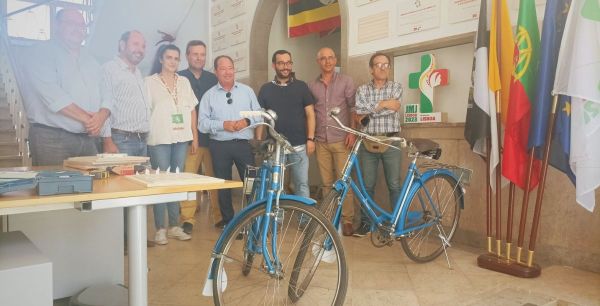
An original and sustainable gift
Bicycles are playing another role in WYD this year. When the pope arrives at the WYD headquarters in Lisbon, he will be presented with two bicycles built from scrap metal by high school students from a small Portuguese town of Gafanha da Nazaré, located 250 kilometers (155 miles) north of Lisbon.
Building them was the major project this year at the high school, where the GAFe Bike Lab operates — a workshop dedicated to refurbishing bicycles and donating them to disadvantaged students.
António Rodrigues, a teacher of physics and chemistry responsible for the workshop, explained that giving the bicycles to the pope was born from a dream of “continuing the tradition of cycling,” still common in their town, and “promoting sustainability.”
When the students first learned about the challenge, they were excited and at the same time confused. “But … the pope doesn’t ride a bicycle?” they wondered.
But Rodrigues, who’s been commuting to school by bicycle for 30 years, explained it was “symbolic” and “for awareness.” Other teachers surmised that the pope would take the bicycles with him and lend them to priests and nuns to use around the Vatican “at full speed.”
