

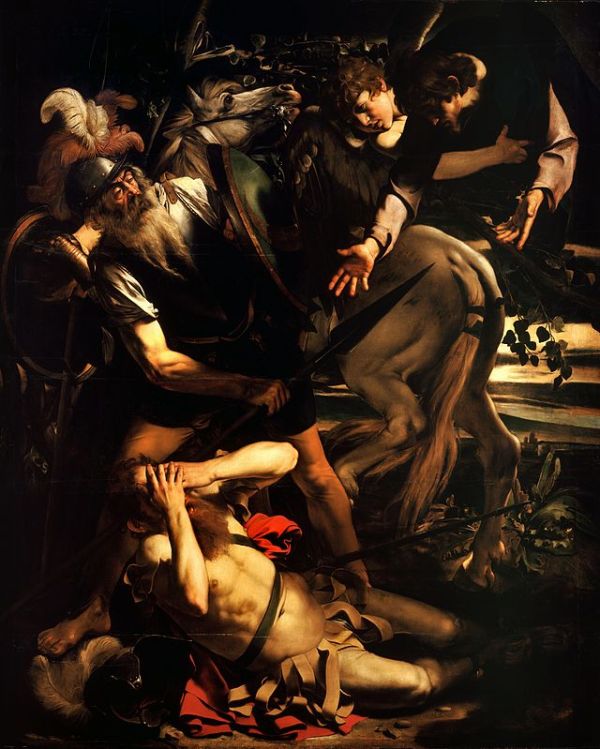
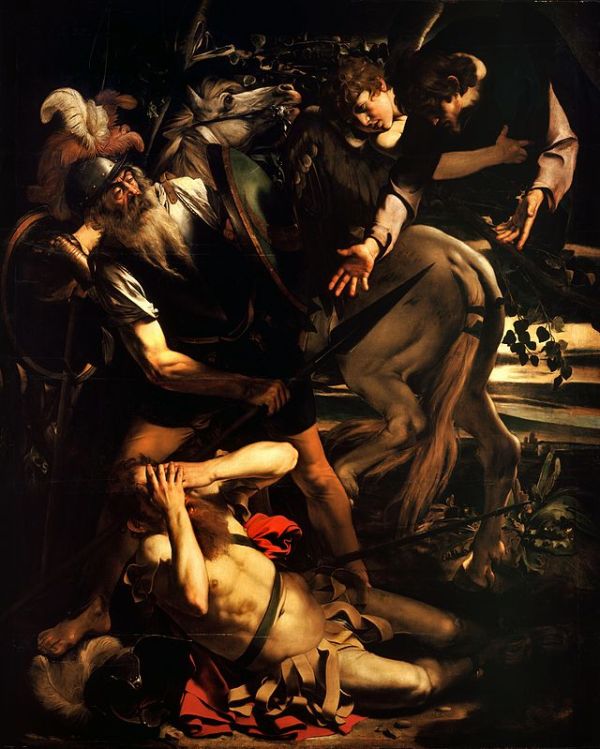
As was the Baroque style, the painting is heavy with contrast: Profound strokes of light are met with dark, brooding shadows. Jesus Christ is depicted in the upper third of the image, reaching out to Paul while being assisted by an angel. Paul himself is seen as an older man with a beard.
Though the artist plainly invested a great deal of work in the painting, it would ultimately never make it to the Cerasi Chapel. Instead, Caravaggio would paint a second work, “Conversion on the Way to Damascus,” a substantially different depiction of Paul’s conversion showing a younger man knocked off his horse by the blinding light of God.
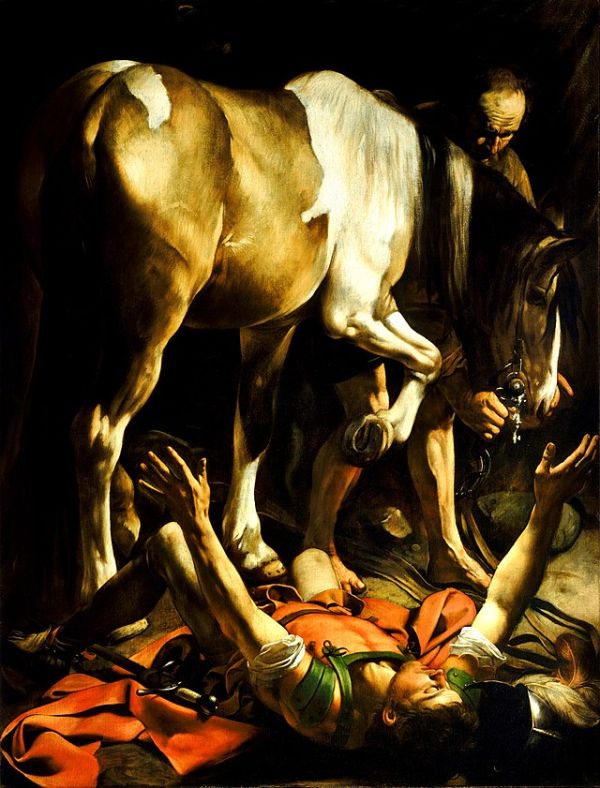
The popular historical account, written by Caravaggio’s contemporary Giovanni Baglione, holds that Cerasi rejected the first versions of both “Conversion” and “Crucifixion,” requiring the artist to paint the revisions that now hang in the chapel.
Catherine Puglisi, a professor emerita of art history at Rutgers University, said that version of events leaves “a lot of room for doubt because of the complicated circumstances surrounding the commission.”