

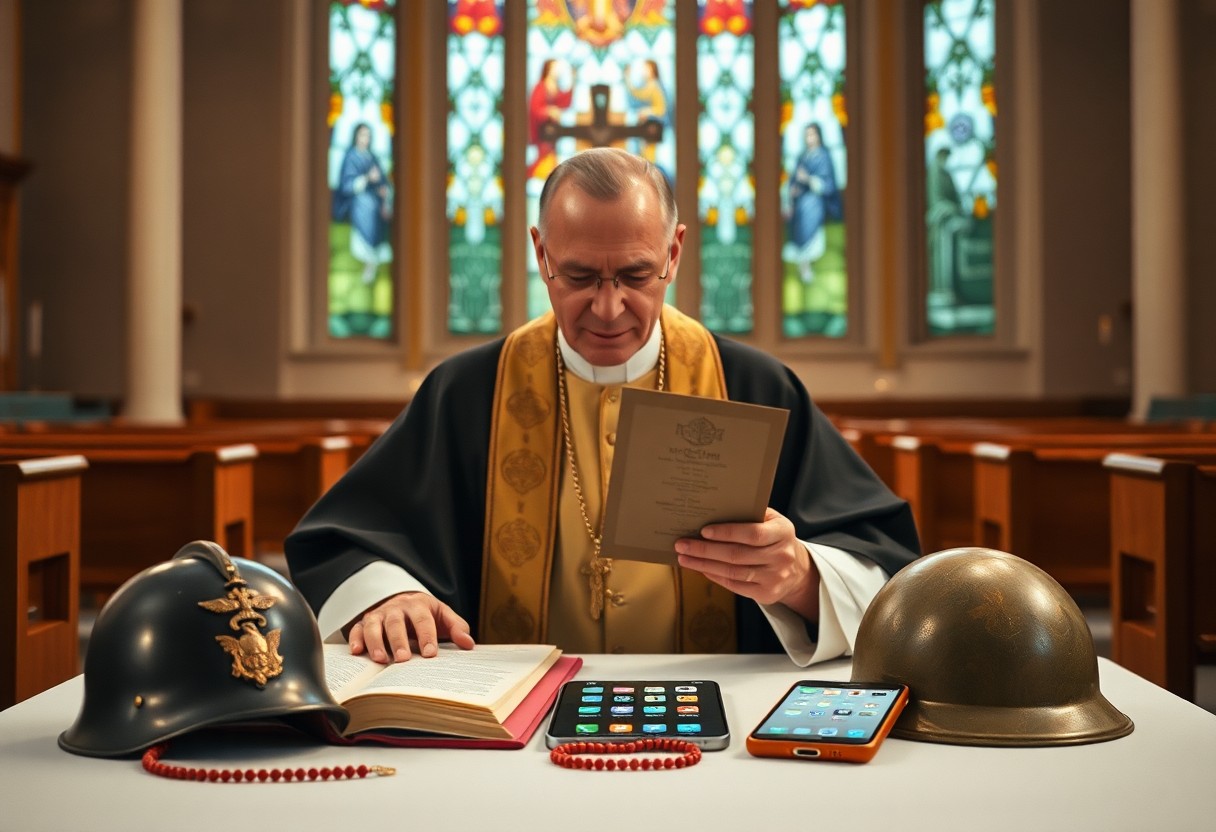
Catholicism calls you to pursue authentic peace rooted in justice, not mere absence of conflict. The Church permits war only under strict moral conditions, condemning aggression and unjust violence. In modern culture, you are challenged to uphold human dignity, reject war propaganda, and build communities of reconciliation through faith and reason.
Key Takeaways:
- The Catholic Church teaches that peace is more than the absence of conflict-it is built through justice, forgiveness, and respect for human dignity, rooted in the belief that every person is made in the image of God.
- War may be considered morally permissible only under strict conditions, such as last resort, proportionality, and legitimate authority, according to the Church’s just war doctrine, which emphasizes the moral responsibility to protect innocent life.
- In modern culture, the Church challenges violence, militarism, and dehumanizing ideologies by promoting solidarity, nonviolence, and the sanctity of life, calling believers to be active peacemakers in families, communities, and global affairs.
The Divine Paradox of Peace and the Sword
You hold in tension Christ’s call to turn the other cheek and the Church’s recognition that some violence may be morally permissible in defense of the innocent. This paradox is not a contradiction but a profound moral challenge. The sword, when used, must serve peace-not power. War is never a solution; at best, it is a tragic necessity under strict moral limits. You are called to pursue peace with courage, even when force cannot be ruled out entirely.
The Mechanical Nightmare of Modern Conflict
You face a world where war is no longer fought only by soldiers on battlefields but by machines that can strike without warning or remorse. Autonomous drones, cyber warfare systems, and artificial intelligence now shape the tactics of nations, distancing decision-makers from the human cost. The Catholic Church warns that such detachment risks eroding moral responsibility, turning violence into a technical exercise. You are called to question whether progress that dehumanizes conflict can ever serve true peace.
The Church Against the Spirit of the Age
Standing Firm in Truth
You face a world that often equates peace with mere comfort and war with outdated morality. The Church challenges this dangerous illusion, insisting that true peace flows from justice and sacrifice, not compromise with falsehood. While modern culture glorifies self-assertion, the Church upholds the sanctity of life and the duty to love enemies. You are called not to conform, but to resist the age with quiet courage.
Final Words
On the whole, the Catholic Church calls you to pursue peace as a moral duty, rooted in the dignity of every human life. You are taught to reject war unless strictly necessary and to oppose cultural currents that glorify violence or erode solidarity. In modern society, you are challenged to live the Gospel actively, promoting justice, forgiveness, and reconciliation in everyday choices.
FAQ
Q: What does the Catholic Church teach about when war is morally acceptable?
A: The Catholic Church permits war only under strict conditions defined by the just war theory. War may be considered morally acceptable if all peaceful alternatives have been exhausted, the damage inflicted by the aggressor is lasting and serious, there is a reasonable chance of success, and the use of force will not cause greater harm than the evil it seeks to eliminate. The Catechism of the Catholic Church emphasizes that public authorities have a duty to evaluate these conditions prudently. The Church does not support wars of aggression and insists that any use of military force must be guided by moral principles, not political convenience.
Q: How does the Church promote peace in modern society?
A: The Church promotes peace through teaching, prayer, and active engagement in social justice. Popes and bishops regularly speak out against violence, poverty, and injustice, calling for dialogue and reconciliation. The Church supports international cooperation, human rights, and nonviolent conflict resolution. Catholic organizations around the world run peacebuilding programs, provide humanitarian aid, and advocate for policies that protect human dignity. Peace, in Catholic teaching, is more than the absence of war-it is the presence of justice, respect for life, and solidarity among peoples.Q: Does the Catholic Church oppose all forms of violence, including self-defense?
A: The Church does not oppose all forms of violence in an absolute sense. While it upholds the sanctity of life and condemns unnecessary violence, it recognizes the right to self-defense under certain conditions. Individuals and nations may defend themselves when attacked, but the response must be proportionate and aimed at restoring security, not revenge. The Catechism teaches that legitimate defense can be a duty, especially for those responsible for protecting others. However, the Church always encourages nonviolent solutions and warns against the escalation of conflict.
Q: What is the Church’s stance on nuclear weapons and modern warfare?
A: The Catholic Church strongly opposes the use of nuclear weapons and other weapons of mass destruction. Popes from John XXIII to Francis have warned that such weapons threaten the survival of humanity and violate moral law. The Church supports nuclear disarmament and criticizes the possession of nuclear arsenals, especially when they are maintained for deterrence. Modern warfare involving drones, cyberattacks, and autonomous weapons raises new ethical concerns. The Church insists that even in war, moral limits must be observed, including the protection of civilians and the prohibition of indiscriminate attacks.
Q: How does Catholic teaching on peace challenge contemporary culture?
A: Catholic teaching on peace challenges modern culture by rejecting the normalization of violence in media, politics, and international relations. It questions a culture that glorifies power, speed, and efficiency at the expense of compassion and dialogue. The Church calls for a conversion of hearts, urging people to practice forgiveness, reject hatred, and build communities based on love and truth. In a world often driven by fear and division, the Gospel message of peacemaking offers a counter-witness. Catholics are encouraged to live peacefully in their families, workplaces, and societies, becoming signs of hope in a fractured world.