

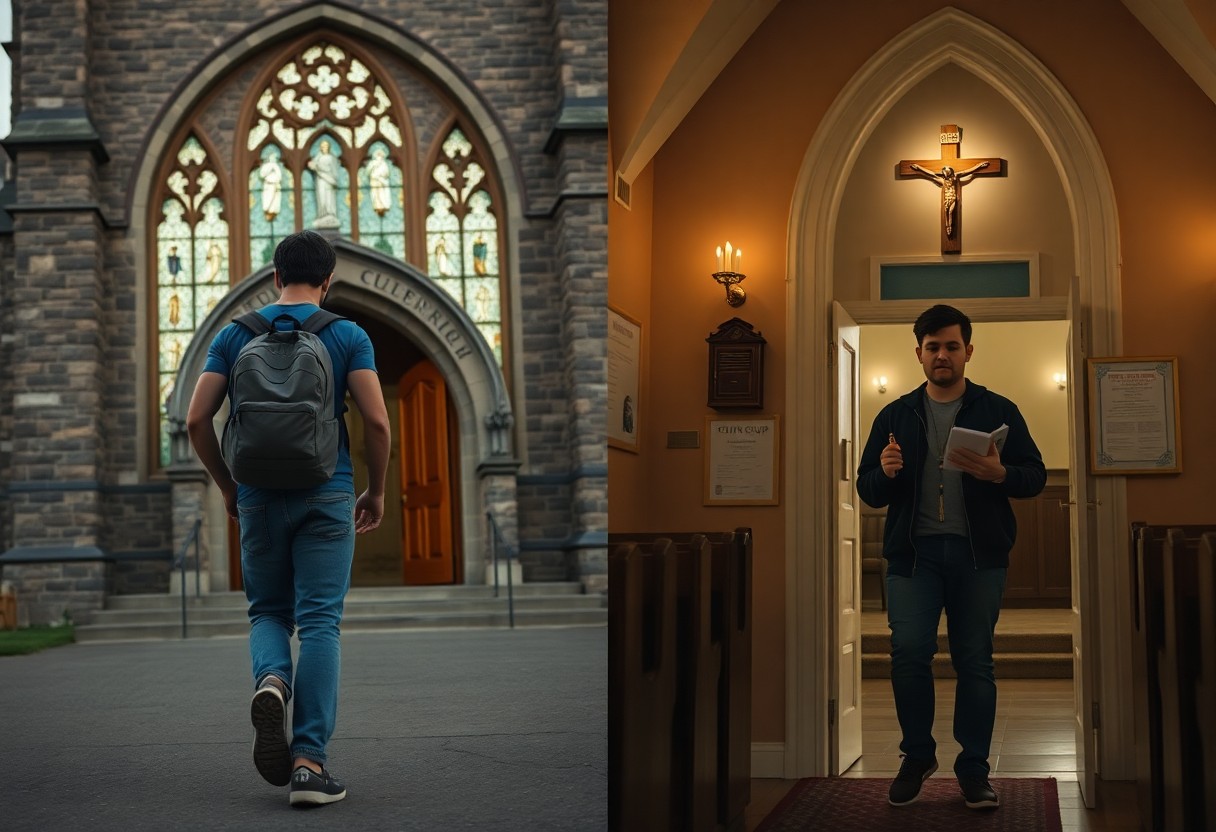
There’s a quiet shift happening in your parishes: more young Catholics are walking away, disillusioned by institutional scandals, rigid teachings, and a perceived lack of relevance. Yet, a growing number are returning, drawn by authentic community, meaningful worship, and a renewed sense of spiritual belonging that speaks directly to their lived experience.
Key Takeaways:
- Many young Catholics leave the Church due to perceived conflicts between Church teachings and modern values, especially around gender, sexuality, and social justice.
- Some are returning because they find meaning in liturgy, tradition, and community-especially when parishes offer honest dialogue and space for doubt.
- Authentic relationships with clergy and peers, along with opportunities for service and spiritual growth, play a major role in re-engaging former attendees.
The Great Flight into the Void
You feel the emptiness before you name it. Something sacred once filled the space now occupied by distraction, isolation, and silence. That void isn’t accidental-it’s where belief once lived, and its absence echoes louder than any sermon. You didn’t leave for nothing; you fled toward what promised meaning, only to find thin air.
The Siren Song of the Secular
Freedom calls to you in polished tones, promising autonomy without guilt and identity without doctrine. The world offers belonging through culture, career, and connection-yet these comforts rarely satisfy the soul’s deeper hunger. You thought liberation would feel lighter, but sometimes it only deepens the weight you carry in secret.
The Scandal of the Human Vessel
Leaders entrusted with holiness betrayed your trust, and their sins became stumbling blocks to your faith. The abuse, cover-ups, and hypocrisy weren’t just failures-they were spiritual violence. You couldn’t separate the message from the messengers when the messengers caused harm.
When those meant to reflect Christ instead inflicted pain, your disillusionment was not weakness-it was moral clarity. The Church is divine, yet run by broken people, and that tension has shattered many. But naming this scandal honestly is the first step toward healing, not heresy. You are not alone in your anger, and it does not disqualify you from return.
The Desolation of the Modern Spirit
You feel it in the quiet moments-when the noise fades and the ache returns. Something is missing, not just in the rituals you’ve left behind, but in the way life now feels thin, hurried, disconnected. The soul wasn’t built for endless scrolling or curated identities. You were made for depth, even if the world no longer speaks its language.
The Fatigue of Self-Invention
Creating yourself from nothing grows exhausting. You weren’t meant to assemble identity like a puzzle with missing pieces. Each new version of “you” demands more energy, more performance, until the mask becomes heavier than the face beneath. The Church once offered a story you could live within-now you’re writing one on the fly, with no ending in sight.
The Shallow Waters of Digital Life
You scroll, but you don’t find peace. The constant churn of content leaves little room for silence or sacrament. Every notification pulls you further from presence, replacing stillness with stimulation. In this flood of pixels, the soul drowns quietly, mistaking connection for communion.
Digital life promises endless access but delivers minimal meaning. You’re always reachable, yet rarely known. The Church’s ancient rhythms-prayer, fasting, silence-feel foreign because they require stillness, not speed. Real transformation doesn’t trend; it takes root in hidden places no algorithm can track. When you finally unplug, you begin to remember what it means to be seen, not just seen online.
The Surprising Pull of Ancient Roots
Many young Catholics are rediscovering a deep sense of belonging in traditions long overlooked. You’re not just seeking authenticity-you’re finding it in ancient liturgies, sacred music, and sacramental rhythms. Why Young People Are Leaving the Church may explain the exodus, but it’s the enduring beauty of the past that’s drawing you back.
The Romance of the Old Rites
Beauty arrests you in the silence before Communion, the chant of the Kyrie, the incense curling like prayer. These ancient rites don’t feel outdated-they feel timeless. You’re drawn not to nostalgia, but to a worship that speaks beyond words, where mystery still has space to breathe.
The Liberty of Dogmatic Walls
Clarity sets you free. In a world of endless options and moral drift, the Church’s unchanging teachings offer solid ground. You don’t see dogma as a prison, but as a boundary that makes true spiritual freedom possible-like walls that define a sanctuary, not a cell.
Dogma gives you more than rules-it gives you identity. When every cultural message shifts with the wind, the Church’s firm teachings become a refuge of constancy. You’re not submitting to outdated ideas; you’re embracing a truth that doesn’t change because it’s rooted in something greater than trends.
The Intellectual Rebirth
You’re not abandoning reason when you return to the Church-you’re reclaiming it. A quiet revival is underway, where young Catholics are discovering that faith and intellect aren’t opposed. They’re exploring into theology, philosophy, and history with fresh eyes, realizing the Church has always championed truth in all its forms.
Rediscovering the Mind of the Church
Truth draws you in when you find thinkers like Augustine, Aquinas, and John Henry Newman speaking with startling relevance. The Church’s intellectual tradition isn’t dusty dogma-it’s a living conversation. You begin to see doctrine not as a restriction, but as a framework for deeper understanding and freedom.
The Adventure of Orthodoxy
Orthodoxy feels like a risk worth taking when everything else offers shallow certainty. You’re not just believing-you’re exploring. The creed becomes a map, not a cage, guiding you through mystery with confidence. This isn’t blind faith; it’s faith with eyes wide open.
What surprises you most is how orthodoxy fuels creativity, not conformity. When you embrace the fullness of Catholic teaching, you don’t lose your questions-you find better ones. The Church’s ancient truths become launching pads for personal and spiritual discovery, turning belief into a dynamic, lifelong journey rather than a static set of rules. You’re not escaping complexity-you’re finally engaging it.
The Gathering of the Remnant
Some of the young Catholics returning to the Church aren’t seeking comfort but conversion. You’re finding that faith isn’t about relevance but resilience, drawn not by trends but by truth. In quiet parishes and underground communities, a remnant is rising-unashamed of orthodoxy, unafraid of sacrifice.
The Fellowship of the Unfashionable
Belonging here doesn’t require approval from the culture. You wear the cross not as a fashion but a flag. These communities thrive on honesty, not performance-where doubt is welcomed, but never made an idol. Simplicity, not spectacle, defines the way forward.
The Hunger for the Real Presence
You’re returning because you’ve tasted substitutes and found them empty. The Eucharist isn’t a symbol to you-it’s sustenance. In a world of illusions, you crave what is truly real: Christ, hidden yet present, feeding your soul in silence.
That hunger deepens when you realize no ideology, relationship, or achievement fills the void only worship can. The Mass becomes not a ritual but a rendezvous. You begin to see the altar as the one place where time touches eternity-and you are changed not by words, but by the One who speaks them.
To wrap up
So your reasons for leaving or returning to the Church often reflect personal experiences, moral questions, and the search for authenticity. You see institutional failures, yet you also respond to genuine community, meaningful worship, and spiritual honesty. Your choices shape the future of Catholicism not through loyalty alone, but through truth as you understand it.

FAQ
Q: Why are so many young Catholics leaving the Church today?
A: Many young Catholics feel disconnected from Church teachings that seem out of step with modern social values. Issues like gender roles, LGBTQ+ inclusion, and reproductive rights often clash with official doctrine, creating tension. Some also report feeling judged or unwelcome in parishes, especially if they question teachings or live in non-traditional family situations. The abuse scandals and perceived lack of accountability have deepened distrust. For many, the Church feels more like an institution focused on rules than a community offering spiritual support.
Q: Are young people leaving because they no longer believe in God or religion?
A: Not necessarily. Many young Catholics who leave the Church still consider themselves spiritual or believe in God. They often describe themselves as “spiritual but not religious.” What they reject is organized religion’s structure, especially when it feels rigid or hypocritical. Some find meaning in meditation, interfaith communities, or personal prayer outside the Church. Their departure isn’t always about faith-it’s often about how the Church expresses and enforces that faith.
Q: What are the main reasons some young Catholics are returning to the Church?
A: Some return because they miss the sense of ritual, community, or tradition they grew up with. Others find value in the Church’s social justice teachings or become involved in progressive Catholic groups that emphasize compassion over doctrine. Young adults starting families often seek out parishes for baptism, marriage, or children’s education. A few reconnect after encountering priests or communities that listen, admit past failures, and focus on inclusion rather than judgment.
Q: How does the Church’s stance on sexuality affect young people’s decisions to stay or leave?
A: The Church’s teachings on premarital sex, contraception, and same-sex relationships are major points of friction. Many young Catholics see these positions as outdated or harmful, especially when they conflict with personal experiences or scientific understanding. LGBTQ+ youth and their allies often feel particularly alienated. When the Church frames sexuality only in terms of sin and rules, it can push young people away. Those who stay often do so despite these teachings, not because they agree with them.
Q: Can the Church do anything to keep or bring back younger members?
A: Yes, but it requires real change. Young people respond to honesty, transparency, and humility-especially after the abuse crises. Parishes that encourage open dialogue, welcome diverse viewpoints, and act on social justice issues tend to retain more youth. Using modern communication, offering meaningful roles in leadership, and focusing on mercy rather than dogma also help. Some are drawn back when the Church acknowledges its flaws and works to be a place of healing, not just authority.