
Only the Greek Orthodox patriarch is allowed to enter the chamber that houses the tomb of Jesus, while all the others remain in the Chapel of the Angel, a sort of antechamber that commemorates the appearance of a heavenly messenger to the women at the tomb announcing Jesus’ resurrection.
Before entering the tomb, the Greek patriarch was inspected by Israeli authorities to prove that he didn’t carry any technical means to light the fire.
All the lights and lamps in the basilica were extinguished, especially those inside the edicule, which was left in darkness.
What believers attest to be a miracle takes place after a brief time of prayer: A holy fire is said to descend from heaven and ignite an oil lamp inside the tomb.
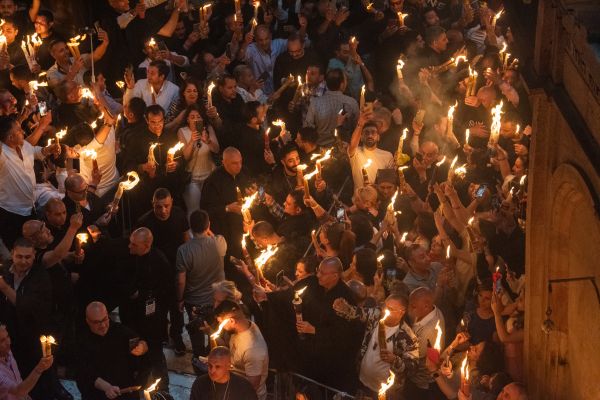
On Saturday, after the lamp was lit the Greek Orthodox patriarch emerged from the tomb and lit bundles of 33 candles (a number representing the age of Christ at the time of his crucifixion and resurrection). Meanwhile, pilgrims lit their candles also from the small round windows on the sides of the edicule, creating a dramatic scene outside the tomb. It is said that the fire does not burn anything (or anyone) for the first 33 minutes after being lit.
For Orthodox believers, the lighting of the fire is a genuine miraculous event, although voices within the Orthodox world itself have repeatedly questioned the authenticity of the miracle, attributing the spontaneous lighting of the lamp to tricks or chemical methods.
In solidarity with the Palestinian people in Gaza and the victims of the war, the Orthodox Christians have chosen a more subdued celebration this year. To that end, the Holy Fire was not passed hand to hand through the streets of the Old City of Jerusalem, as is the custom, but was brought directly into the homes of the faithful.
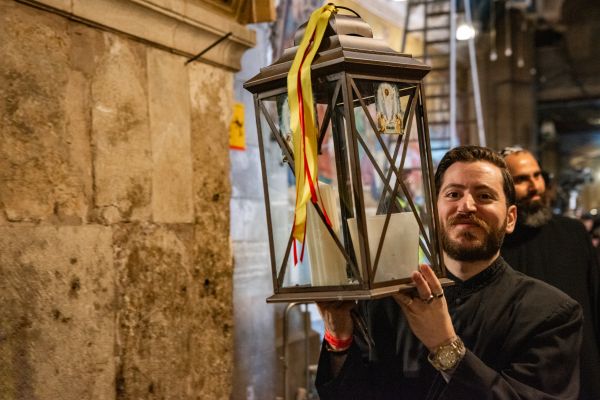
Special lanterns transport flames from the tomb to the main Orthodox churches in the Holy Land and around the world (via specially arranged flights). The arrival of the flames from Jerusalem will mark the beginning of the Easter celebrations.

Born and raised in Italy, Marinella Bandini has been a professional journalist since 2008. She works for several news agencies and online newspapers in the Catholic space. Currently based in Jerusalem, she collaborates with the Custody of the Holy Land.