
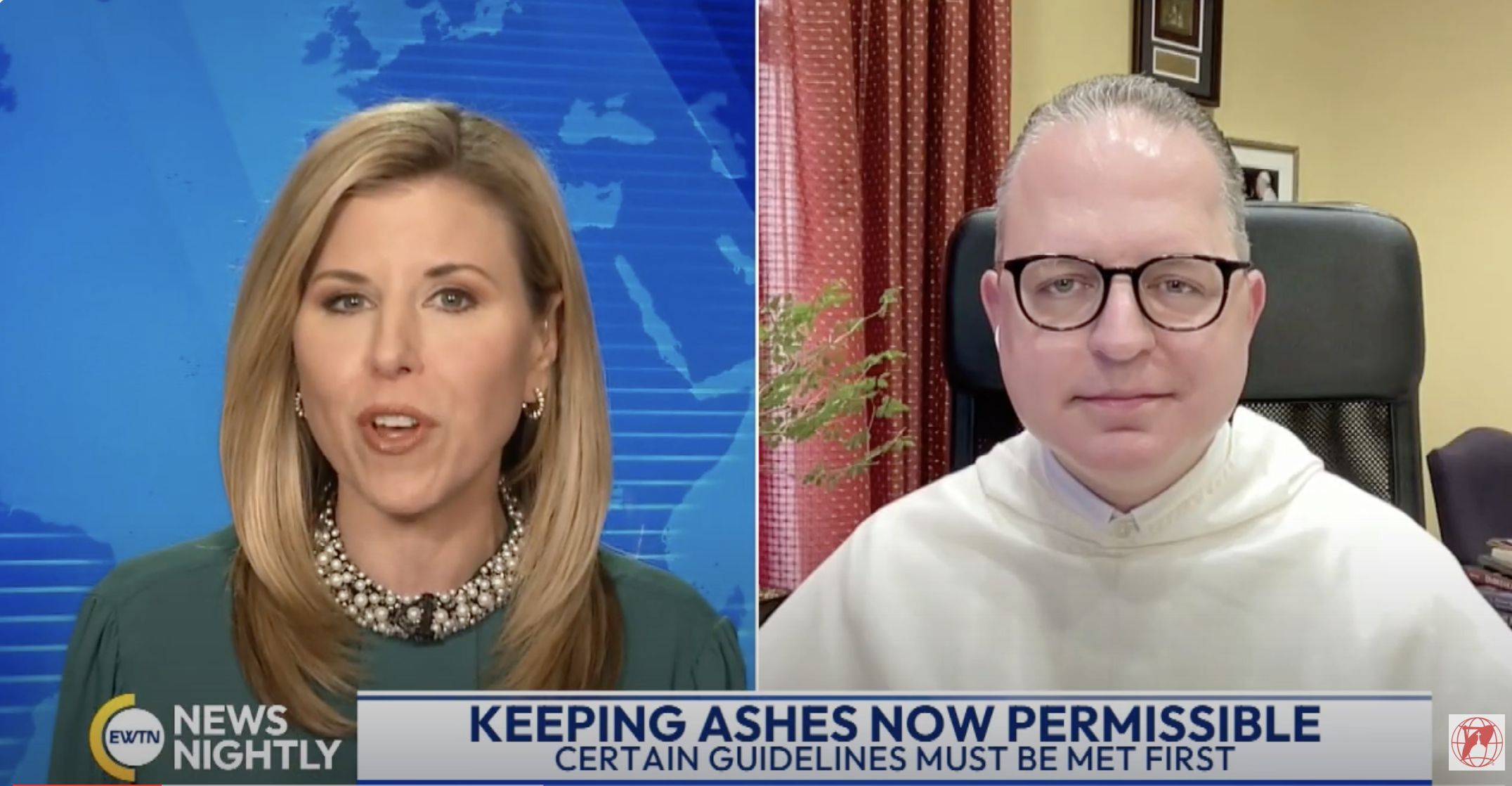
“There were pagan rituals attached to cremation, especially with the practice of scattering ashes,” he told EWTN anchorwoman Tracy Sabol. But a few decades ago the Church began to revise its guidance on the matter, he noted.
“Because cremation is inexpensive or less expensive, often, than burial of the body, and because in many places around the world there’s a shortage of cemetery space, the Church said that cremation can be allowed, and can be done, provided that the cremated remains of the person are preserved in a sacred space,” Petri explained.
Petri noted that the Church’s latest guidance sought to answer “whether or not it is possible to mingle multiple cremated remains together as long as they’re kept in a sacred space.”
“The Vatican office said this is possible as long as, of course, it’s kept in a sacred space and that the names of who is mingled there [are written],” he said.
“The concern that our remains are being mingled and that’s somehow going to deter the resurrection of the body at the end, of course, is a theological question,” he noted. “The Vatican dicastery said the resurrection is part of God’s power. Even when you have a body that’s been buried for a thousand years and practically nothing is left, God still can resurrect that body and make it glorious.”