
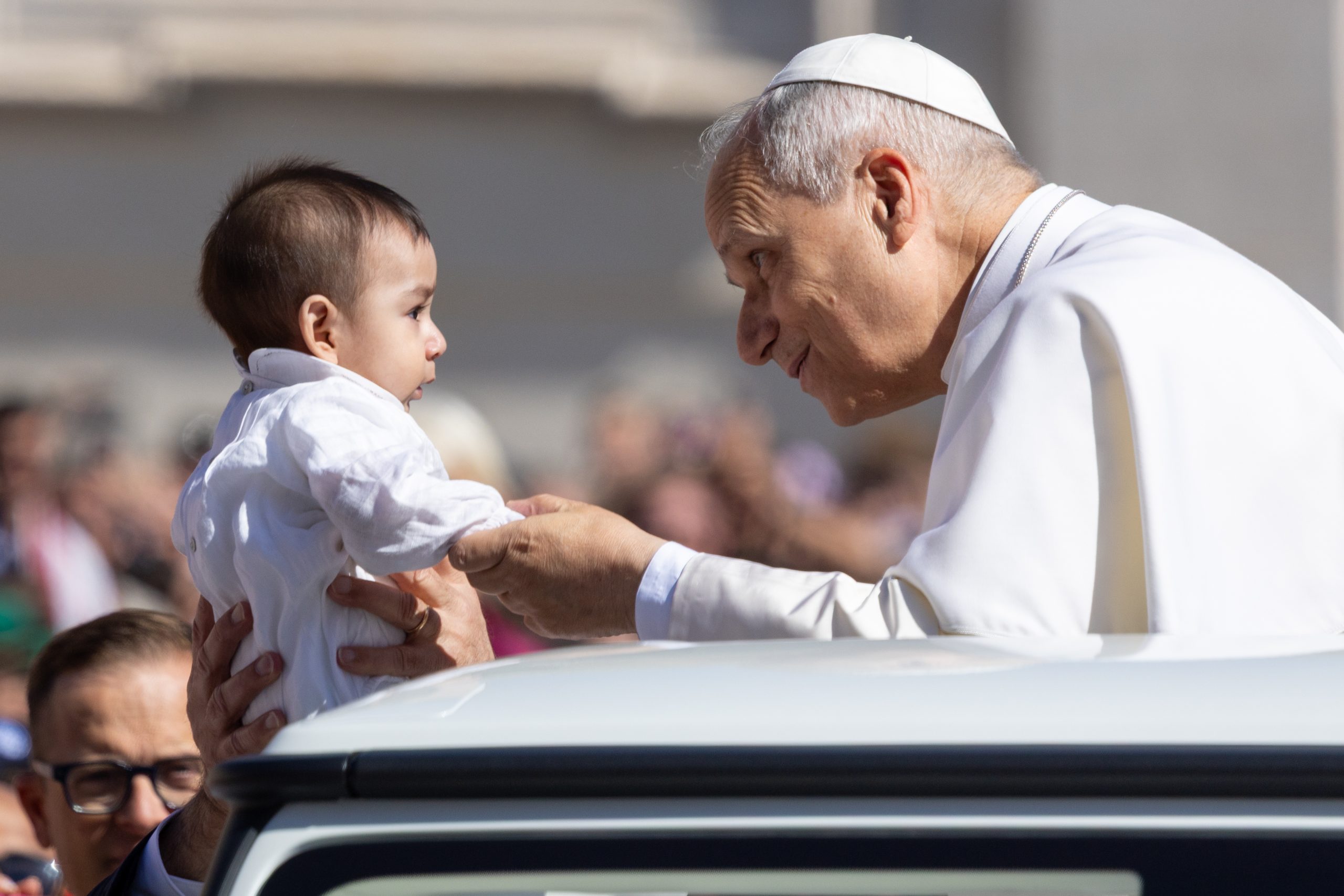
Pope Leo XIV said Wednesday that the liturgy occupies a central place in the life of the Church, since it “touches the very heart” of the mystery of Christ — because it is “at once the space, the time, and the context” in which the Church receives from him “her very life.”
The liturgy, he said at the general audience in St. Peterʼs Square, is where “the work of our redemption is accomplished,” which makes us “a chosen lineage, a royal priesthood, a holy nation, a people whom God has acquired for himself.”
On May 20, the pontiff began a new series of catechesis about the Second Vatican Councilʼs constitution on the sacred liturgy, Sacrosanctum Concilium.
The conciliar text marks a shift in emphasis in the understanding of the liturgy: Whereas the Tridentine Mass prior to Vatican II focused primarily on the sacrificial dimension, the conciliar liturgical reform placed at the forefront Christ acting in the liturgy, setting at the center the paschal mystery — his passion, death, resurrection, and glorification — which is made sacramentally present in every celebration.
Not just a reform of the rites
The pope explained that the council fathers at Vatican II sought not only an external reform of the rites but also a broader spiritual deepening: “In drafting this constitution, the council fathers sought not only to undertake a reform of the rites but to lead the Church to contemplate and deepen that living bond which constitutes and unites her: the mystery of Christ.”
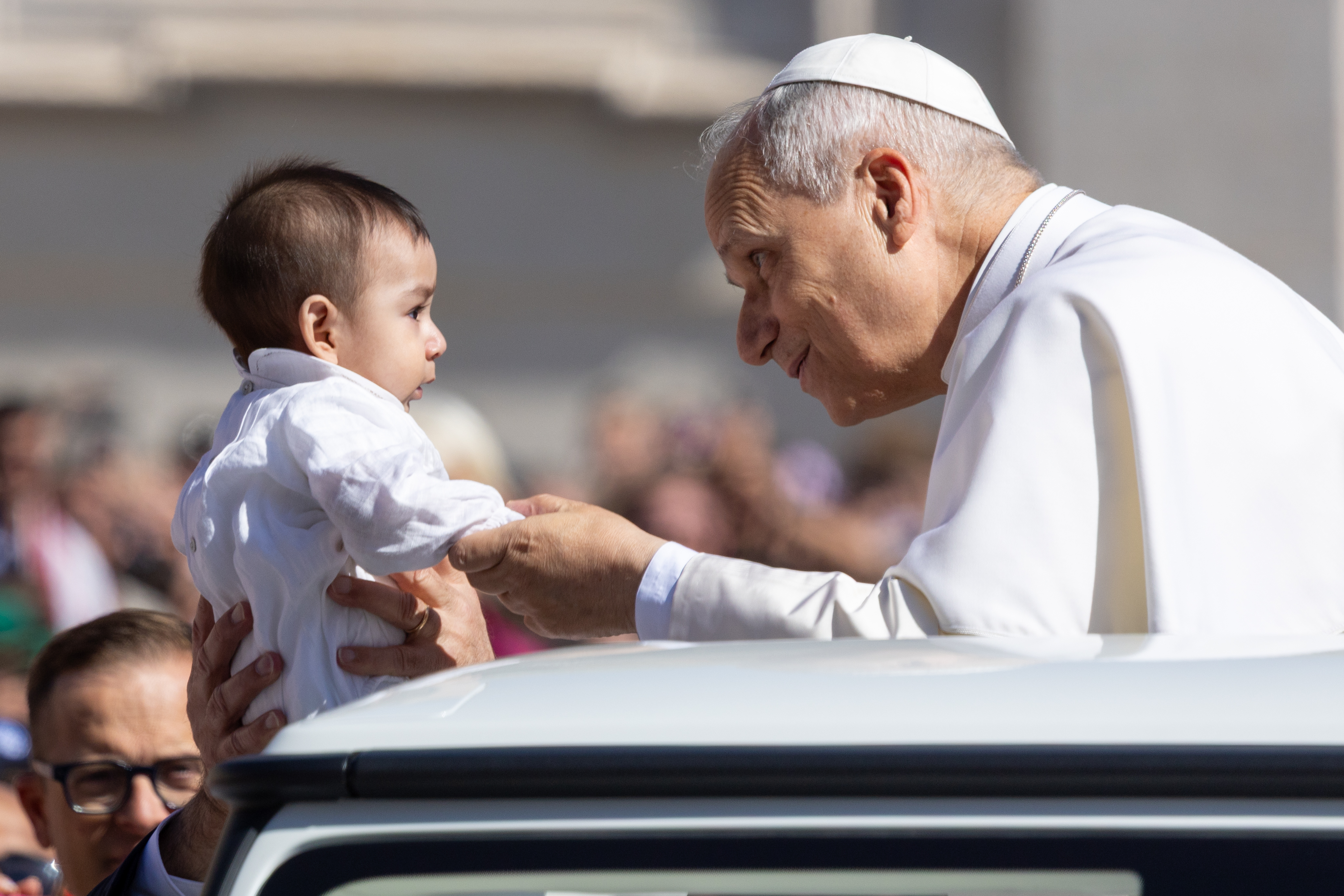
The pontiff thus affirmed that “every time we take part in the assembly gathered ‘in his name’ we are immersed in this mystery,” stressing that Christ continues to act in the Church as “he who is present in the proclaimed word, in the sacraments, in the ministers who celebrate, in the gathered community and, in the highest degree, in the Eucharist.”
Referring to St. Augustine, Leo recalled that in celebrating the Eucharist the Church “receives the body of the Lord and becomes what she receives,” thus becoming the body of Christ and “a dwelling place of God in the Spirit.”
The pope also insisted that the liturgy is not an isolated act but “the summit toward which the activity of the Church is directed … the font from which all her power flows.”
Leo highlighted the missionary and universal dimension of the liturgy, which “represents a sign of the unity of the entire human race in Christ,” and, quoting pope Francis, recalled that “the world still does not know it, but everyone is invited to the supper of the wedding of the Lamb.”
The pontiff concluded by inviting the faithful to allow themselves to be transformed by the liturgical action. “Let us allow ourselves to be shaped inwardly by the rites, symbols, gestures, and above all the living presence of Christ in the liturgy,” he said.
His Holiness Aram I, Catholicos of the Holy See of Cilicia, the head of the Armenian Church and one of the most important figures in Eastern Christianity, was also present during the general audience. The pope said the fraternal visit by the Armenian Orthodox leader “represents an important opportunity to strengthen the bonds of unity that already exist between us, as we move toward full communion between our churches.”
This story was first published by ACI Prensa, the Spanish-language sister service of EWTN News. It has been translated and adapted by EWTN News English.