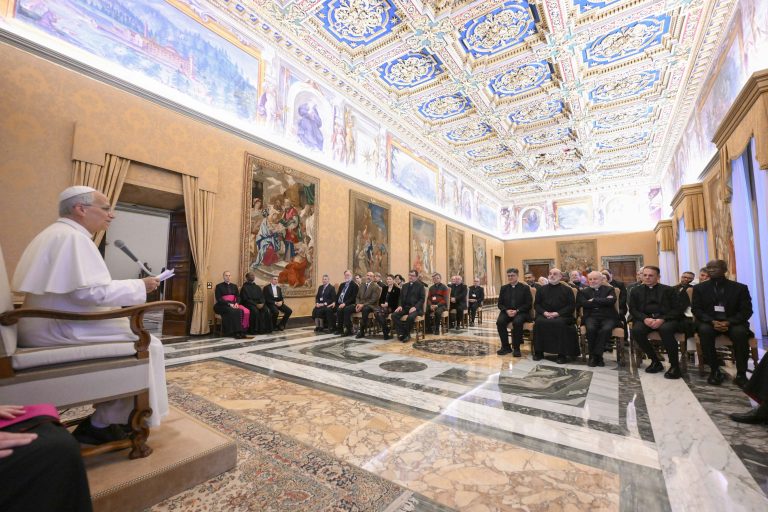

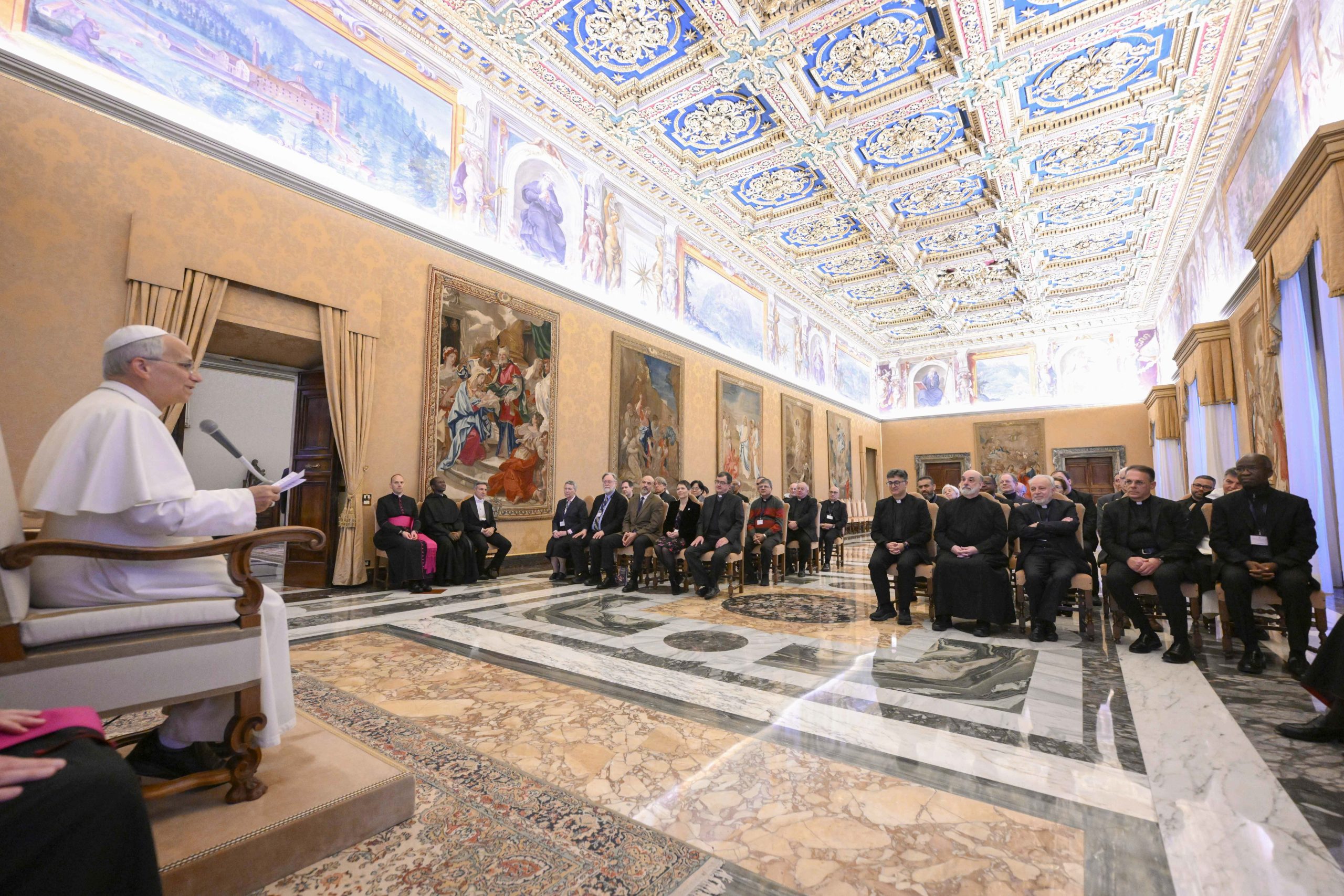
Welcoming new members to the International Theological Commission on Wednesday, Pope Leo XIV emphasized the connection between apostolic tradition and continuing inculturation.
The pontiff held a private audience with commission members on Nov. 25, their first meeting with him since he named 24 new members in October. These appointees serve on an advisory body to the Dicastery for the Doctrine of the Faith; the new group consists of 16 priests, one religious sister, and seven laypeople.
Members of the commission, who can number no more than 30, serve a five-year term that the pope may choose to renew.
Apostolic tradition passed on through inculturation
In his address, Leo explained that the commission’s service to the Church consists of both defending its tradition and discerning how it is transmitted in modern culture.
“[Apostolic tradition] is a reality that points to the heart of the Churchʼs identity and mission,” Leo said. “Proclaiming and bearing witness in every time and place to the living presence of the Lord Jesus, transmitting it faithfully and integrally from generation to generation: This is the indispensable good for the Church.”
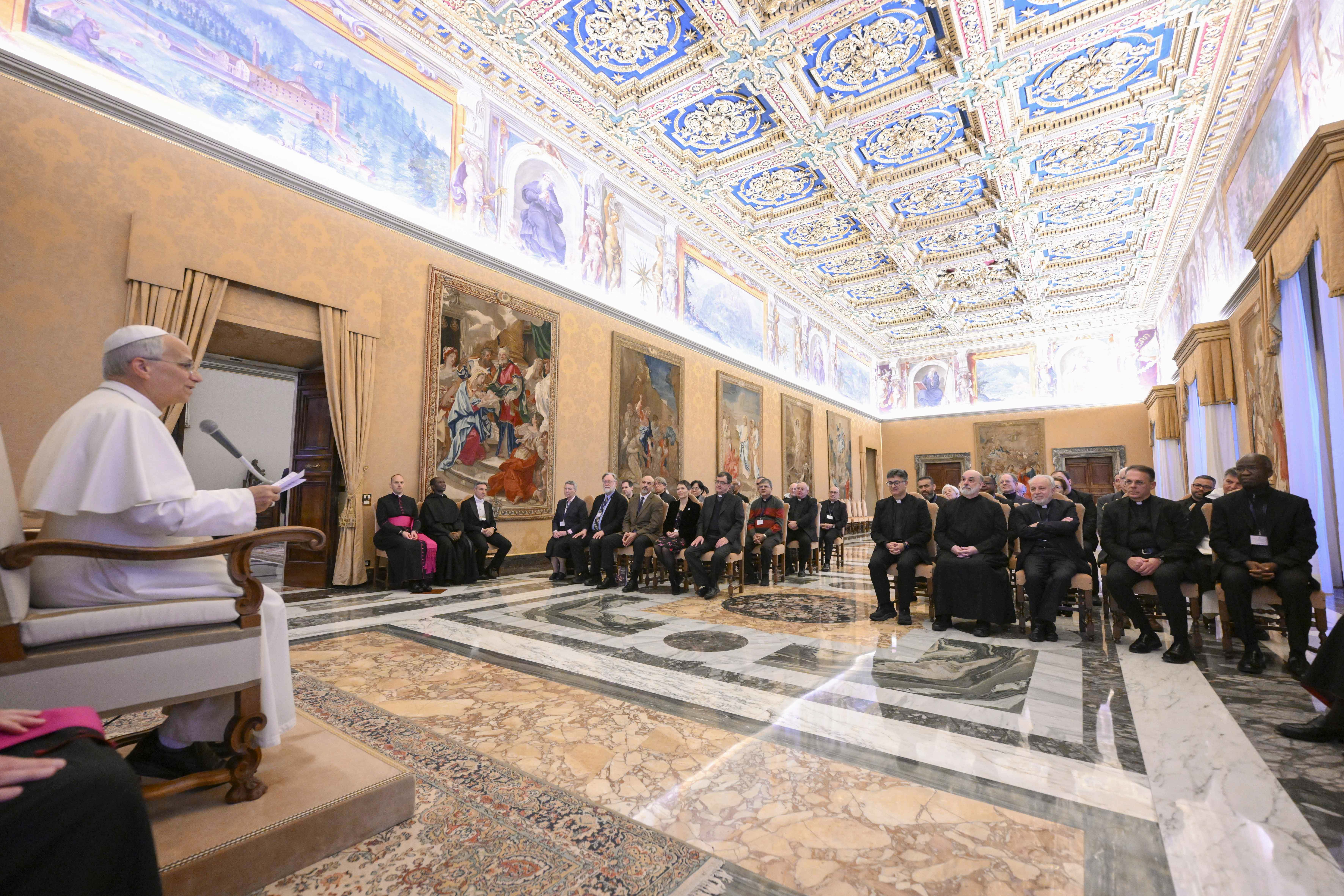
However, the pope added, “the inculturation of faith is indeed an indispensable dimension of its coherent witness from generation to generation.”
Leo’s words reflect his recent request to the group, as reported by EWTN News, to clarify the meaning of Church tradition and the cultural forms through which it is transmitted.
Citing Dei Verbum, the Second Vatican Council’s Dogmatic Constitution on Divine Revelation, the pope explained that the development of doctrine does not imply a rupture with Church tradition but rather a deeper understanding of it in the modern era.
“One may think in particular of issues such as war, slavery, and the death penalty,” the pope said regarding the development of Church doctrine.
“Because holy tradition is always living, our knowledge of this reality is subject to coherent and constant deepening. While, on the one hand, there must be a rejection of a kind of ‘emancipation that authorizes a detachment, almost a pseudo-liberation, from what … the Church has authoritatively taught and professed,’ on the other hand it must be acknowledged that there is growth in the ‘understanding of both the realities and the words handed down’ (Dei Verbum, 8).”
“This does not imply a rupture in the teaching of the magisterium, but rather a development of the principles that animate it,” Leo added.
Increased lay representation
The new makeup of the International Theological Commission is notable for the increased presence of laypeople for the 2026–2031 cycle.
The number of women on the commission has increased from five to eight, including five laywomen, raising the total number of laypeople to eight — double that of the previous term.
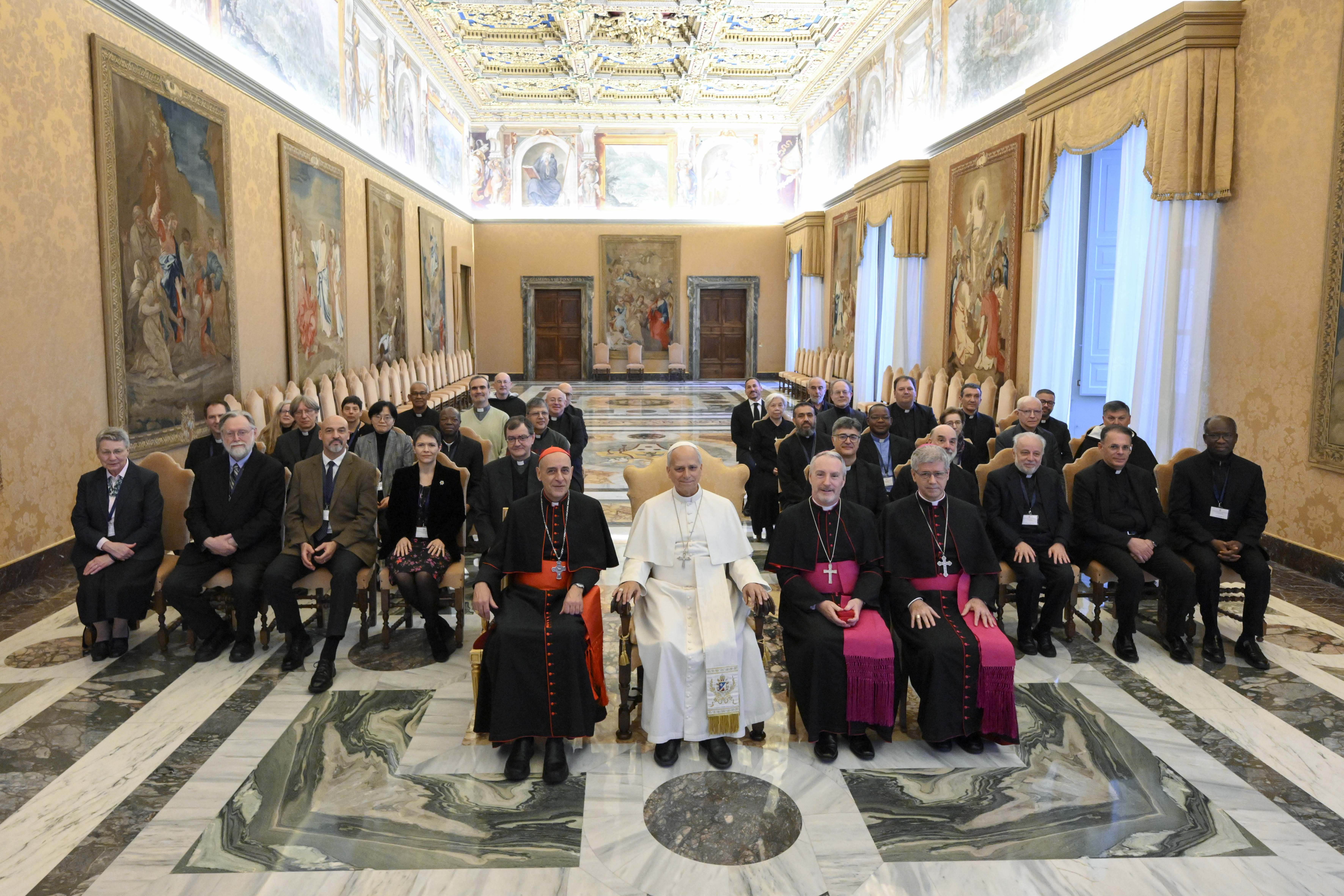
Among the new appointees are also two U.S. theologians who have studied or taught at the University of Notre Dame and Boston College: Father Khaled Anatolios and Professor Boyd Coolman.
Founded by St. Paul VI in 1969, the commission assists the Dicastery for the Doctrine of the Faith in studying theological questions and publishing official advisory documents.
The group meets in Rome once a year for a week to discuss its work and address ongoing discussions and global theological needs.