
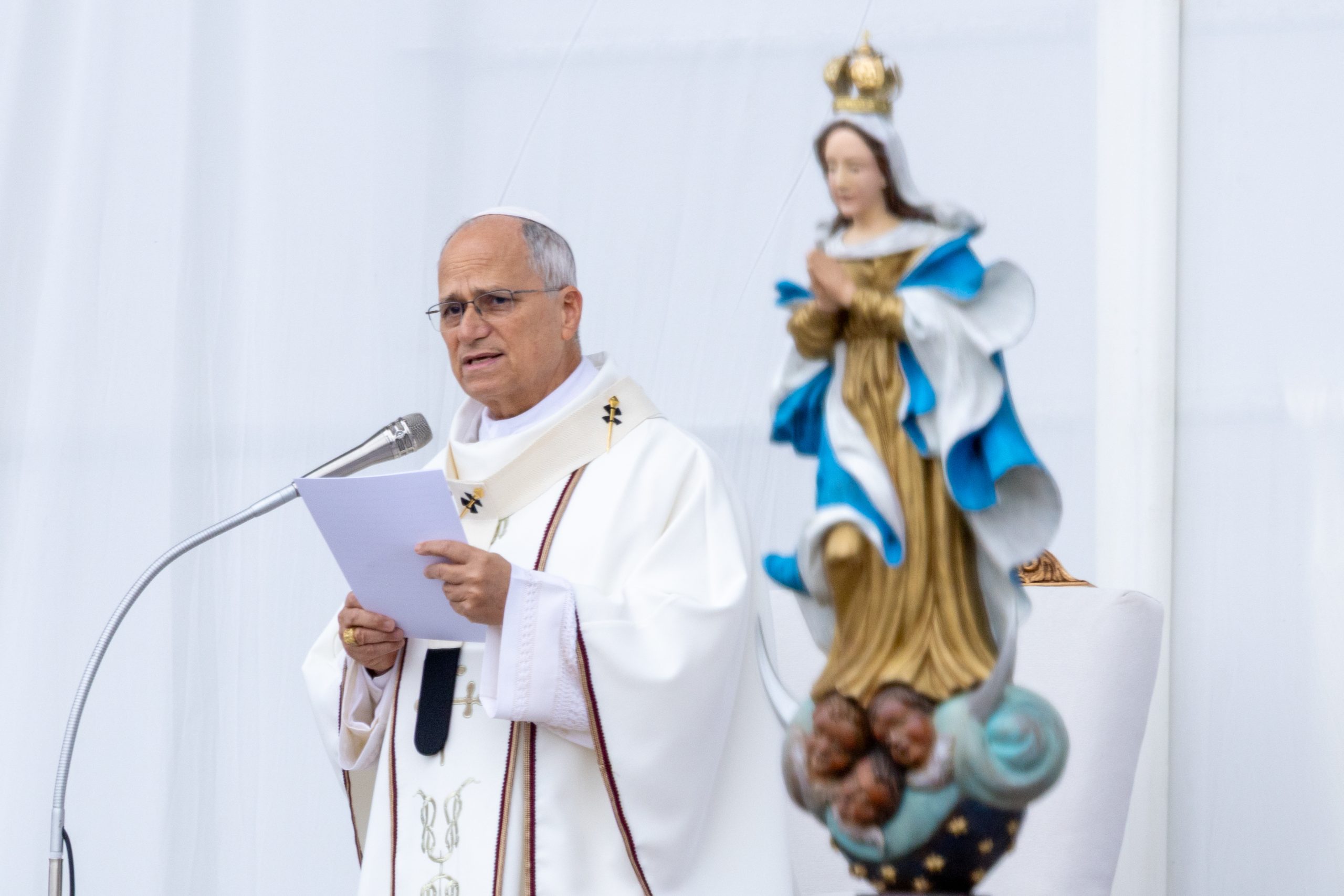
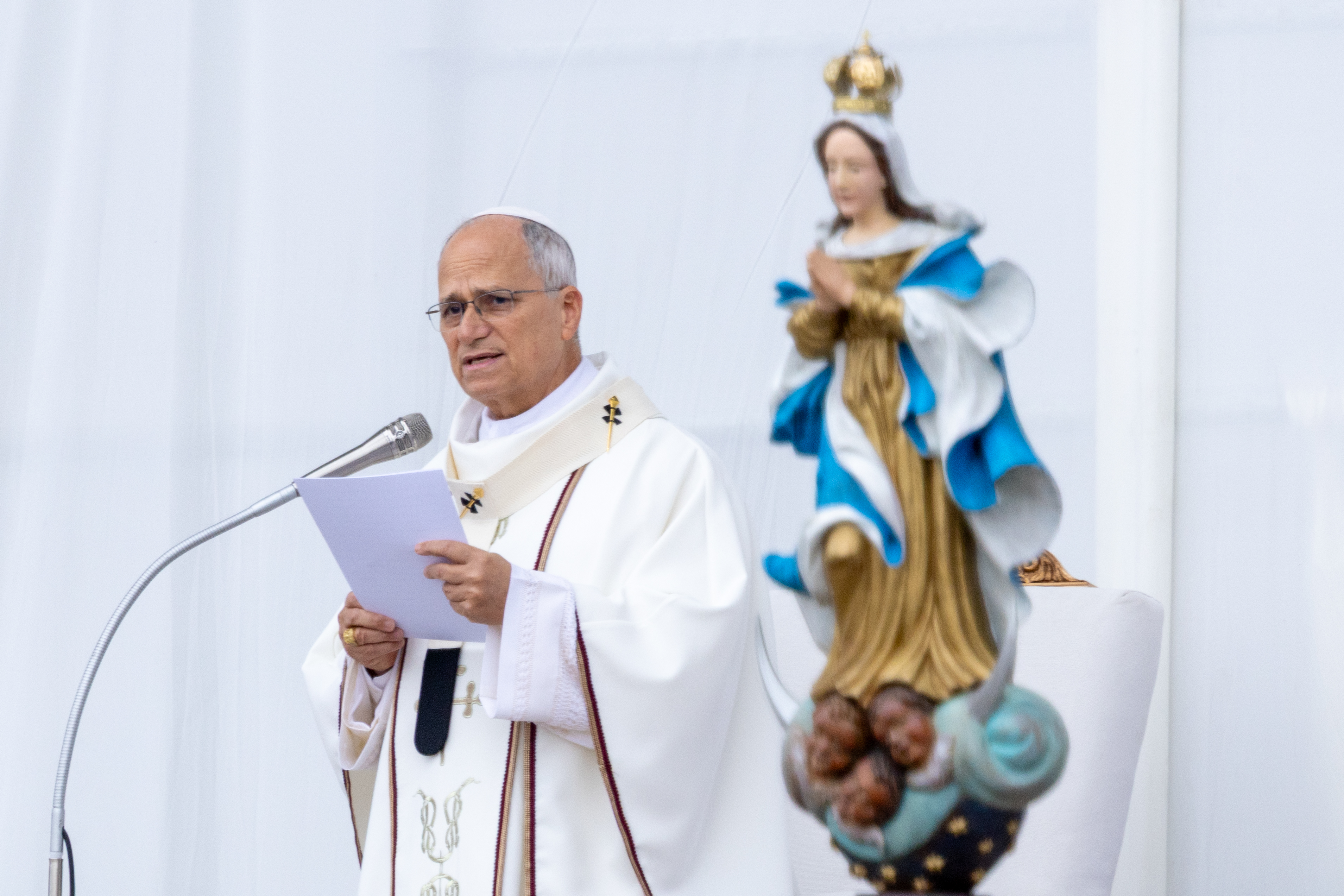
PAYSANDÚ, Uruguay — Pope Leo XIV on Saturday celebrated his first Mass in the Americas since his election as pope, choosing to do so not in a national capital but in a provincial border city, where he lauded and encouraged the simple faith of ordinary people.
In his first full day on a tour of three South American countries, Leo also honored Uruguay’s first bishop, Bl. Jacinto Vera, whom he remembered as the “gaucho bishop” who evangelized the region in the 19th century.
The pope’s homily was a reminder to Uruguay, one of Latin America’s most secular countries, where more than half the population is unaffiliated with organized religion, that the Catholic Church has deep roots in its history.
“From the earliest days of evangelization on this continent, [people of faith] arrived in the name of the Lord to proclaim the great joy they themselves had experienced in encountering Christ,” Leo said. “Like the angels who appeared to the shepherds, they joyfully shared the Good News of the Gospel, expressing their faith through works of charity and mercy.”
Paysandú is a city of about 80,000 people, just across the Uruguay River from Argentina, and more than 200 miles from Uruguay’s capital, Montevideo.
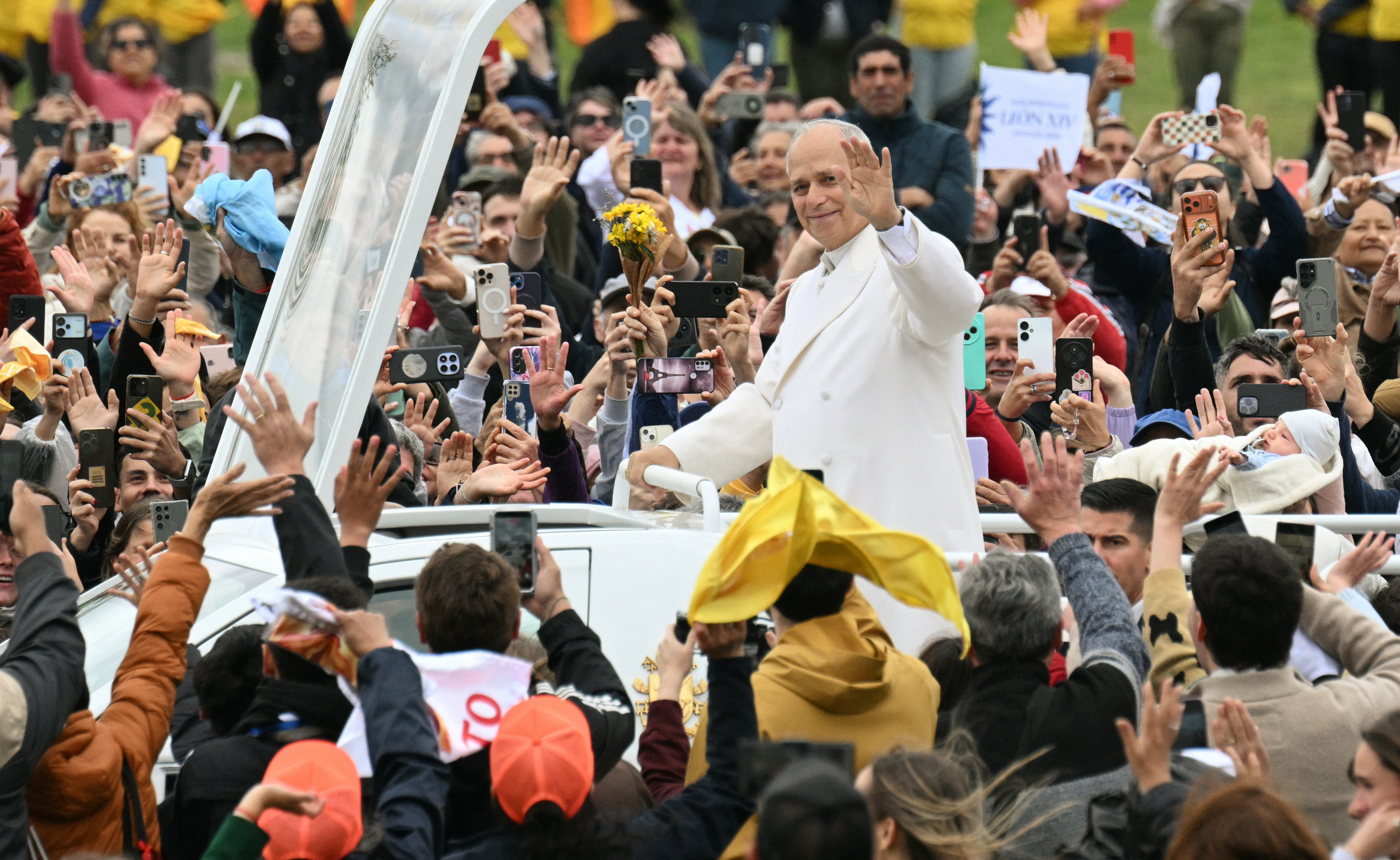
Leo celebrated Mass under cloudy skies in a city park whose grounds were muddy after recent rains. Temperatures were in the low 60s Fahrenheit but felt 10 degree colder on account of the wind.
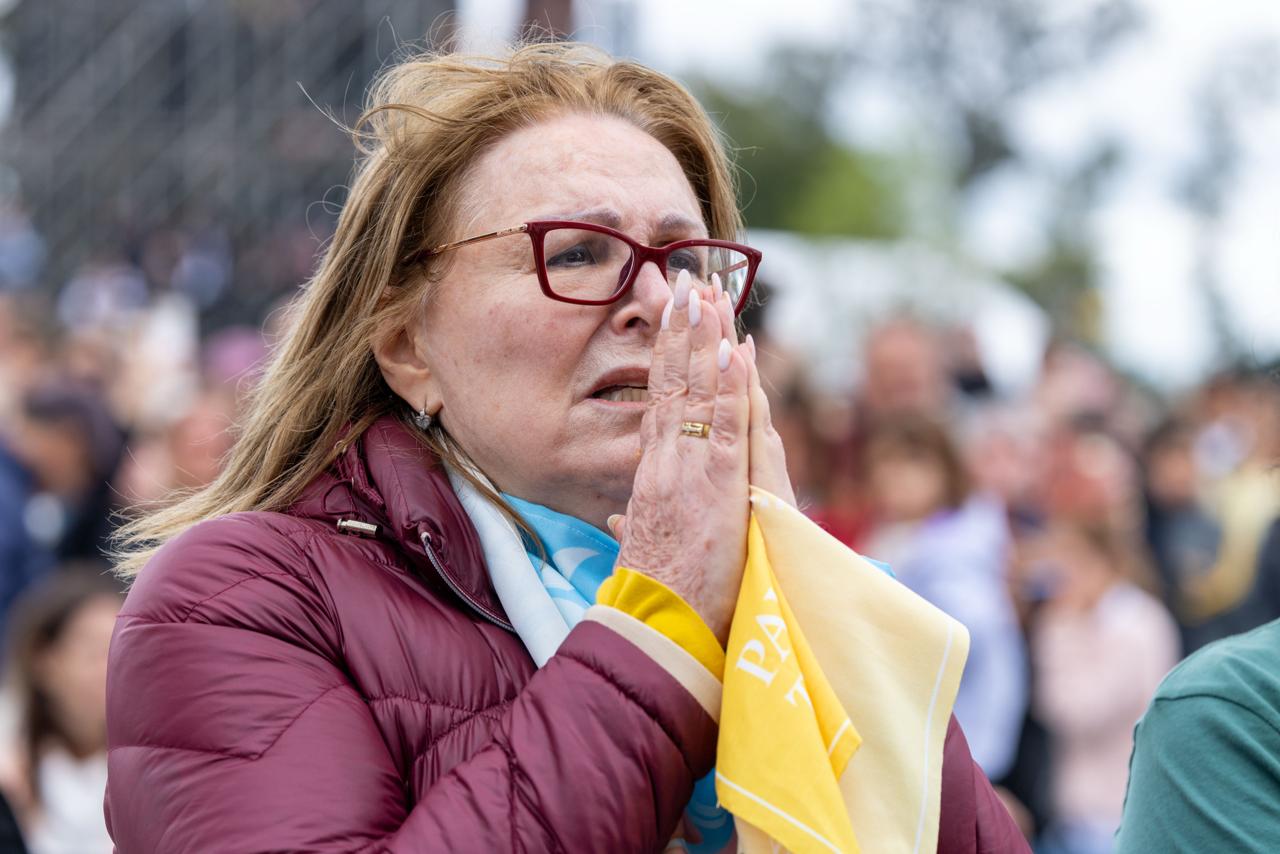
Still, over 40,000 turned out for the Mass and the enthusiasm level was high, with members of the congregation chanting out their affection for Leo prior to his arrival.
“It’s an enormous joy, an enormous joy. We waited a long time for Francis, and now Pope Leo has arrived, so we’re happy,” said María del Rosario Esquiros, a retiree from Paysandú who said she had trained for several days to serve as an extraordinary minister of Communion at the Mass.
The last pope to visit Uruguay was St. John Paul II, who spent three days there in 1988.
Leo organized his homily on Saturday around three symbols: bridges, palm groves and mate, a traditional herbal infusion popular in the region.
Bridges bring people together, Leo said, repeating a metaphor beloved of his immediate predecessor Pope Francis. He said that palm trees are symbols of rootedness in Christ, and the fact that they grow not separately but in groves a symbol of the Church.
As for mate, often drunk in company, Leo called it “a sign of familiarity, friendship and encounter. It teaches us to share and to be together, strengthening the bonds that unite us as brothers and sisters. It is a sign of welcome, integration and shared values.”
After three days in Uruguay, the pope will spend three days in Argentina and five days in his adopted Peru, where he served for about 20 years as a missionary and bishop.