

Another man communicates by pointing to letters on a sheet of paper. The wry, intelligent look on his face seems to invite people to engage in conversation with him. We later learn that he has attempted suicide twice.
The inspiration for the movie came from its writer, veteran journalist Sixtine Léon-Dufour, who first went to Lourdes as a volunteer, very reluctantly, on the occasion of her mother-in-law’s 70th birthday. Once there, she was profoundly moved by the work, bathing, dressing, feeding, and talking to the pilgrims, and now returns with her family every year.
When she is volunteering at Lourdes, she told CNA that she is struck by the faith of the pilgrims, who, she said, come for consolation more than for a cure.
“What they all say is that when you go to the grotto and you spend some time praying — or not — at the feet of this statue of the Virgin Mary, you find peace, a real peace,” she said.
While Léon-Dufour is Catholic, the film’s directors, Thierry Demaizière and Alban Teurlai, are non-believers, she said.
In the months they spent interviewing people to feature in the movie, she said, the directors would always ask the same question: “You’re very Catholic, you pray a lot. Tell me, you are absolutely looking for a miracle, right?”
“And each time all the people you saw in the documentary, they said, ‘No, no!”
“No matter how hard I tried to explain that people come to Lourdes not especially looking for a miracle they would not understand that it was much more about faith and being together to find some comfort,” she said.
And despite the directors’ initial confusion and purported lack of faith, they managed to capture traces of the divine in the interactions between the sick and the volunteers who assist them. The word “miracle,” comes from the Latin miraculum or “thing of wonder,’ which perfectly describes these encounters.
The film shows the sick and disabled pilgrims light up when they are with others who treat them with love and respect. Volunteer nurses are seen engaging with their charges, talking to them, and drawing them out. For some pilgrims, it is clear that just being touched or held as they are bathed and dressed delights them.
For other sick pilgrims, it is the conversation that brings them joy. A sad-looking woman in her nineties appears completely transformed after talking with a young volunteer who engages with her as she would a friend. At first quiet and guarded, the encounter leaves the woman smiling, telling stories, and even singing.
(Story continues below)
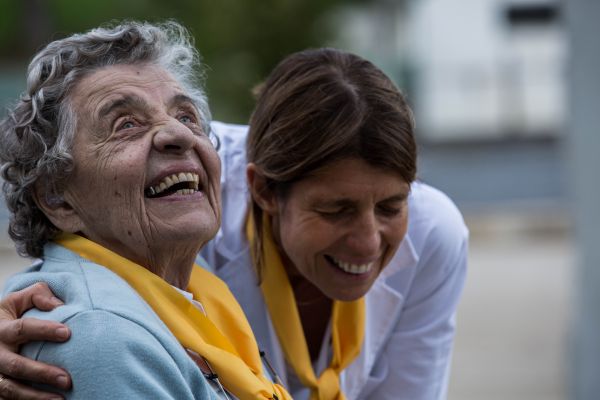
The young faith-filled boy who is at Lourdes to pray for his sick brother seems to know what these pilgrims need. He makes a habit of reaching out to hold the hands of those who seem barricaded in their wheelchairs, eliciting shy smiles on their faces.
When a disabled woman begins to thrash and cry and it’s explained to the group of volunteers with her that she is sad to be leaving Lourdes, the young women soon have tears rolling down their cheeks.
Léon-Dufour told CNA that she thinks the sick and disabled find Lourdes a respite from what can be a cruel world.
“To be able to be in that place without any judgment from society because you are surrounded by disabled people, sick people. The poor, ‘the invisibles’ are on the front stage, which doesn’t happen in our real lives. Here in Lourdes, you don’t have any judgment. So I think that the first cure you can get is that you don’t have ‘funny eyes’ on you.”
“And oh, all the people you will find on your way! Either they’re as sick as you or as poor as you. Either. They’re here just to help you,” she said.