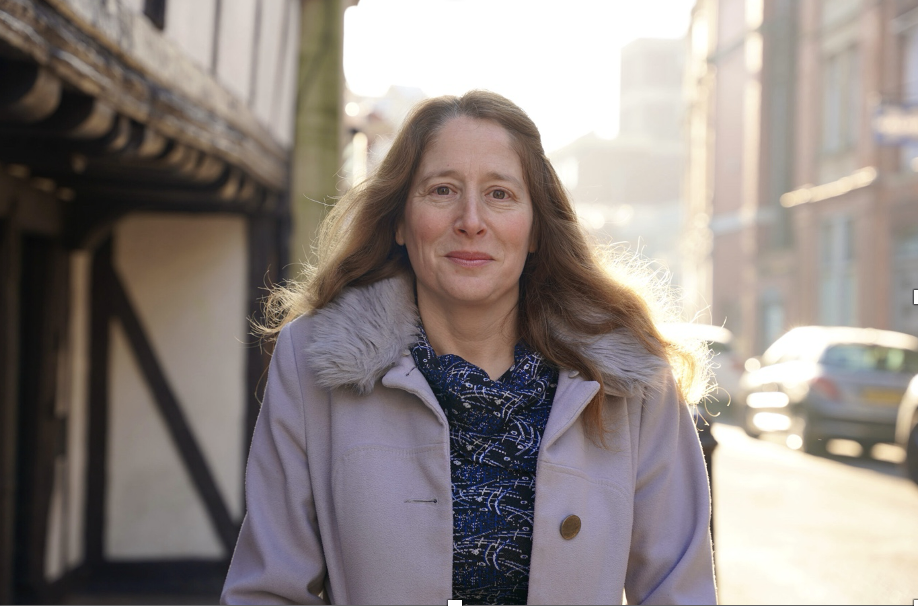

A Christian pro-life advocate will face trial on charges of having silently prayed near an abortion clinic, legal advocates announced on Nov. 25.
“My criminal prosecution for alleged ‘thoughtcrime’ is clear evidence of the UK’s censorship crisis,” Isabel Vaughan-Spruce said in a press release from ADF International, the global wing of the religious liberty law firm Alliance Defending Freedom.
Vaughan-Spruce has faced legal consequences for several years related to her prayer advocacy. She was first arrested in Birmingham, England, in late 2022 after standing still and praying silently outside an abortion facility there.
She was acquitted of those charges but arrested again in 2023. She subsequently received a police apology and a payment of 13,000 pounds from the West Midlands Police.
She was arrested again in December 2025 by the same police department for having prayed in the “buffer zone” near an abortion clinic. The charges were brought under the national Public Order Act 2023. In January, she pleaded not guilty to those charges.
ADF International said in its Nov. 25 release that it would be representing Vaughan-Spruce in the dispute. She said she hoped the court “will uphold my fundamental human rights to freedom of thought and religion, and rule in my favor following my trial in January.”
Jeremiah Igunnubole, an attorney with the religious liberty law firm, accused the United Kingdom of enforcing a “two-tier system” of legal rules.
“Isabel’s case is yet another example that shows how Christians and pro-lifers are being targeted in a discriminatory manner and facing censorship by the UK authorities. Isabel’s prosecution clearly illustrates the reality of this two-tier system,” he said.
The trial is scheduled to take place Jan. 25–29, 2027.
If found guilty, Vaughan-Spruce would not be the first person convicted of praying in a forbidden area near an abortion facility. British army veteran Adam Smith-Connor was found guilty of a similar charge in October 2024.
Prior to the passage of the national law, buffer zones had been enforced in just five areas in the United Kingdom. Those who are found guilty of violating the law face up to six months in prison. There is no cap on the fines that can be imposed on those found guilty.