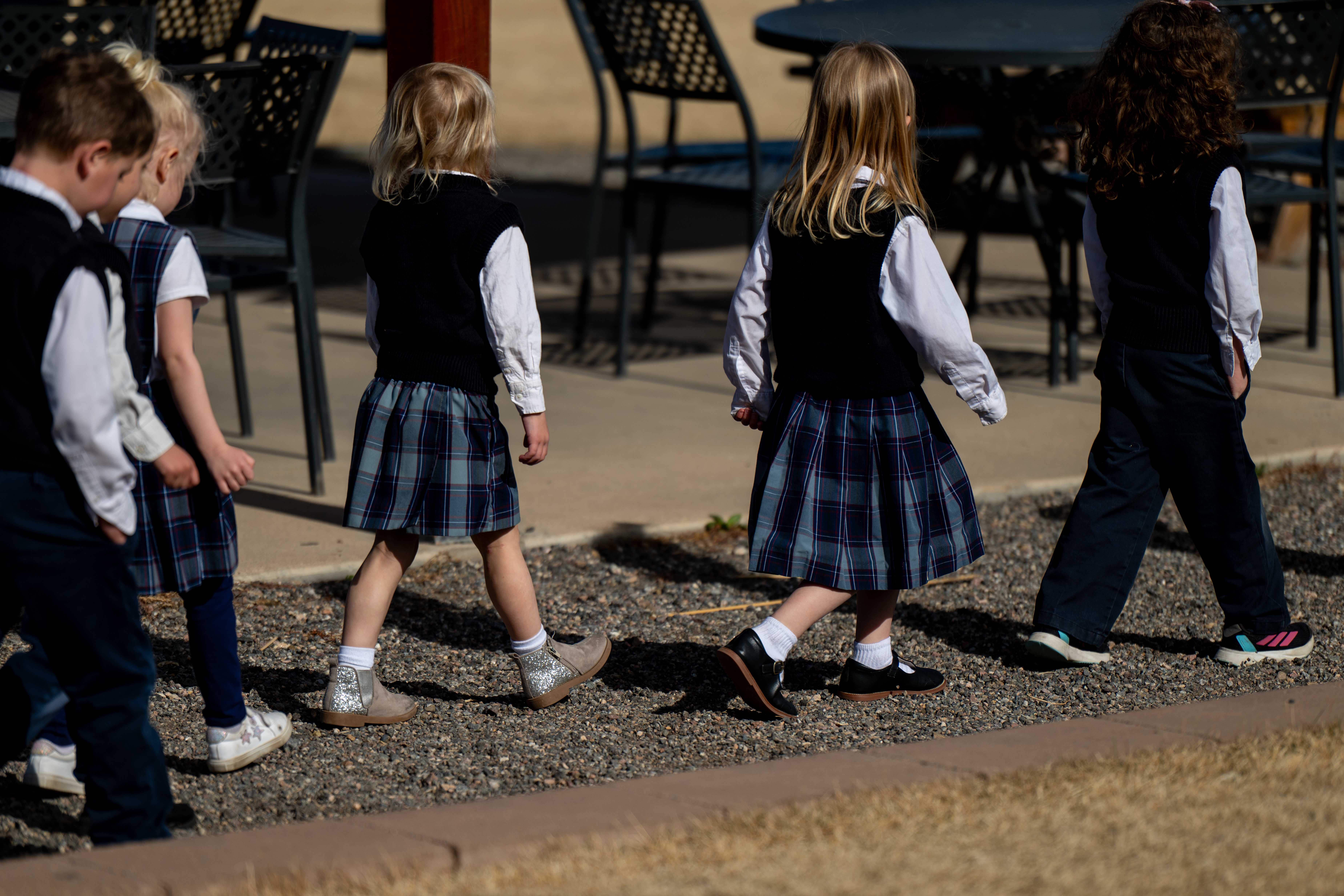

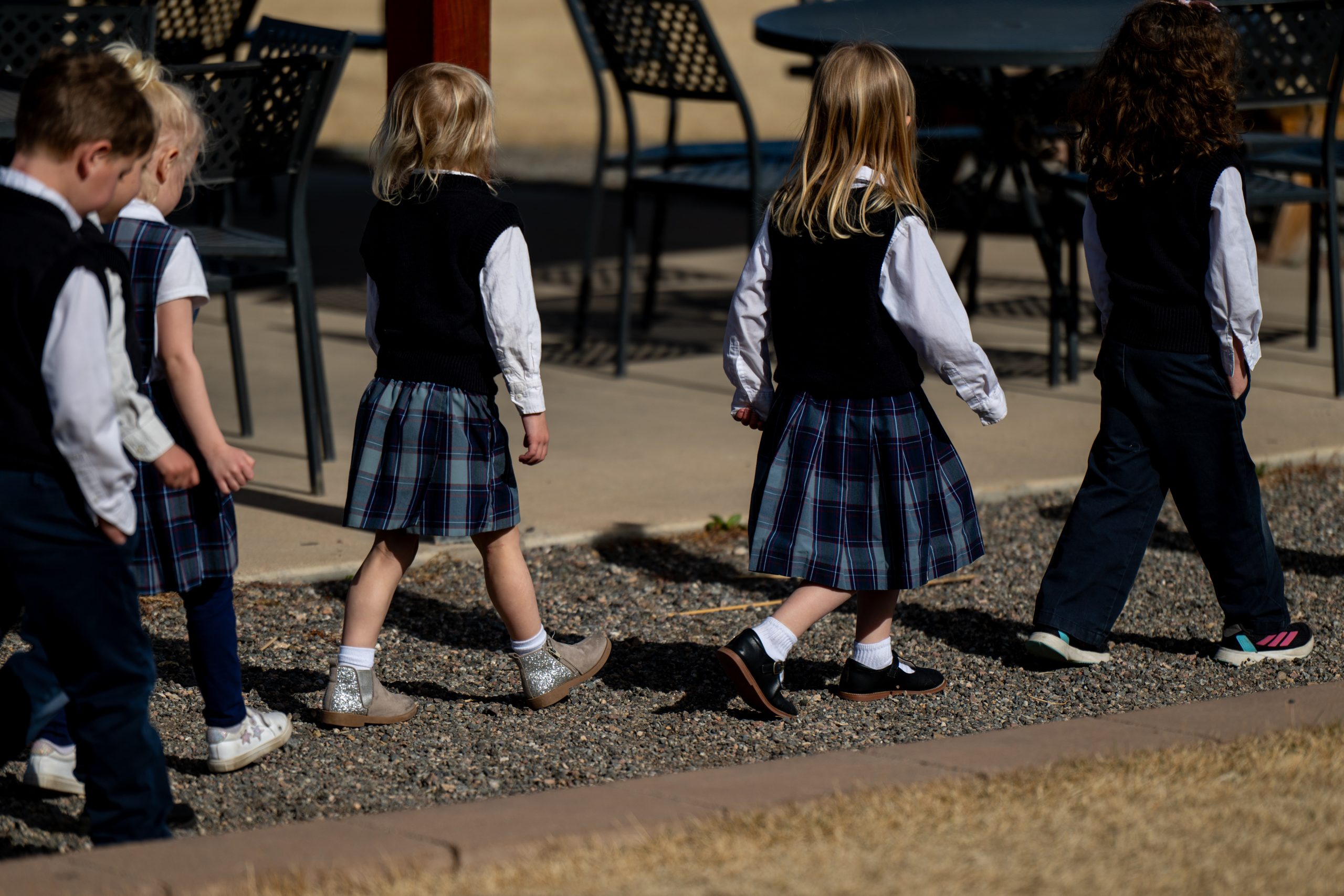
Thomas More Society attorneys released guidelines and recommendations to assist school districts that are working “to uphold parental rights.”
The guidelines follow recent school choice cases by the U.S. Supreme Court, Mahmoud v. Taylor and Mirabelli v. Bonta, which “clarify the scope of parental rights in American schools,” according to the Catholic law firm.
In the 2025 Mahmoud decision, the Supreme Court struck down a public school board’s policy refusing to provide parental notice and an opt-out when LGBT books were being taught.
In the 2026 Mirabelli case, the court ruled that plaintiffs were likely to succeed on claims that California’s gender‑transition secrecy policies violated their constitutional rights, allowing an injunction to take effect for those parents while the case continues.
There “are simple steps any school district can take to remain or become compliant with these new Supreme Court cases” and using them “will also help minimize the risk of costly litigation,” the firm reported.
The guidelines urge districts to “immediately and expressly adopt a parental notice and opt-out policy,” which provides prominent and regular notice that will reach all parents.
The firm said the required notice should inform parents of their constitutional rights to opt their children out of any instruction, electronic applications, materials, or activities that “burden their families’ religious or other closely held beliefs.”
The districts should also assign a district employee to be in charge of implementing opt-outs and require all school employees to proactively notify parents of any information that affects or reflects their children’s health, including mental health, under the guidelines.
The firm also suggested that districts “immediately and expressly repeal or revoke” any policies that require or permit school employees “to conceal or forgo" sharing information about childrenʼs health with their parents.
They should also repeal any policies that “facilitate a child’s social gender transition,” including those in “respect to bathroom and locker room access“ and ”sex-segregated extracurricular activities …. without the consent of the child’s parent,” the firm said.
Christendom College launches free course on how to restore Catholic education
Christendom College launched a free online course on how “to restore the great tradition of Catholic education."
The course, “Education at the Crossroads,” explores what the college calls “the crisis in modern education” throughout its seven lessons.
Students will “trace the progressive revolution — from pragmatism to modern ideological shifts — that reshaped our schools,” the college reported. “By exploring the prophetic warnings of the Church and the wisdom of great traditional thinkers, you will rediscover a spiritual vision of learning as a pilgrimage toward God.”
The course is taught by Christendom College professor Jon Kirwan, who serves as director of the Institute for Advanced Studies, director of the Center for Educational Philosophy and Leadership, and an associate professor of theology.
The course will discuss how “we can rebuild education in America for our children and generations to come,” Kirwan said in a video announcing the course.
Students will “uncover why classrooms stopped forming souls and started managing outcomes,” he said. They will “discover the Catholic answer — education ordered to goodness, truth, and beauty, with teaching understood as a vocation rather than a technique.”
The first two lessons of Kirwan’s course are currently available, and the remaining five will be released weekly through July 2.
St. Charles Borromeo Seminary launches master’s healthcare program integrating bioethics
St. Charles Borromeo Seminary’s School of Theological Studies (STS) launched a master of arts in Catholic healthcare ministry in collaboration with the National Catholic Bioethics Center (NCBC).
The program is intended to integrate both bioethics and pastoral care, offering “the most up-to-date bioethics information conveyed to its students,” STS reported on its website.
The fully online degree also meets graduate education requirements for board certification as a Catholic chaplain through the National Association of Catholic Chaplains. The program hopes to aid the “great need for Catholic healthcare professionals” and to create “well-formed” chaplains.
Students will complete the 36-credit program with 27 credits through STS and nine through the NCBC. The coursework will focus on human, spiritual, intellectual, and pastoral formation.