
“As St. Francis said, we must receive sister death with open arms and without fear. This is what God asks of us: to perceive death as a companion that assists us on the journey toward life, preparing us for the last step toward meeting our full happiness, our eternal happiness,” he added.
“We cannot miss the opportunity to save souls,” Sánchez further emphasized.
The importance of a spiritual approach
Sánchez explained that when a patient arrives at the hospital, the staff first provides basic hygienic and medical care.
“Our first task is to serve [the patient],” he said. “We don’t talk to them about God or the future at that time. First, we assist them and notice how they open their hearts.”
“Those who can smile begin to do so, and for those who cannot communicate, we interpret their gestures, their gaze, and their smile as signs that they are feeling the love we give them,” he explained.
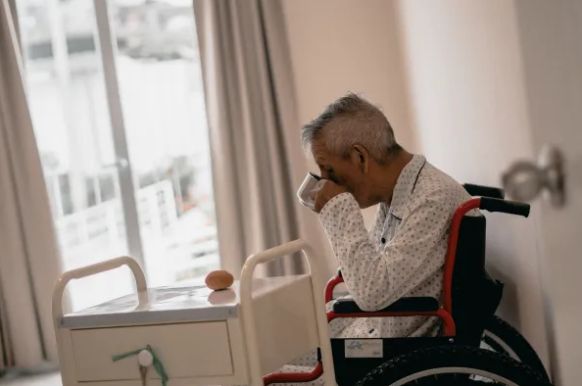
After the patient is stabilized, the volunteers sit to listen or talk, depending on the person’s ability. With those who can speak, a gradual conversation about faith is established. Some accept this process immediately, especially those who have had previous Catholic formation.
“Then comes the third part. They are asked if they are baptized. Many don’t know or don’t remember it. For those who do not have the ability to speak, we perform what the Church allows, known as conditional baptism. This guarantees the sacrament in case they are not sure if they have been baptized,” Sánchez continued.
Other sacraments are also administered. “No one is ever forced to receive them. For those who cannot make decisions for themselves, such as those who are unconscious, the sacraments are also given. It is considered that if the soul is open to receiving them, it constitutes an opportunity for salvation and eternal life,” the priest said.
(Story continues below)
Subscribe to our daily newsletter
Stories that touch the heart
Sánchez also shared some of the most difficult, moving stories of abandonment of the people who have passed through the Misky María Hospital.
He told the story of one young man who was imprisoned for having stolen a cellphone and who was released three years later from the Lurigancho prison, one of the most violent prisons in Latin America, “with all the diseases you can imagine.”
“He essentially left to die with his family. However, this family, which was very poor, told him: ‘You can’t stay here, because we have no possibility of taking care of you.’ He left and ended up living in the garbage dump of a market in the south section of Lima. A group of friends looked for him and found him. They brought him to Misky María.
“He lived four days with us, days full of love and attention,” Sánchez continued.
Sánchez shared that of his own volition the young man was baptized and received Communion, confirmation, and extreme unction. “He received all the sacraments and died in my arms four days later,” the priest said. “That was a truly dignified death, a dignified death in every respect.”