
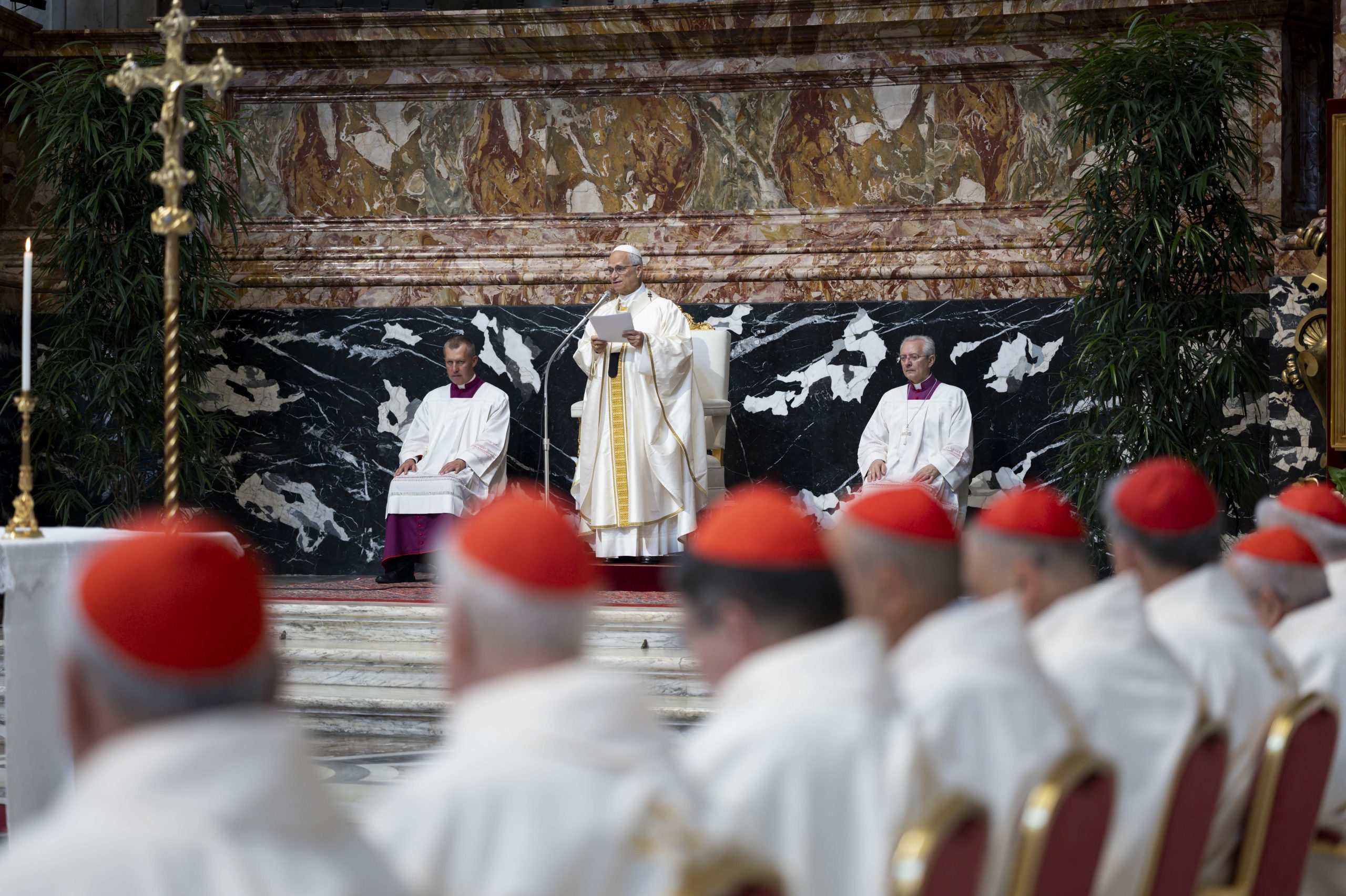
Pope Leo XIV opened his second extraordinary consistory of cardinals on June 26 by defending his decision to conduct the gathering in a synodal format, acknowledging that the approach is unusual, but insisting that the Lord is leading the Church along this path so that she can “grow in communion.”
Addressing 178 cardinals in the Paul VI Hall on the first of two days of discussions, Leo encouraged them to “engage wholeheartedly” in a synodal, working group structure, adding that he was “well aware that, for many of us, this is not the usual way of conducting a consistory.”
Yet, he said this form is now part of “the journey along which the Lord is leading us,” encouraging the cardinals to participate actively while assuring them that they can still make “personal contributions” and send him “any confidential observations or reflections.”
“Enter into this ecclesial exercise with confidence,” he said, adding that synodality is learned “by practising it” and that “we learn together to grow in communion.”
The pope’s comments came after some cardinals had expressed apprehensions about the consistory using a “synodal” round-table format for a second time — a structure they felt was “very controlled” when used at the first consistory last January, and left them with a sense that key decisions and framing had been set in advance.
Efforts made to address those concerns at this meeting include the introduction of a “free dialogue” session at the end of the meeting and a dedicated email address where cardinals can write directly to the pope to share their advice and concerns.
In his opening address, Pope Leo summarized the four themes the cardinals are to discuss. First, they were invited to contemplate the world “through the eyes of faith,” listening and walking with others amid contemporary challenges. Secondly, they were asked to reflect on a “civilization of love” in a time of conflict, oppression and division, drawing on his social encyclical Magnifica Humanitas, which explores human dignity and the common good. Thirdly, they are to explore that encyclical in greater depth by examining how the Church can build the common good through shared responsibility and adopting a “synodal style.” Finally, they are to consider how to implement the Synod on Synodality “in the face of the world’s wounds.”
Synodality, a recurring theme in both his opening address and homily at the opening Mass, “points to a way forward: listening, discerning and jointly assuming responsibility,” Leo said. It is not simply a set of procedures, he insisted, but “an attitude, an openness, a willingness to understand.” Nor does it entail a “diminishment of authority;” rather it serves to “safeguard communion” while fostering the participation of all and helping pastors exercise authority more evangelically.
The pope underlined that the consistory is not meant merely to address the internal life of the Church but to shape “our view of the world, peace, the common good, synodality,” so that the Gospel may be proclaimed with greater fidelity and credibility. The goal, he said, is to improve the Church’s witness and to become better heralds of the Gospel, which requires listening and the sharing of responsibilities.
“For this reason I wish to ask for your help,” he continued. “I need your support: strong, explicit and public. I need to feel supported by you as by brothers.” He urged the cardinals to accompany him in his service, to listen to what is emerging in local churches, to recognize signs of hope, but not ignore “struggles, misunderstandings and resistance.”
Leo said he was convinced the Lord is “teaching us a more evangelical way of living out together the responsibility he has entrusted to us,” and that the credibility of their witness and fruitfulness in mission depend on this.
The pope decided to reinstate extraordinary consistories after Pope Francis had suspended them in 2014, a generally unpopular move with many cardinals who, ahead of the conclave last year, voiced a need for the Holy Father to consult them more frequently.
In contrast to the approach of Francis, who rarely consulted his porporati except for a select few and his council of nine cardinals who advised him on Church governance, Pope Leo was emphatic on Friday about how much he valued their input, saying “sincere advice is always an act of communion” and that he needed their freedom, frankness and loyalty.
He thanked them for attending, saying their presence showed their “concern for the whole Church,” and stressing that their dialogue with him, to assist him in the service and mission of the Church, is one of the cardinals’ “most important responsibilities.”
Leo underlined that they are to be builders of “Christ’s communion” which, he said, “takes shape in a synodal Church in which everyone cooperates in the same mission, each according to their own charism and ministry.”
“We are not guardians of particular interests,” he reminded them, “but disciples and witnesses of the Kingdom of God, called to be, in Christ, the leaven of universal brotherhood,” echoing remarks he had made to the Roman Curia last December.
Opening homily
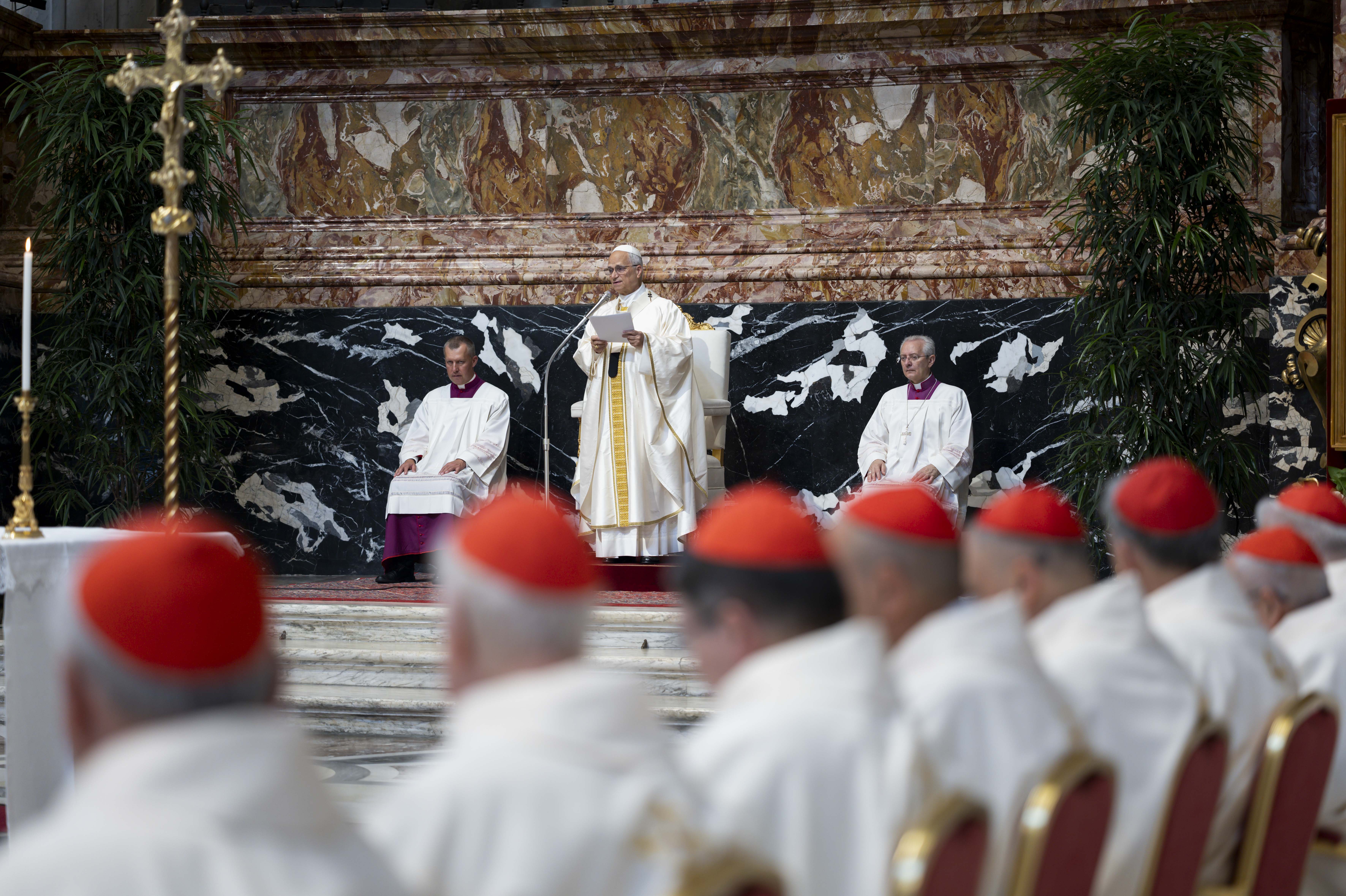
In his homily at the opening Mass in St. Peter’s Basilica on Friday morning, Pope Leo said synodality and collegiality are “forms of Christian fraternity,” which enables all the baptized to participate in the unity of the People of God.
Noting that the meeting is taking place just ahead of the Solemnity of Sts. Peter and Paul, he urged the cardinals to follow the apostles’ example of sharing the faith in freedom, to ask for the gift of peace and unity, and to “savor harmony through obedience.”
The implementation of the synod, “to which we are committed, invites everyone to move forward in unity of faith, promoting peace, and in obedience to Jesus, the living Word,” he said. As ideologies fade away, the Holy Spirit makes fraternal harmony, charity, and missionary zeal “flourish in the Church.”
“Our working together in a collegial way embodies the synodality in which all the baptized participate in the unity of the People of God,” he continued. “Synodality and collegiality are, in fact, forms of Christian fraternity, which binds us together as the baptized and as bishops.”
Appearing to recast the way in which Petrine ministry is exercised, he closed by saying that in helping him in that task, “you will find in me one who asks, not commands.”
“Moreover, the authority of primacy belongs to the one who listens and only then leads, to the one who learns and only then teaches, always following the one and only Teacher,” he said. “May the intercession of the Holy Apostles Peter and Paul accompany us on this enthralling journey.”