
VATICAN CITY — Continuing his catechetical series on the pastoral constitution Gaudium et Spes on Wednesday, Pope Leo XIV called on the faithful not to live their faith with a spirit of “opposition” or “hostility towards the world,” while underscoring that a mature and responsible synthesis between faith and culture constitutes “a necessary condition for persevering in the Christian vocation.”
“The constitution Gaudium et Spes reminds us not to live the faith in a spirit of opposition or hostility towards the world, culture, and its human expressions,” the pontiff said during the general audience in St. Peter’s Square at the Vatican on Oct. 28.
He then cited a passage from the document that exhorts believers to “live in very close union with the other men of their time and [to] strive to understand perfectly their way of thinking and judging, as expressed in their culture.”
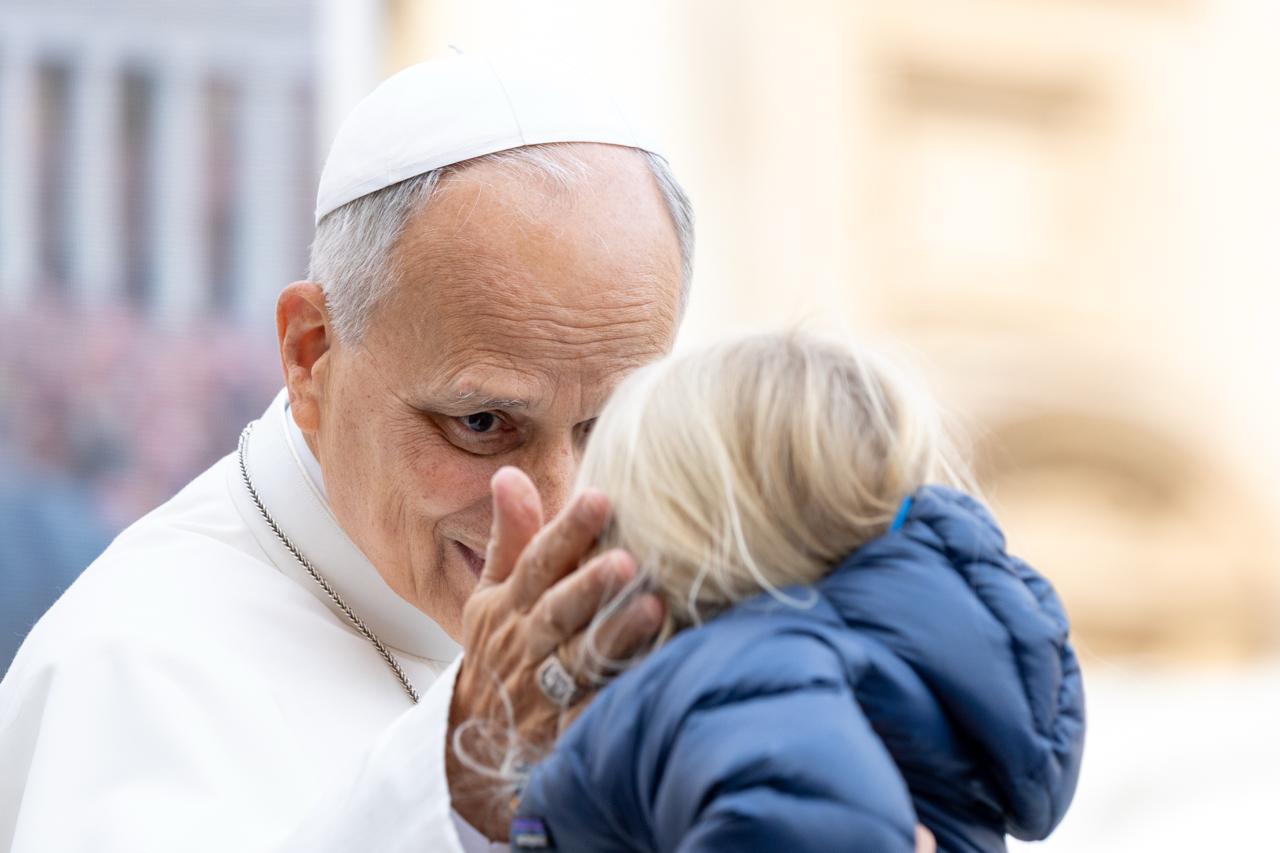
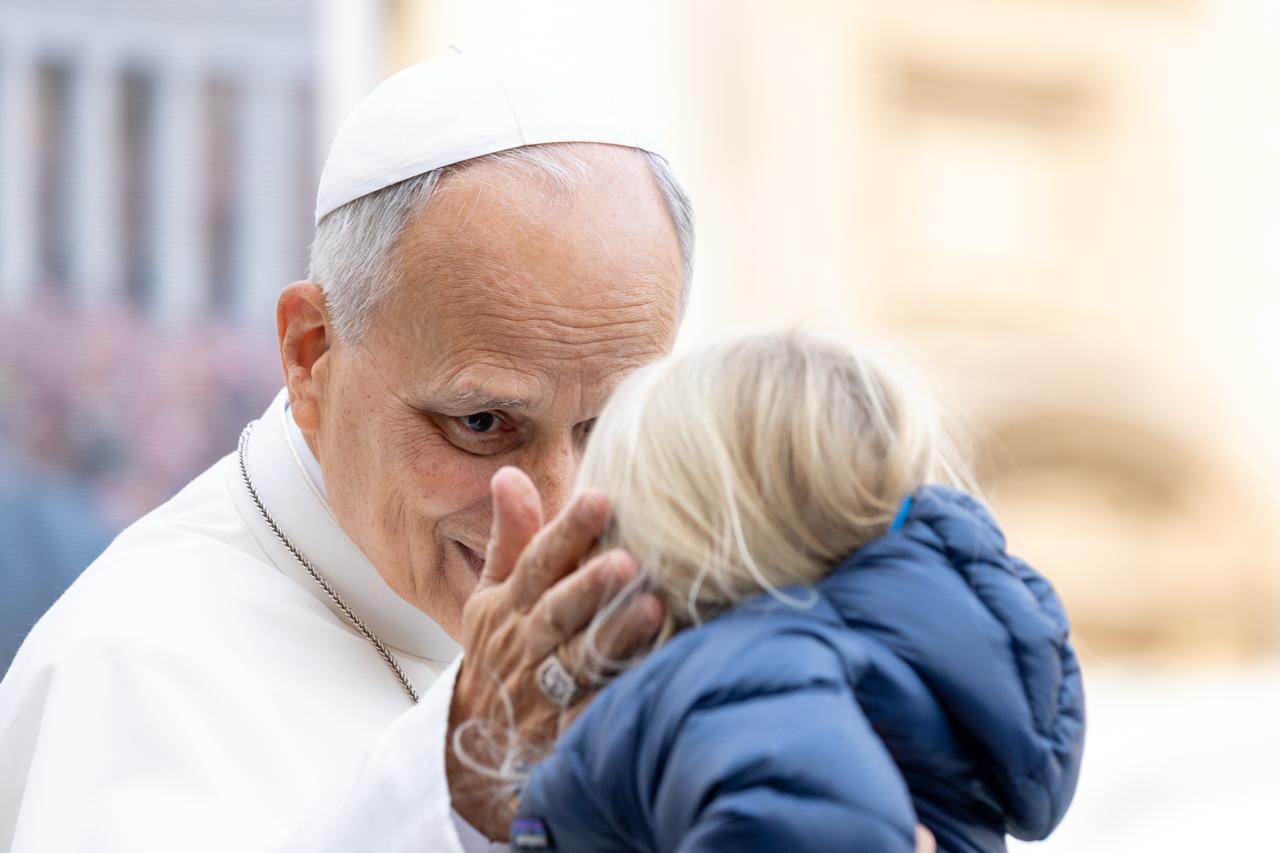
Before arriving at the platform set up in St. Peter’s Square, the pope spent about 15 minutes riding through the area in the popemobile. During the ride, he blessed around a dozen children who were brought to him from among the crowd.
A more credible witness
Leo XIV also stressed in his catechesis that a mature synthesis between faith and culture is “an essential requirement for bearing witness to the faith before the world and communicating it to others in a credible manner.”
The second chapter of the second part of Gaudium et Spes is devoted precisely to culture and its relationship with the Christian faith. In this context, the pope recalled that the Catholic Church “has always been concerned with accompanying the preaching of the Gospel with the establishment of schools of every kind, aimed at advancing the human, cultural, and spiritual formation of men and women across the five continents.”
The conciliar text, the pontiff noted, upholds the need “to direct teaching towards a certain unity of knowledge,” while recognizing that changing living conditions may make this more difficult.
According to Leo XIV, Christians are the first who “must strive to bring about this unity of wisdom, first and foremost within themselves.”
“Although they have received from revelation the answers to the great questions of existence, they are not thereby exempt from patient intellectual and cultural formation,” he warned.
On the contrary, he added, human and scientific knowledge must “go hand in hand with the substance of their faith, which must be continually deepened with age and in accordance with their level of study.”
The pope emphasized that the various manifestations of culture contribute to opening minds to the perennial questions on the meaning of the world and of human existence, “thus preparing people to receive the Gospel of Jesus Christ.”
He also explained that “the relationship between faith and culture finds its primary foundation in the Incarnation.” For this reason, he said, faith is “an incarnate reality, interwoven with the culture in which it is immersed.”
In this sense, he noted that faith is also required “to become culture,” that is, “to reach the person in their living environment, made up of human words, traditions, religious meaning, art and poetry, thought and science.”
To illustrate this idea, the Holy Father quoted St. John Paul II: “A faith that does not become culture is a faith not fully accepted, not entirely thought out, not faithfully lived.”
The Christian faith and a particular culture
Leo XIV also insisted that faith can be embodied in any culture because “it does not identify itself with any of them in a specific way.” In this way, he explained, the Church draws from the various cultures “all that is good, beautiful, and true” in order to embody and transmit the message of the Gospel.
Finally, he recalled that Gaudium et Spes urges the international community to ensure that everyone has access to fundamental cultural goods “by overcoming illiteracy and the lack of education.”
He also stressed that “it will belong to all to acknowledge and favor the proper and necessary participation of women in the cultural life.”
In his greetings to Italian-speaking pilgrims, the pope noted that only a few days remain before the solemnity of All Saints, which the Catholic Church celebrates on Nov. 1. He invited the faithful to contemplate “this immense multitude of men and women” who have attained holiness and who stand before the Church as a “prophetic sign of the life to come.”
The Holy Father emphasized that eternal life “already begins in the commitment and Christian witness of earthly life,” encouraging believers to live the Gospel faithfully in their daily lives and to allow themselves to be inspired by the example of the saints.
On Nov. 2, the pontiff is scheduled to celebrate a Mass for the Commemoration of All the Faithful Departed at the Monumental Cemetery of Verano, the oldest and largest cemetery in Rome. The Eucharistic celebration will begin at 4 p.m. local time in this historic Roman cemetery, which preserves evidence of a necropolis dating back to the first centuries of Christianity and includes the Catacombs of St. Cyriaca.
This story was first published by EWTN News Español, the Spanish-language sister service of EWTN News. It has been translated and adapted by EWTN News English.