
According to Para-Mallam, the crowd numbered about 5,000 and included both Catholics and Protestants. Together, he said, they peacefully and prayerfully marched, ending in front of the governor’s office building in the city of Jos. Archbishop Matthew Ishaya Audu of Jos and several Catholic priests also took part in the march and rally, according to Para-Mallam.
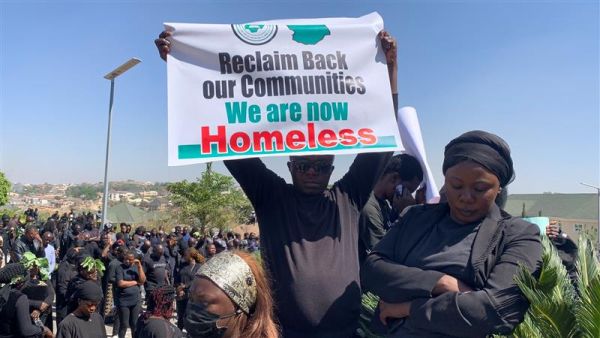
The rally was organized with the help of the Christian Association of Nigeria (CAN), a coalition of Nigerian Christian Churches and groups that includes the Catholic Church in Nigeria.
Para-Mallam said the purpose of the demonstration was to “mourn in solidarity” with the devastated communities as well as to show them that the Church “cares” and “identify with them in the moment of suffering and mourning.”
A secondary purpose for the rally, Para-Mallam said, was to “get the Church on the Plateau to unite and to speak with one voice around the issues of social justice” and to “create awareness nationally and globally about the Christmas season attack.”
Para-Mallam said that Plateau’s governor, Caleb Mutfwang, addressed the crowds at the rally and was “sympathetic and understanding and spoke well on the pains of his people.”
Mutfwang condemned the attacks shortly after they occurred in a Dec. 26 statement in which he said: “This has indeed been a gory Christmas for us.”
“He promised to relay our concerns to the president and committed to work with the president to end the killings in the Plateau state,” Para-Mallam said.
Despite the governor and president voicing their support for the impacted communities, several religious freedom advocates have been critical of the lack of government response to the growing terrorist attacks.
Maria Lozano, a representative for the papal relief group Aid to the Church in Need, told CNA after the attacks that tangible government support was largely absent after the Christmas massacre and that a “lack of response from the government” over the years has worsened the situation in the region. The absence of government support, Lozano said, has forced Christian churches to take on the “primary responsibility of providing assistance.”
Para-Mallam asked for Christians outside of Nigeria to help by offering prayer, advocacy, and humanitarian intervention.
(Story continues below)
Subscribe to our daily newsletter
“We also want fellow believers to encourage policymakers to encourage the Nigerian government to do more to end the killings in general and particularly those targeted at Christians,” he said.
For several years now, religious freedom advocates have criticized the U.S. government for failing to include Nigeria in the State Department’s “Countries of Particular Concern” list, which some consider to be America’s most effective tool to encourage foreign governments to address the persecutions in their countries.
“There is no justification as to why the State Department did not designate Nigeria or India as a Country of Particular Concern,” said U.S. Commission on International Religious Freedom chair Abraham Cooper and vice chair Frederick Davie in a Jan. 4 statement.
Cooper and Davie mentioned the Christmas massacre as “just the latest example of deadly violence against religious communities in Nigeria.”
Speaking on “EWTN News Nightly” on Monday, Davie said that the decision to leave Nigeria off the list was “particularly” concerning and a “huge mistake.”