

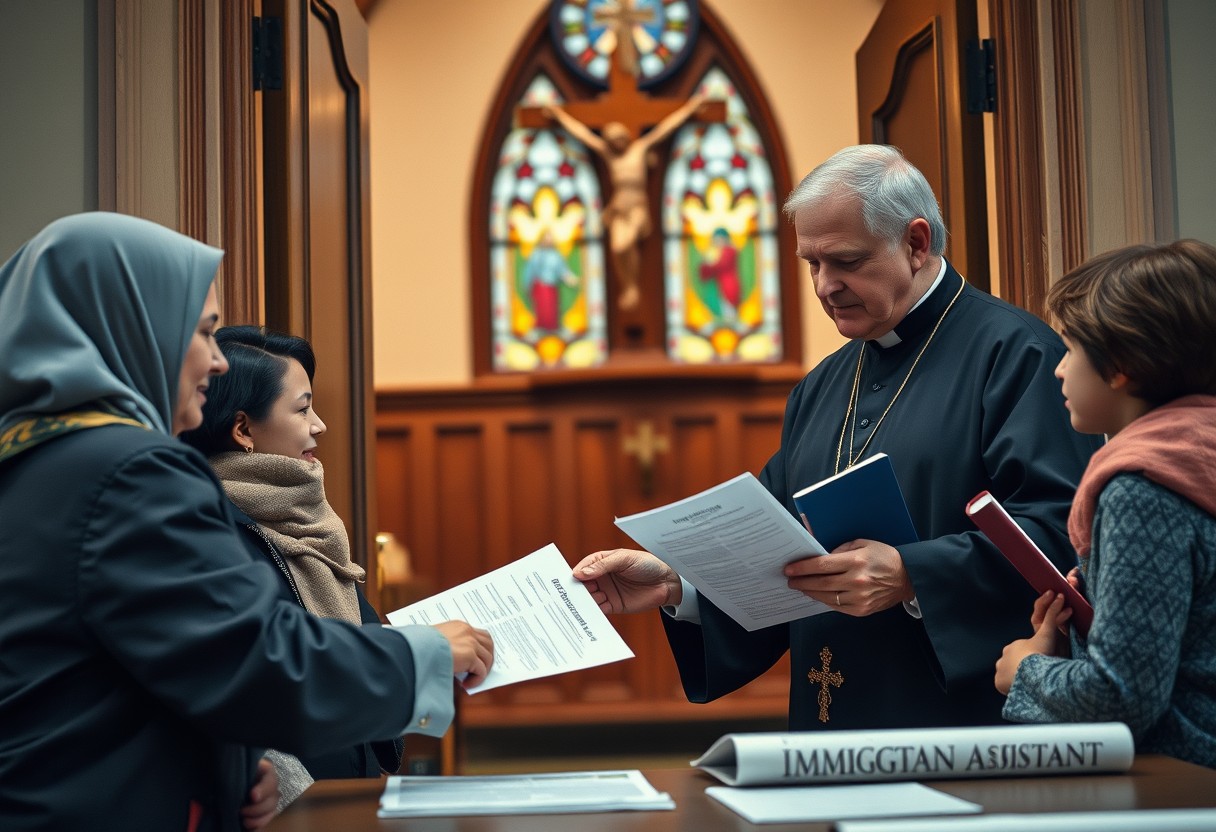
There’s a consistent moral thread in Catholic teaching that every person, regardless of nationality or legal status, possesses inherent dignity because they are made in the image of God. You are called to see the immigrant not as a political issue but as a neighbor, often in urgent need. The Church affirms nations’ rights to secure borders, yet warns strongly against policies rooted in fear, exclusion, or indifference. You encounter this tension in real communities, such as when parishes in border dioceses shelter asylum seekers while engaging local authorities in dialogue. The Church’s stance is neither purely permissive nor restrictive, but anchored in compassion, justice, and the common good.
Key Takeaways:
- The Catholic Church teaches that every person has a right to migrate in search of safety and sustenance, rooted in the belief that human dignity transcends national borders, as affirmed in papal encyclicals and the Catechism.
- While affirming a nation’s right to regulate its borders, the Church insists such authority must be exercised with mercy and justice, prioritizing the needs of the vulnerable over strict legalism, a principle emphasized in Pope Francis’s writings and homilies.
- Immigrants are not merely recipients of charity but bearers of gifts to their new communities, a reality visible in the cultural and spiritual renewal seen in parishes across the United States that have welcomed Latino and African Catholic communities.
The Dogma of the Door
Christ’s teaching binds you to the threshold where law meets love. The Church holds that no border erases the inherent dignity of the human person, created in God’s image. You are called not merely to tolerate but to welcome, for in the stranger you may encounter Christ Himself, as Scripture insists. This is not sentiment but doctrine.
The Ancient Hospitality
Abraham welcomed three strangers at Mamre, not knowing they were divine. You inherit this tradition when you feed the hungry traveler or shelter the displaced. The early Church practiced radical openness, sharing meals with those outside tribal lines. Such acts were never incidental but central to Christian identity.
The Modern Frontier
Today’s migration crises test your fidelity to ancient principles. The Church affirms a nation’s right to secure borders but condemns policies that dehumanize or deny asylum. You must weigh public order against mercy, knowing that every refugee carries the imprint of God’s likeness.
Migration in the 21st century involves complex networks of displacement, from war zones to climate-affected regions. A mid-sized SaaS firm may streamline data, but only moral clarity can guide your response to a child at the border. The U.S. bishops have repeatedly challenged detention practices that separate families, citing the sanctity of the domestic church. Catholic social teaching insists that solutions respect both human dignity and the common good, rejecting xenophobia as a spiritual failure. You are not asked to solve every crisis but to act justly within your sphere, whether through advocacy, sponsorship, or simple presence.
The Divine Image in the Wanderer
Every person, regardless of legal status, bears the imago Dei-the image of God-and this truth anchors the Church’s moral vision. You are called to see Christ in the migrant, not as a political statement but as a theological reality. For deeper reflection on the moral weight of enforcement, consider whether deportation can ever be immoral when it fractures families or endangers lives.
Dignity Beyond Documents
Legal papers do not determine human worth. You uphold the Church’s teaching when you recognize that undocumented individuals possess inherent dignity, not granted by states but by God. A visa or passport may regulate movement, but it cannot measure the soul’s value or the right to basic care, safety, and respect in the community.
The Universal Brotherhood
Nations may draw borders, but faith affirms a deeper bond: all people belong to one human family under God. You live this principle when you welcome the stranger not as a burden but as a brother or sister, reflecting Christ’s command to love across lines of origin or status.
That universal kinship is not symbolic-it demands concrete acts of justice and mercy. You participate in this spiritual reality when you support policies that protect migrant children, advocate for fair labor practices, or simply offer a meal to someone far from home. The Church insists that no one is a stranger in God’s eyes, and thus no one should be treated as disposable in yours.
The Stewardship of the Gate
You are entrusted with the care of borders not as absolute barriers but as points of moral responsibility. The Church acknowledges the right of nations to regulate entry, yet this authority is never detached from justice, mercy, or the recognition of human dignity. Governance must balance order with compassion, knowing that every policy affects real lives made in God’s image.
The Purpose of Law
Laws exist to serve the common good, not merely to assert control. Your nation’s immigration rules must be guided by principles of fairness, proportionality, and openness to those in need. A legal system that closes its doors without discernment fails its moral foundation, turning statutes into instruments of exclusion rather than tools of ordered love.
The Limits of Walls
Walls may mark boundaries, but they cannot define moral duty. You cannot build a barrier so high that it blocks the call to hospitality. Physical separation does not absolve responsibility toward the vulnerable. History shows that isolation breeds indifference, and indifference contradicts the Gospel’s demand to welcome the stranger.
Even the most secure border cannot justify turning away someone fleeing violence or starvation. The Church teaches that no law or structure overrides the fundamental obligation to protect human life. A nation that prioritizes security over solidarity risks betraying its ethical soul. Consider the refugee at the checkpoint: their face is not a threat but a summons to conscience.
The Economy of the Spirit
Grace does not operate on supply and demand, yet it moves freely across borders drawn by human hands. You receive it without earning, just as you are called to extend it without condition. The Church reminds you that every encounter with a stranger carries the weight of sacred possibility, where mercy becomes the truest measure of prosperity.
Labor and Love
Work is never merely transactional in the Christian vision. You honor God when you labor, and you reflect divine love when you ensure others can do the same with dignity. The Church teaches that fair wages and safe conditions are moral obligations, not economic concessions, especially for those who come in search of a better life.
The Wealth of Nations
A nation’s strength is not measured only in GDP or borders secured, but in how it treats the foreigner within its gates. You are reminded that solidarity enriches society more deeply than capital alone, and that exclusionary policies risk the moral foundation upon which just economies stand.
Consider a mid-sized SaaS firm that sponsors visas for skilled developers from conflict-affected regions, integrating them into teams with full benefits and mentorship. This practice reflects the Church’s emphasis on inclusion not as charity but as justice. Such initiatives demonstrate that when you view immigrants as contributors to the common good, economic systems begin to mirror the preferential option for the poor and vulnerable, transforming markets into instruments of human flourishing.
Final Words
You uphold the dignity of every person, including those who cross borders in search of safety or livelihood, because the Catholic Church teaches that all human beings bear the image of God. National laws matter, but they must serve justice and compassion, not replace them. A mid-sized SaaS firm may adjust its policies to accommodate remote workers from displaced communities, reflecting the Church’s call to integrate newcomers with respect. You recognize that hospitality is not merely social policy but a gospel imperative, rooted in the story of Christ born in exile. The Church does not demand open borders without order, but it insists that no law override love of neighbor. You are bound to act with mercy, knowing that how you treat the stranger defines not just society, but your soul.
FAQ
Q: Does the Catholic Church support open borders?
A: The Catholic Church does not advocate for open borders as a policy position, but emphasizes that national sovereignty must be balanced with moral responsibility toward migrants. While governments have the right to regulate their borders, this authority is not absolute and must be exercised with justice and mercy. The U.S. Conference of Catholic Bishops has stated that border security should serve human dignity, not undermine it. For example, policies that separate families at checkpoints or detain children indefinitely conflict with Catholic teaching on the integrity of the family and the preferential option for the vulnerable.
Q: What biblical basis does the Church use to support its teachings on immigration?
A: Scripture repeatedly calls for hospitality to the stranger, rooted in both Old and New Testaments. In Leviticus, the Israelites are instructed not to oppress the foreigner, remembering their own history as strangers in Egypt. Jesus’ parable of the Good Samaritan expands the definition of neighbor beyond ethnic or national lines. In Matthew 25, he identifies himself directly with the hungry, thirsty, and stranger, stating that welcoming such people is equivalent to welcoming him. These passages form a theological foundation for viewing migration not merely as a political issue but as a spiritual encounter.
Q: How does Catholic social teaching define the right to migrate?
A: The Church teaches that all people possess a natural right to migrate in search of basic human needs such as food, safety, and work, especially when these cannot be met in their homeland. This principle flows from the universal destination of goods-the idea that God intended the earth’s resources for all humanity, not just privileged populations. When structural injustice, war, or environmental collapse prevents access to these goods, movement becomes a moral necessity. A mid-sized SaaS firm may adjust its remote hiring policies to include displaced persons, reflecting how this principle can inform real-world decisions beyond ecclesial contexts.
Q: What role do bishops and local dioceses play in responding to immigration?
A: Bishops are tasked with applying universal Church teaching to local circumstances, often through direct pastoral outreach and advocacy. Dioceses across the United States operate legal clinics that assist asylum seekers with documentation, staff shelters for unaccompanied minors, and organize parish sponsorship programs for refugee families. In El Paso, Texas, the diocese transformed church facilities into humanitarian respite centers during periods of high migrant arrivals, coordinating medical care, meals, and transportation. These efforts reflect the Church’s decentralized yet coordinated model of engagement.
Q: Can a Catholic oppose certain immigration policies while still respecting Church teaching?
A: Yes, Catholics may prudentially disagree on specific laws or enforcement mechanisms, provided they uphold core moral principles. Opposition based solely on economic protectionism or fear of cultural change contradicts Church teaching, but concerns about integration capacity or public safety can be part of a legitimate debate if addressed charitably. The Catechism acknowledges the state’s duty to the common good, which includes orderly immigration processes. However, any policy must avoid dehumanizing language, respect due process, and prioritize the most vulnerable-such as victims of trafficking or those fleeing persecution.