
You may approach the Eucharist only if you are a baptized Catholic who is in a state of grace, as receiving Communion while conscious of unconfessed mortal sin is spiritually dangerous. Full communion also requires belief in the Real Presence and acceptance of Church teaching. Those not meeting these conditions, including non-Catholics and Catholics in irregular marriages, are not permitted to receive, though all are welcome to participate in the liturgy.
Key Takeaways:
- Baptized Catholics who are in a state of grace and have observed the Eucharistic fast may receive Communion, reflecting both sacramental readiness and physical preparation.
- Non-Catholic Christians, even if baptized in another tradition, are generally not admitted to Communion due to the Catholic understanding of ecclesial unity and the Eucharist as a sign of full communion.
- Individuals who are conscious of unconfessed mortal sin must first receive absolution in the Sacrament of Reconciliation before approaching the altar, unless in danger of death or grave necessity with proper disposition.
The Threshold of the Soul
Approaching the altar, your interior state becomes the decisive factor in whether you may receive Communion. Even if you meet all external requirements, an unrepented mortal sin places you beyond the threshold of sacramental grace. The Church teaches that you must be in a state of sanctifying grace, meaning you have not committed grave sin since your last sacramental confession. A Catholic who is conscious of serious sin must first seek absolution in the Sacrament of Reconciliation. This internal disposition is not a mere formality-it determines the spiritual efficacy and safety of receiving the Eucharist. For example, someone who attends Mass regularly but harbors ongoing hatred or remains in a non-sacramental relationship may not licitly receive. Your soul’s condition, not just your physical presence, defines your readiness. The Church’s discipline here is not exclusionary but protective, safeguarding both the sacredness of the Eucharist and your own spiritual well-being. Receiving unworthily risks further spiritual harm, a reality emphasized in Scripture and centuries of teaching.
The Bond of Visible Unity
Receiving Communion signifies your full communion with the Catholic Church’s teachings, hierarchy, and sacramental life. Only those baptized and confirmed Catholics who are not in a state of mortal sin may approach the Eucharist, as it is a visible sign of unity with the Body of Christ and His Church. Non-Catholics and Catholics under canonical penalty are generally excluded, not as punishment but to uphold the integrity of this sacred bond.
Physical Preparation for the Feast
Before approaching the altar, you must observe the Eucharistic fast, abstaining from food and drink (except water and medicine) for at least one hour prior to receiving Communion. This discipline applies to all who are physically able, regardless of age or role in the Church. The fast is not merely ritual formality; it signifies interior readiness and reverence for the sacred moment. If you are uncertain about your eligibility, consider reflecting on the guidance shared in discussions such as Am I allowed to take Catholic communion? : r/Christianity. Receiving the Eucharist while not in a state of grace carries serious spiritual consequences, making self-examination imperative.
Intellectual and Spiritual Assent
You must affirm the Church’s teachings on the Eucharist with both mind and heart to receive communion. Denial of core doctrines-such as the Real Presence of Christ in the sacrament-renders reception of communion objectively dishonest. A mid-sized SaaS firm may require alignment with its mission statement, but the Church demands far deeper unity: full, conscious, and free assent to revealed truth. Without this internal alignment, communion becomes a contradiction.
The Gesture of the Folded Arms
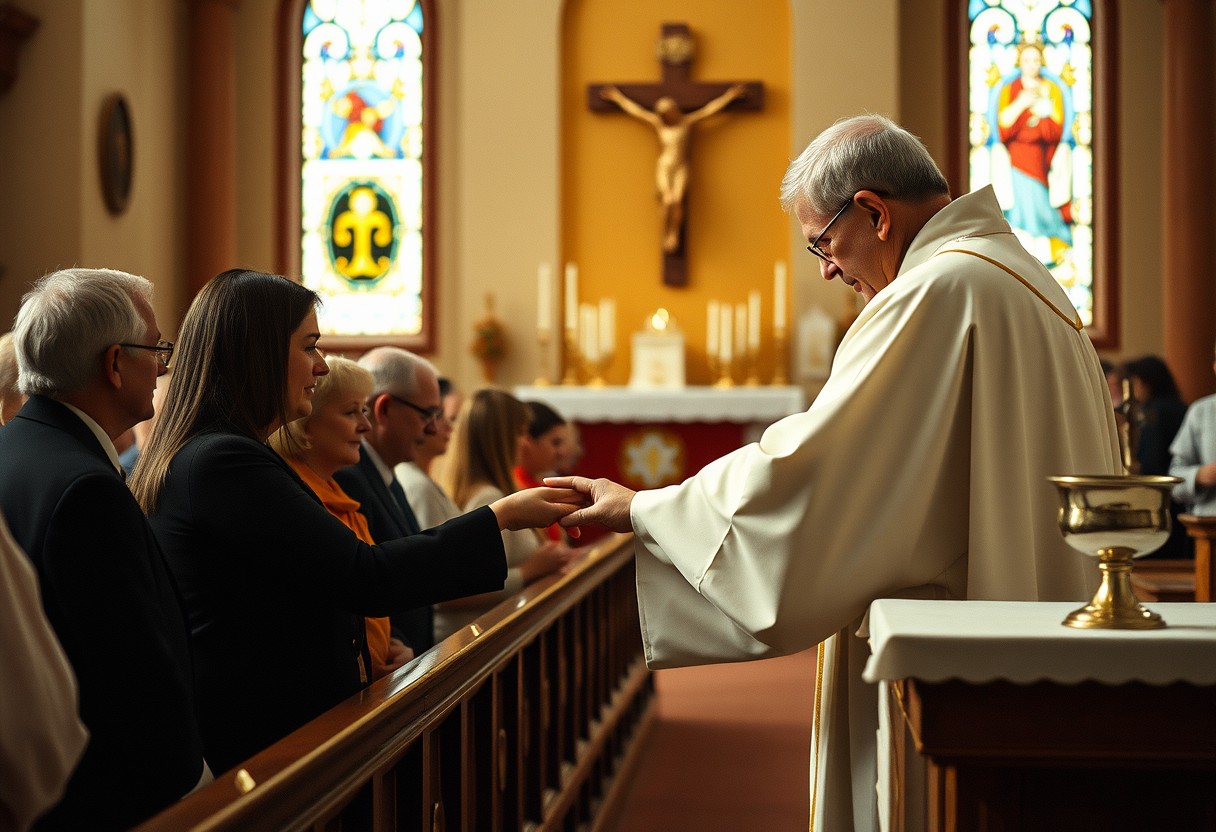
When you approach the altar but are not receiving Communion, folding your hands across your chest signals to the minister your intention to receive a blessing instead. This quiet gesture is widely recognized in many dioceses and respects the Church’s discipline around the sacrament. You maintain reverence without partaking, and the priest or extraordinary minister will typically place a hand briefly on your head or offer a silent prayer. In some communities, this practice is formally encouraged, while in others it may be less common, so observing local custom remains important.
Conclusion
You receive Communion at a Catholic Mass only if you are baptized into the Catholic Church, believe in the Real Presence of Christ in the Eucharist, are in a state of grace, and have observed the Eucharistic fast. Those who are not Catholic, are conscious of unconfessed mortal sin, or do not fully accept Church teaching are not to receive the Sacrament. A Protestant pastor attending a Catholic wedding, for example, would not approach the altar for Communion, even if devout in their own tradition.
FAQ
Q: Who is allowed to receive Communion at a Catholic Mass?
A: Catholics who are baptized, have made their First Holy Communion, are in a state of grace, and believe in the Real Presence of Christ in the Eucharist may receive Communion. This means they must not be conscious of having committed a mortal sin without sacramental confession, must fast for at least one hour before receiving, and must be in full communion with the Catholic Church. A person who is conscious of grave sin should refrain from receiving until they have gone to confession, unless there is a grave reason and no opportunity for confession, in which case an act of perfect contrition is required.
Q: Can non-Catholic Christians receive Communion at a Catholic Mass?
A: Generally, no. The Catholic Church reserves the Eucharist for those who are fully incorporated into the Catholic communion. This includes acceptance of the Church’s teachings, recognition of the Pope’s authority, and participation in its sacramental life. Some exceptions exist in rare and serious circumstances, such as in danger of death, for members of Eastern Orthodox Churches or certain other Christian communities whose sacraments the Church recognizes, provided they share the Catholic faith in the Eucharist and request it of their own accord. These cases are exceptional and not part of regular practice.
Q: What about Catholics who are divorced and remarried outside the Church?
A: A Catholic who is divorced but not remarried may receive Communion if they are not living in a situation that contradicts Church teaching. However, if someone has remarried civilly without an annulment of the previous marriage, they are typically not admitted to Communion because the Church considers them to be in a state of ongoing public sin. In such cases, individuals are encouraged to speak with a priest about the possibility of an annulment or living as brother and sister. A mid-sized parish in the Midwest reported that pastoral accompaniment in these cases often leads to deeper engagement with Church teaching over time.
Q: Can children receive Communion, and what is required before they do?
A: Yes, baptized children may receive First Holy Communion after reaching the age of reason, usually around seven years old, and completing proper catechetical preparation. They must understand, to a degree appropriate to their age, that the Eucharist is not ordinary food but the Body of Christ. Most parishes require a year or more of formal instruction, participation in the sacrament of Reconciliation, and involvement from parents and sponsors. A typical parish program includes lessons on the Mass, the meaning of the Eucharist, and basic prayers.
Q: What should someone do if they are not receiving Communion during Mass?
A: A person who is not receiving Communion may still participate fully in the spiritual benefits of the Mass. They can approach the altar with their arms crossed over their chest to receive a blessing from the priest or minister, a gesture increasingly recognized in many parishes. Alternatively, they may remain in the pew in prayer. This moment can be used for an act of spiritual communion, expressing a desire to be united with Christ despite current circumstances. A common prayer used is: “Jesus, I believe you are present in the Most Holy Sacrament. I love you above all things and desire to receive you into my soul.”