
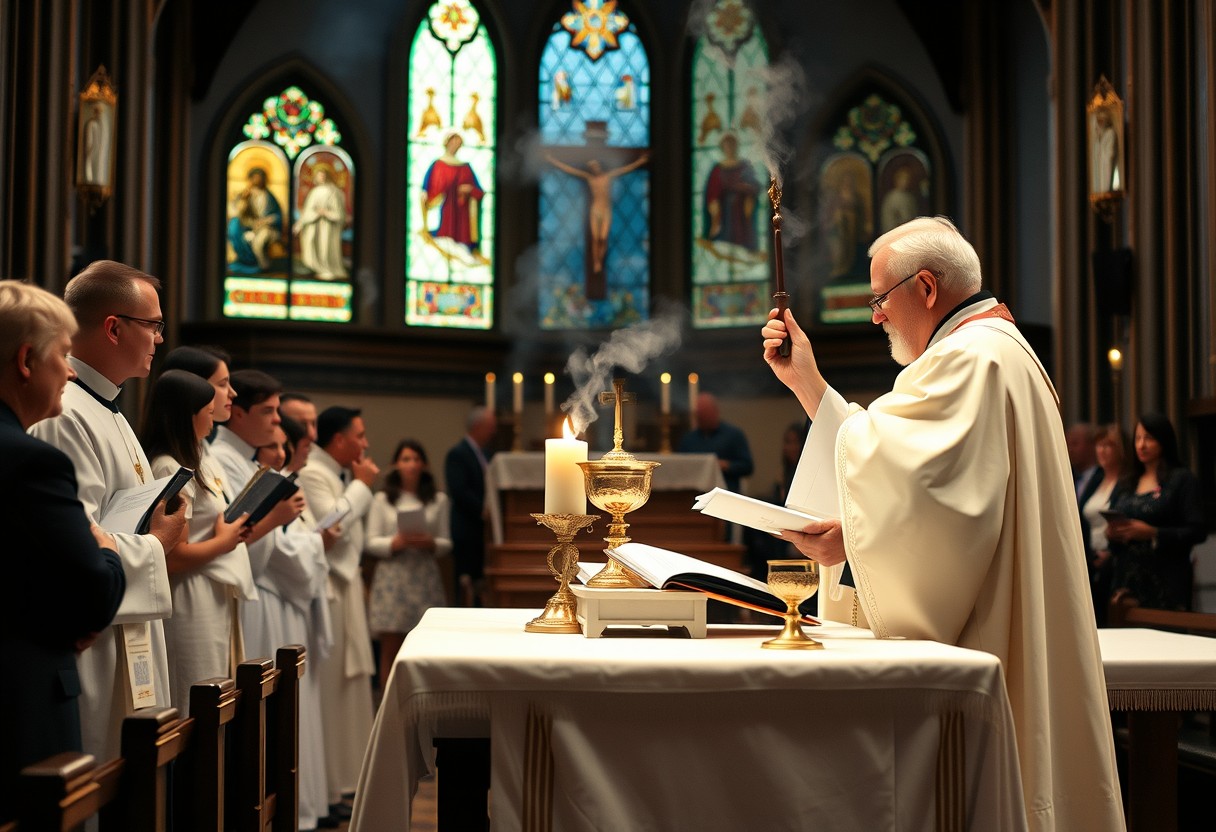
There’s a quiet moment before the opening hymn when the priest processes to the altar, marking the start of a structured, centuries-old liturgy. You’ll observe rituals rooted in scripture and tradition, from the sign of the cross to the consecration of bread and wine, each carrying deep spiritual meaning. This guide prepares you for what to expect, reducing uncertainty and helping you engage respectfully.
Key Takeaways:
- The Catholic Mass follows a structured liturgical sequence divided into two main parts: the Liturgy of the Word and the Liturgy of the Eucharist, each containing specific rituals and scriptural readings that reflect centuries-old traditions.
- First-time visitors are not expected to participate in every aspect, such as receiving Communion, but are welcome to observe, with many parishes providing missals or worship aids to help follow along.
- The tone and pace of the Mass can vary significantly between parishes, influenced by factors like music style, language, and community size, meaning a weekday Mass in a rural church may feel markedly different from a Sunday celebration in an urban cathedral.
Understanding the Various Types of Catholic Mass
Catholic Mass varies in formality and structure depending on the occasion and community. Low Mass, High Mass, Votive Masses, Missa Cantata, and Requiem Masses each serve distinct liturgical purposes. Thou
| Low Mass | Spoken, minimal music, often celebrated on ordinary weekdays |
| High Mass (Solemn Mass) | Chanted or sung, includes deacon and subdeacon, common on Sundays |
| Missa Cantata | Fully sung but without deacon; frequent in parishes without extra clergy |
| Votive Mass | Offered for a specific intention outside the liturgical calendar |
| Requiem Mass | Mourns the dead, uses distinct chants and purple or black vestments |
The Distinction Between Low Mass and High Mass
A Low Mass is spoken rather than sung, with minimal ceremonial actions and no choir. The priest performs most parts alone, creating a quiet, reflective atmosphere. High Mass involves chanting, incense, multiple ministers, and full musical accompaniment, emphasizing the solemnity of the liturgy. Thou
Special Liturgies for Holy Days and Sacramental Rites
On feasts like Easter or Christmas, the Church celebrates with extended readings, processions, and incense. Special rites such as baptisms, confirmations, or weddings may be integrated into Mass. These liturgies follow unique texts and rituals approved by the diocese. Thou
During Easter Triduum, the liturgy transforms dramatically: the Gloria is sung after Holy Thursday’s evening Mass, the altar is stripped, and on Good Friday, the faithful venerate the Cross in silence. A baptismal font may be filled during the Easter Vigil, marking the initiation of new members. These rites follow ancient patterns preserved across centuries. Thou
Essential Etiquette Tips for First-Time Visitors
Observing basic customs helps you engage respectfully during Mass. Arrive early, dress modestly, and follow the congregation’s lead on postures. Silence your phone and refrain from chewing gum. The sign of peace is a brief gesture, not a conversation starter. The communion line is for baptized Catholics; others may come forward for a blessing. The silence after Mass is part of the prayer-exit quietly.
Appropriate Attire and Arrival Protocol
Dress in clean, modest clothing such as slacks, skirts, or dresses that reflect reverence for the sacred space. Avoid shorts, tank tops, or revealing garments. Arrive at least ten minutes before Mass begins to settle in quietly. The church doors typically close once the procession starts, so punctuality shows respect for the liturgical rhythm.
Following the Postures of Standing, Sitting, and Kneeling
Follow the congregation’s movements: stand during the Gospel and Profession of Faith, sit for most readings and the homily, and kneel during the Eucharistic Prayer. These postures express different forms of prayer-attention, listening, and adoration. The pew kneelers are used only during specific parts of the Mass.
Most postures are led by the priest or cantor, and a missalette or worship aid can help you follow along. Standing signifies readiness and respect, especially during the Gospel reading. Sitting allows for reflection on the readings and homily. Kneeling, a sign of humility and worship, occurs during the consecration and is expected in most parishes. The physical participation deepens spiritual engagement throughout the liturgy.
A Step-by-Step Walkthrough of the Liturgical Sequence
Each movement of the Mass follows a structured liturgical order designed to guide you from gathering to sending forth, with symbolic actions and spoken responses uniting the assembly in worship. The sequence reflects centuries of tradition while remaining accessible to newcomers who observe and participate at their comfort level.
| Introductory Rites | Entrance procession, greeting, Penitential Act, Gloria (on solemnities), and Collect prayer |
| Liturgy of the Word | First Reading (usually from the Old Testament), Responsorial Psalm, Second Reading (New Testament), Gospel Acclamation, Gospel Reading, Homily, Profession of Faith (Creed), and Universal Prayer (Prayer of the Faithful) |
| Liturgy of the Eucharist | Preparation of the gifts, Eucharistic Prayer (including consecration), and Communion Rite (including the Lord’s Prayer and sign of peace) |
| Rite of Dismissal | Blessing by the priest, final sending forth with the words “Go forth, the Mass is ended” |
The Introductory Rites and the Proclamation of Scripture
You begin by joining the community in song as the priest and ministers process to the altar, setting a tone of communal worship. After the Penitential Act and Gloria, the readings unfold with a lector proclaiming the First and Second Lessons, while the priest or deacon reads the Gospel, marked by a special acclamation and reverence.
The Liturgy of the Eucharist and the Rite of Dismissal
During the Liturgy of the Eucharist, the bread and wine are brought forward and consecrated, believed by Catholics to become the Body and Blood of Christ. You will witness the congregation’s communal prayer, followed by the sign of peace and Communion, then receive a final blessing before being sent forth to live out the Gospel.
At the heart of the Eucharistic Prayer lies the consecration, a moment of profound theological significance where the priest repeats Christ’s words from the Last Supper. The entire assembly bows or kneels in reverence, and the altar bells may ring to highlight this sacred transformation. After receiving Communion, many remain in quiet prayer before the closing hymn and dismissal, a practice reflecting personal devotion within the communal rite.
Factors That Influence the Atmosphere of the Service
The tone of a Mass varies based on several elements unique to each parish.
- The size of the congregation affects acoustics and communal energy
- Architectural design, such as stained glass or open layouts, shapes the sensory experience
- The pastor’s preaching style influences engagement and pacing
- Lay leadership presence, including lectors and Eucharistic ministers, contributes to flow and warmth
Recognizing these variables helps you interpret differences between services you may attend.
Parish Cultural Traditions and Regional Customs
Local customs often shape how rituals unfold, from the use of native languages in readings to the inclusion of cultural music or gestures like kneeling after Communion. In some communities, extended periods of silence or specific devotional practices reflect longstanding regional piety. You may notice differences between urban, rural, or ethnic parishes, each expressing faith through distinct cultural lenses.
The Impact of Music and Liturgical Seasons
Music shifts dramatically with the Church calendar, guiding emotional tone and participation. During Lent, you experience plainsong or organ-only accompaniment, while Easter Masses feature full choirs and resonant hymns. The use of seasonal texts and colors in music reinforces themes of repentance, joy, or anticipation throughout the year.
Gregorian chant may be used in more traditional parishes during Advent, creating a contemplative mood through its unmeasured rhythm and Latin text. In contrast, a contemporary parish might sing guitar-led settings of the Gloria during the Easter season, amplifying a sense of celebration. The choice of instrumentation-from pipe organ to small ensemble-also affects the sacred character of the space, aligning sound with the liturgical moment.
Pros and Cons of Visitor Participation
Engaging in parts of the Mass as a visitor can deepen your experience, though certain limits apply depending on your religious affiliation. Active involvement in prayers and hymns is welcomed, while sacramental elements remain restricted to baptized Catholics.
| Openness to Participation | You may join in spoken responses, standing, kneeling, and singing without restriction |
| Communal Inclusion | Reciting the Lord’s Prayer or joining intercessions fosters a sense of shared presence |
| Spiritual Observation | Remaining silent during certain rites still allows meaningful reflection |
| Access to Blessings | You can receive a blessing at Communion by crossing your arms over your chest |
| Respect for Tradition | Following the congregation’s posture shows reverence even without full participation |
| Limitation on Communion | Only baptized Catholics in good standing may receive the Eucharist |
| Doctrinal Boundaries | Full sacramental involvement implies beliefs you may not hold |
| Potential Misunderstanding | Accidentally receiving Communion may cause discomfort for you or others |
| Emotional Distance | Restrictions may make you feel like an outsider during key moments |
| Clarity Through Restraint | Observing limits can deepen your understanding of Catholic sacramental theology |
The Spiritual Value of Communal Prayer and Reflection
You share in a profound spiritual rhythm when you pray alongside the congregation. Even without receiving Communion, uniting in spoken prayers and silence connects you to a centuries-old tradition of collective worship, offering peace and perspective through shared reverence.
Navigating the Boundaries of Sacramental Participation
You are not permitted to receive the Eucharist unless you are a baptized Catholic, a restriction rooted in doctrine rather than exclusion. Approaching the altar with crossed arms signals your desire for a blessing instead, a gesture universally recognized by priests.
Receiving the Eucharist signifies full communion with the Church’s teachings, including belief in the real presence of Christ in the bread and wine. For non-Catholics, abstaining is not a rejection but a respectful acknowledgment of theological differences, preserving the integrity of the sacrament while still allowing spiritual engagement through other means.
To wrap up
Now that you’ve followed the structure of the Mass, you understand how each element-from the opening rite to the final blessing-guides participants through a shared spiritual journey. You’ve seen how Scripture, prayer, and sacrament unfold in a deliberate rhythm, allowing you to engage meaningfully even as a newcomer. A mid-sized parish in Milwaukee recently reported that over 70% of first-time guests felt welcomed after receiving a simple missalette and quiet guidance from ushers. You can expect similar support wherever you attend, ensuring your experience remains focused and reverent.
FAQ
Q: What should I do when I first enter the church before Mass begins?
A: Upon entering the church, many Catholics perform a gesture called “making the Sign of the Cross” by touching their forehead, chest, and both shoulders with their right hand while saying, “In the name of the Father, and of the Son, and of the Holy Spirit.” This is typically done while genuflecting-bending the right knee toward the ground-before finding a pew. Genuflection is a sign of reverence toward the tabernacle, where the consecrated Eucharist is reserved. Visitors are not expected to participate in these gestures, but remaining still and respectful while others do so is appropriate.
Q: Why does the priest wear different colored vestments during Mass?
A: The color of the priest’s vestments changes according to the liturgical calendar and reflects the season or feast being observed. White is used during Christmas and Easter to symbolize joy and purity. Green is worn during Ordinary Time, representing growth and hope. Purple appears in Advent and Lent as a sign of penance and preparation. Red is reserved for Palm Sunday, Good Friday, Pentecost, and feasts of martyrs, symbolizing both the fire of the Holy Spirit and the blood of sacrifice. A mid-sized parish may switch vestments weekly depending on the liturgical schedule.
Q: Can non-Catholics receive Communion during Mass?
A: The Catholic Church generally does not permit non-Catholics to receive the Eucharist, as it believes the sacrament is reserved for those who are fully initiated into the Church-baptized, confirmed, and in communion with its teachings. Some Eastern Orthodox Christians may be allowed under rare circumstances, but this is exceptional. Non-Catholics are welcome to come forward during Communion with their arms crossed over their chest to receive a blessing instead, a practice commonly observed in many parishes.
Q: What is the purpose of the readings during Mass?
A: The readings form the Liturgy of the Word and include selections from the Old Testament, a Psalm, a New Testament letter or passage, and a Gospel reading. These follow a three-year cycle known as the Lectionary, ensuring a broad exposure to Scripture over time. The homily, delivered after the readings, connects the scriptural messages to daily life and moral teachings. A typical Sunday Mass includes about 10 to 12 minutes of scriptural content before the homily begins.
Q: How long does a typical Catholic Mass last?
A: Most Sunday Masses last between 60 and 75 minutes, depending on the size of the congregation, the number of hymns sung, and whether sacraments like baptism or marriage are included. Weekday Masses are usually shorter, often lasting 30 to 40 minutes, with fewer musical elements and a simpler structure. A large urban parish with a choir and full liturgical music program may extend the service by 10 to 15 minutes compared to a small rural church with minimal music.