
A coalition of lawmakers, state attorneys general, and advocacy groups filed dozens of legal briefs in support of California parents who are challenging a state law that excludes parents from decisions about “socially” transitioning a child’s gender.
California law does not allow school districts to adopt policies that require teachers and school administrators to tell parents when their child identifies as transgender and wants to be treated as the opposite sex. The law does not forbid voluntary notification by a teacher.
In March, the U.S. Supreme Court halted enforcement of the state law, warning it cuts parents out of the conversation. The 6-3 decision did not offer a final ruling on the constitutionality of the law but found that it likely violates constitutionally protected rights to freedom of religion and to direct the upbringing of one’s children, and sent the case back down to the lower courts.
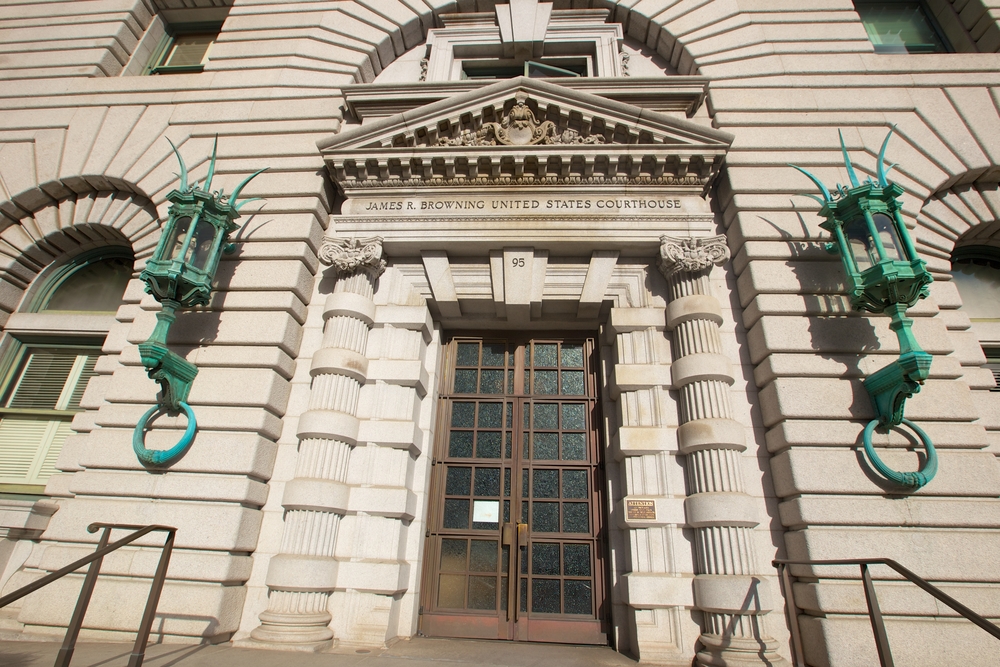
A lower court’s permanent injunction that blocks the law indefinitely is in effect, and the case is in front of the U.S. Court of Appeals for the 9th Circuit.
The parents, represented by the Catholic nonprofit legal group The Thomas More Society, are getting support from 17 state attorneys general, five senators, and dozens of organizations that filed legal briefs with the appellate court in their defense.
Paul M. Jonna, special counsel for Thomas More Society, said in a statement that the legal briefs “all converge on the same point,” which is that the law will not survive “strict scrutiny,” which is the highest standard of review, required in cases when constitutional rights are at risk.
“Parents, not school bureaucrats, have the right to raise their children and to direct their religious upbringing,” Jonna said. “That means a school may not facilitate a childʼs gender transition without their knowledge and consent.”
Legal briefs backing parents
Five Republican senators signed on to a joint brief supporting the parents: Sen. Ted Cruz of Texas; Sen. Mike Lee of Utah; Sen. Kevin Cramer of North Dakota; Sen. Roger Marshall of Kansas; and Sen. Jim Banks of Indiana.
“America’s history and tradition affirm that parents bear the primary responsibility for their children’s upbringing and have ‘natural bonds of affection’ with their children leading them to act in their children’s best interests,” the senators wrote.
“The state must presume that parents are fit to direct their children’s upbringing and education,” they wrote. “It follows that parents are also in the best position to help their children with life’s struggles. That includes mental health struggles like gender dysphoria. When children engage with their school for help regarding their gender dysphoria, the school must tell the parents.”
Republican attorneys general from 17 states also filed a brief: Alabama, Alaska, Arkansas, Florida, Georgia, Idaho, Indiana, Iowa, Kansas, Mississippi, Nebraska, North Dakota, South Carolina, South Dakota, Tennessee, Texas, and West Virginia.
In the brief, they stated their intent is “to ensure that parents retain their fundamental right to direct the upbringing of their minor children.”
“The need for parental involvement and oversight is only more pressing when the ideology pushed by the state confuses innocent and impressionable children experiencing ‘gender dysphoria,’” they wrote.
A large coalition of more than 70 nongovernmental organizations, which includes Catholic and other Christian organizations, signed a separate brief. The signatories include Tradition, Family, Property, Inc.; the Christian Law Association; and the Christian Medical & Dental Associations, along with Catholic former Pennsylvania Sen. Rick Santorum.
“Parents, whether religious or not, have the responsibility as well as the right to monitor the ideas to which their children are exposed and to protect them from those ideas likely to confuse and harm them,” the brief said.
“When officious school officials use their access to children absent parental supervision to instill in those children ideas to which the parents are likely to object, they subvert the trust upon which family strength, and child wellbeing, depend,” it adds.
Three legal scholars also filed a legal brief with the court: Professors Robert P. George, Melissa Moschella, and Eric A. DeGroff. George and Moschella are Catholic.
“Anglo-American law has long recognized that parents — not the state — are the primary decision-makers for their children’s medical care,” the brief said. “This reflects a considered judgment that parents are best positioned to know their children’s needs, weigh risks and benefits in light of family values, and act in their children’s interests.”
“Our legal tradition has never treated parental authority as absolute,” it added. “But the limits history has placed on that authority reflect two principles that, properly understood, reinforce rather than diminish the primacy of parental decision-making.”
The Becket Fund for Religious Liberty, which secured a religious liberty and parental rights victory at the Supreme Court in Mahmoud v. Taylor, also filed a brief in defense of the parents, as did a parent represented by Alliance Defending Freedom, who is fighting against a similar school policy in Wisconsin.