

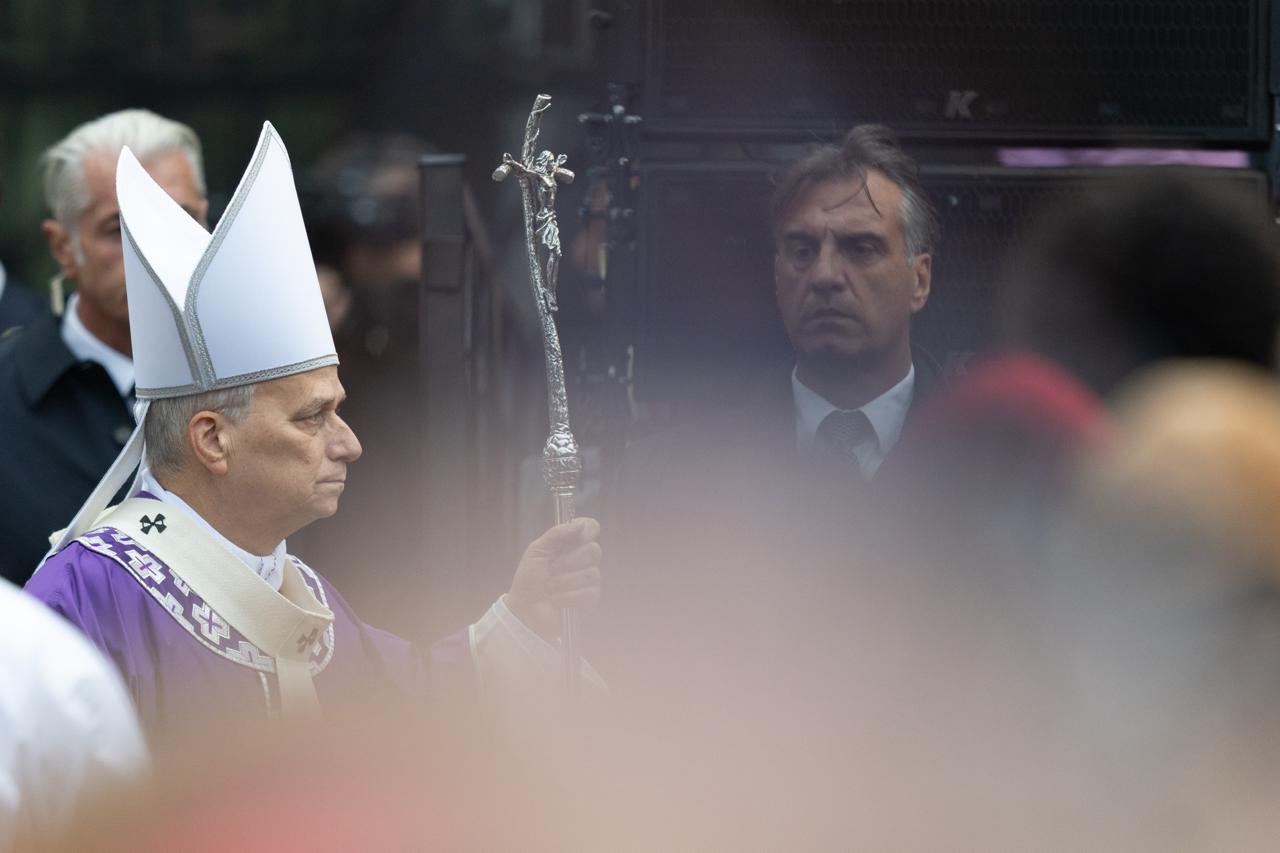
Continuing a tradition begun by St. John Paul II in the late 1970s, Pope Leo XIV visited a cemetery outside the Vatican on Nov. 2 — the day the Catholic Church commemorates All Souls’ Day — to celebrate Mass and pray for those who have died.
“We have gathered to celebrate the Eucharist in this place of prayer and remembrance, of affection and hope. We offer it in suffrage for the faithful departed, particularly for those who rest here and for those whom each of us carries in our hearts,” the pontiff said during Mass celebrated on the central avenue of Rome’s Verano Cemetery.
The altar from which he presided over the celebration was flanked by a row of tombs. Located in the Tiburtino neighborhood, the cemetery, built in the 19th century during the Napoleonic era, is Italy’s second-largest civil cemetery and the largest in Rome.
The grounds, which include an area designated for non-Catholics, suffered severe damage during the Allied bombing of Rome in 1943 and were rebuilt in 1949.
Upon his arrival, Leo XIV placed a bouquet of white and yellow roses on the marble headstone of a randomly chosen grave belonging to an Italian family and bearing the name Antonia Coccia Nicolini.
During his homily, the pontiff explained that the commemoration of the faithful departed, celebrated the day after the solemnity of All Saints, guides the prayer of the Church.
“We turn to the heavenly Father so that the life of holiness and blessedness already enjoyed by so many of his sons and daughters may envelop the souls of those who sleep the sleep of peace,” said the pope, who wore purple liturgical vestments, a symbol of penance, prayer, and hope in the Resurrection.
He also emphasized that faith in Christ is illuminated “by the word that has been proclaimed and that strengthens our trust in God’s hands.”
The Beatitudes, the ‘self-portrait of Jesus’
About 1,500 people attended the celebration, according to figures provided by the Vatican.
Reflecting on the Gospel of the Beatitudes proclaimed during the Mass, Leo XIV said they constitute the “self-portrait of Jesus” and reveal the path to a fully realized life, both on this earth and in eternity.
“The risen Lord tells us: Blessed are those who live according to this path, for theirs is the kingdom of heaven,” he said.
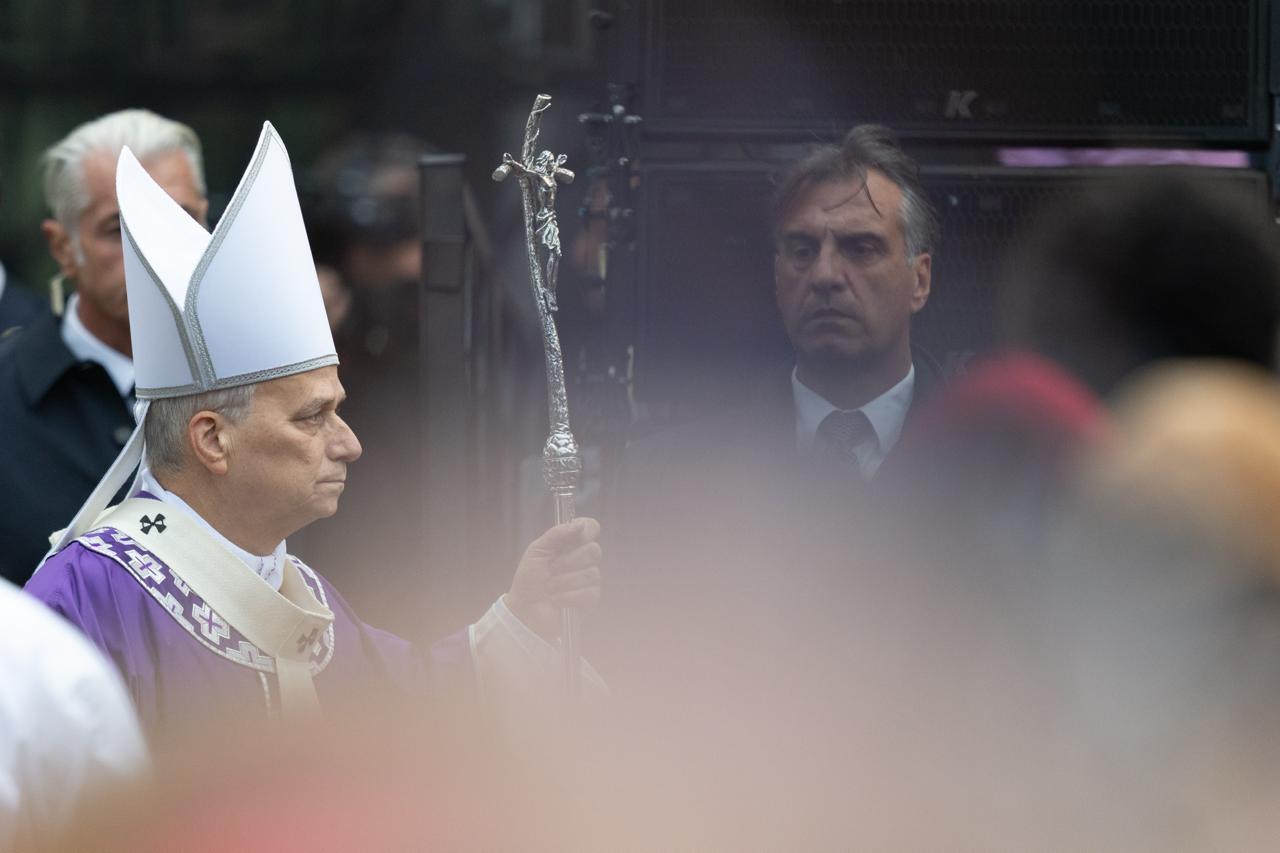
He also observed that this message takes on particular force in a cemetery, which he described as “a threshold between this world and the next,” where faith enables believers to view death through the hope of the Resurrection.
In this context, he stressed that “faith in Christ tells us that our bond with the faithful departed has not been broken but transformed.”
‘The absurd violence of war’
The Holy Father also offered prayers for the deceased and made a special appeal for those suffering the consequences of armed conflicts.
He prayed that “the tears of so many mothers, so many children, and so many elderly people” would move the consciences of those who have the power to end wars.
Reflecting on the beatitude “Blessed are those who mourn, for they shall be comforted,” he offered a special remembrance for those who have recently lost a loved one.
“At this moment we wish to pray for those who have recently lost a loved one, especially for those from whom a loved one has been taken by the absurd violence of war,” he said.
He then renewed his appeal for peace: “May the tears of so many mothers, so many children, and so many elderly people move the consciences of those who have the power to silence the weapons.”
Christian hope in the face of death
Speaking during the 800th anniversary year of the death of St. Francis of Assisi, Leo XIV recalled the praise the saint added to the “Canticle of Creatures” near the end of his life, when he referred to “Sister Bodily Death” and proclaimed blessed those who are found doing God’s will.
In his homily, the pontiff underscored Christian hope in eternal life and reaffirmed that God keeps forever those who have departed this world. Citing the Book of Wisdom, he recalled that the souls of the just are secure in the Lord’s hands and that “no torment shall ever touch them.”
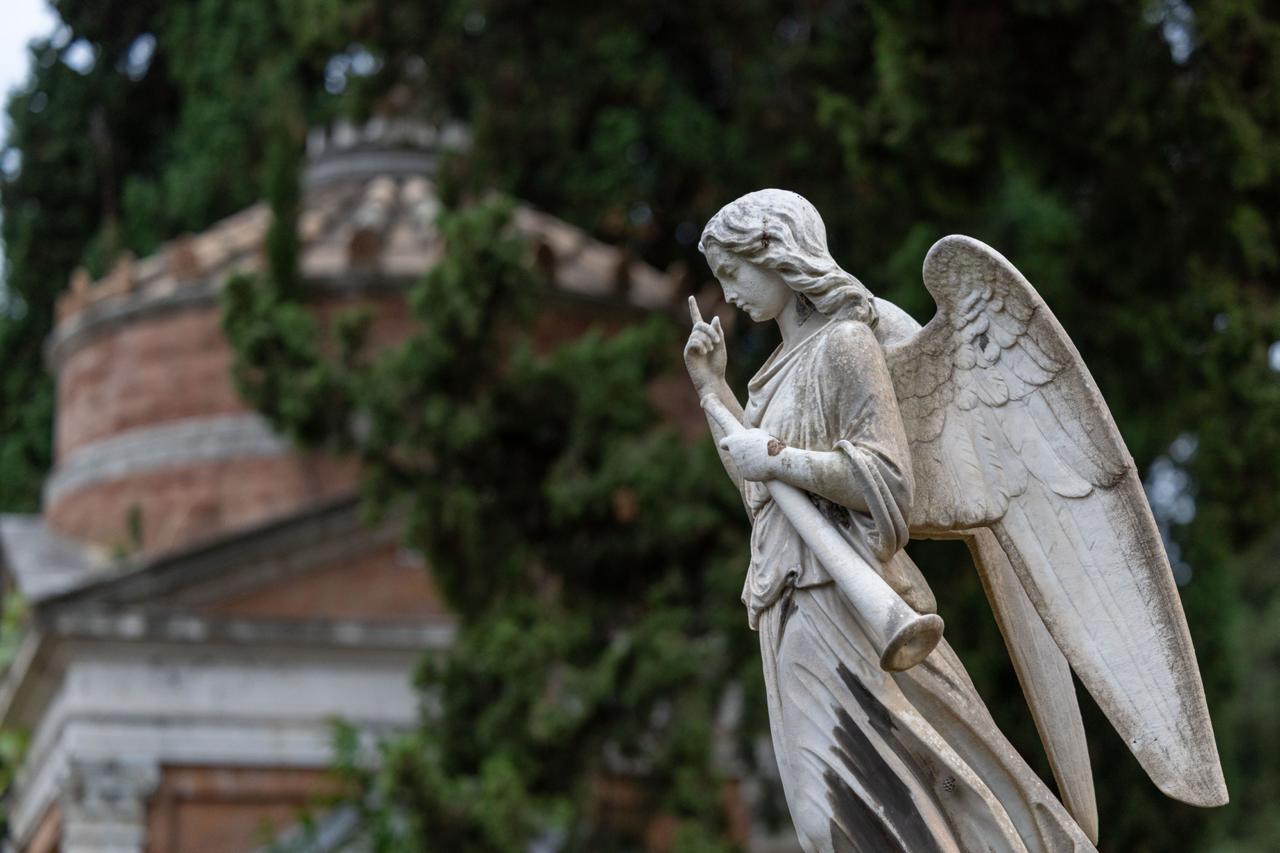
The pope explained that this promise of salvation lies at the heart of the Church’s prayer on All Souls’ Day, when the faithful entrust their loved ones to divine mercy so that they may attain full communion with God.
Leo XIV also invoked the words of the Book of Revelation, which proclaims that God will dwell forever with his people, as well as the promise of the Good Shepherd that no one can snatch his sheep from his hand.
The pope concluded his homily with a reference to Revelation and God’s definitive promise for humanity: the day when “death shall be no more, neither mourning nor crying nor pain,” because all suffering will have been overcome forever.
With this Mass, Leo XIV, as he did last year, continued a tradition promoted by St. John Paul II, who visited the same cemetery on 12 occasions for the Commemoration of All the Faithful Departed. Pope Benedict XVI also celebrated a Mass at the Basilica of St. Lawrence Outside the Walls, located next to the cemetery, though without visiting its graves.
Pope Francis, for his part, maintained the custom of celebrating the All Souls’ Day Mass in various cemeteries throughout Rome during his pontificate.
In addition to Monday’s celebration, Leo XIV is scheduled to preside on Thursday, Nov. 5, at St. Peter’s Basilica, one day before departing on his apostolic journey to Uruguay, Argentina, and Peru, at a Mass offered for the cardinals and bishops who have died during the past year.
This story was first published by EWTN News Español, the Spanish-language sister service of EWTN News. It has been translated and adapted by EWTN News English.