

The diocesan library of Pelplin in the Pomerania region of northern Poland was unknowingly safeguarding a true treasure.
Situated next to the imposing Gothic cathedral where Cistercians have prayed for centuries, this depository of knowledge preserved a medieval manuscript whose significance has since come to light.
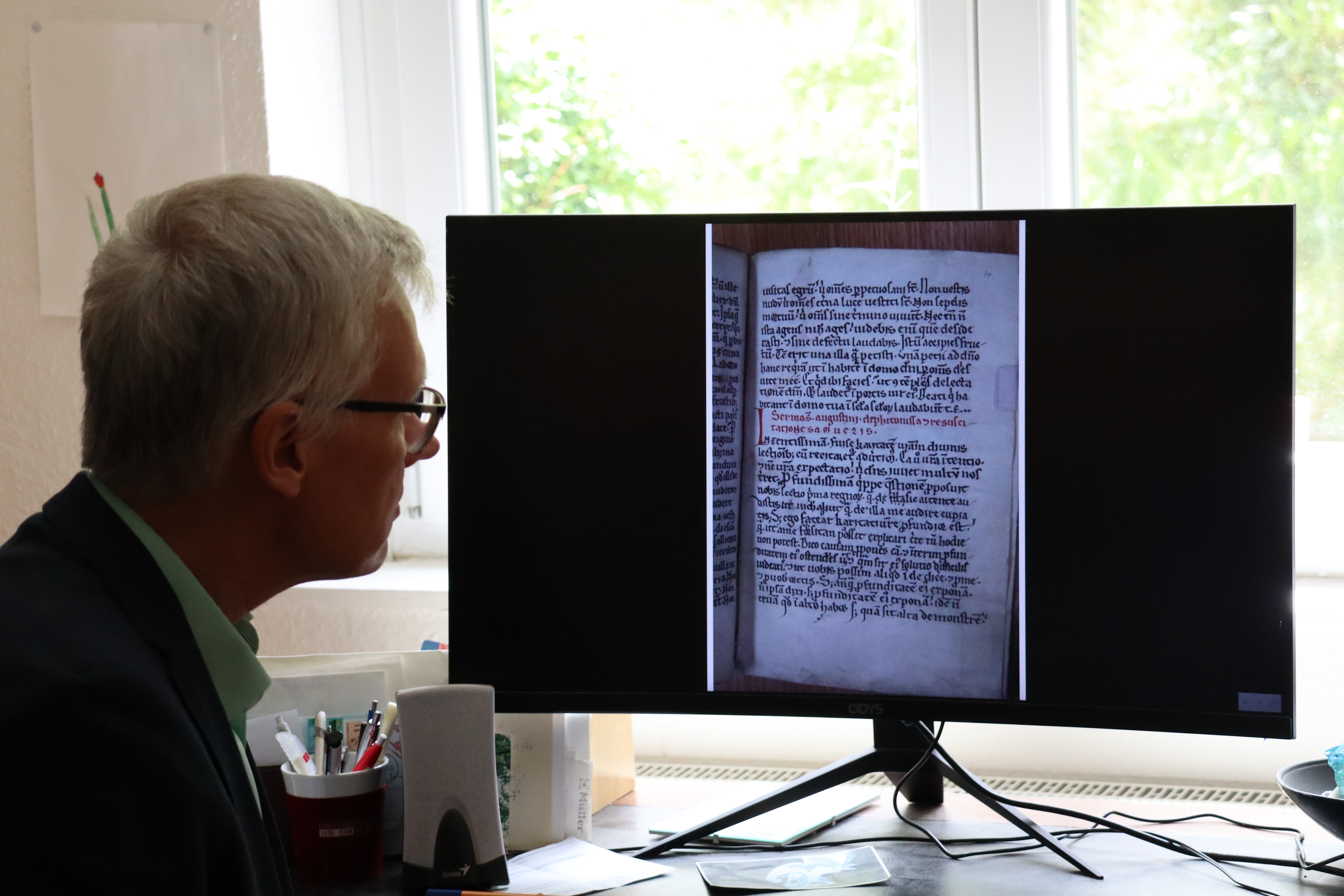
In 2024, Paul Alexander Nebauer, an independent researcher specializing in the medieval history of the former Cistercian monastery of Bad Doberan in Germany, contacted Christian Tornau, a professor of classical philology (Latin studies) at the University of Würzburg, to propose a mission to him: He had located a medieval codex containing several sermons attributed to St. Augustine and needed help identifying and translating them.

Tornau, considered one of Germany’s leading specialists on the works of St. Augustine of Hippo and Christian literature of late antiquity, accepted the challenge.
To an untrained observer, the manuscript might appear to be little more than a collection of aged pages, yellowed in hue with the smell of an ancient document.
However, the exhaustive philological research conducted by Tornau together with Clemens Weidmann, a researcher at the “Corpus Scriptorum Ecclesiasticorum Latinorum” (Corpus of Latin Ecclesiastical Writings or CSEL, by its Latin acronym) in Vienna, Austria, and a team of young scholars ultimately revealed a discovery of immense importance.
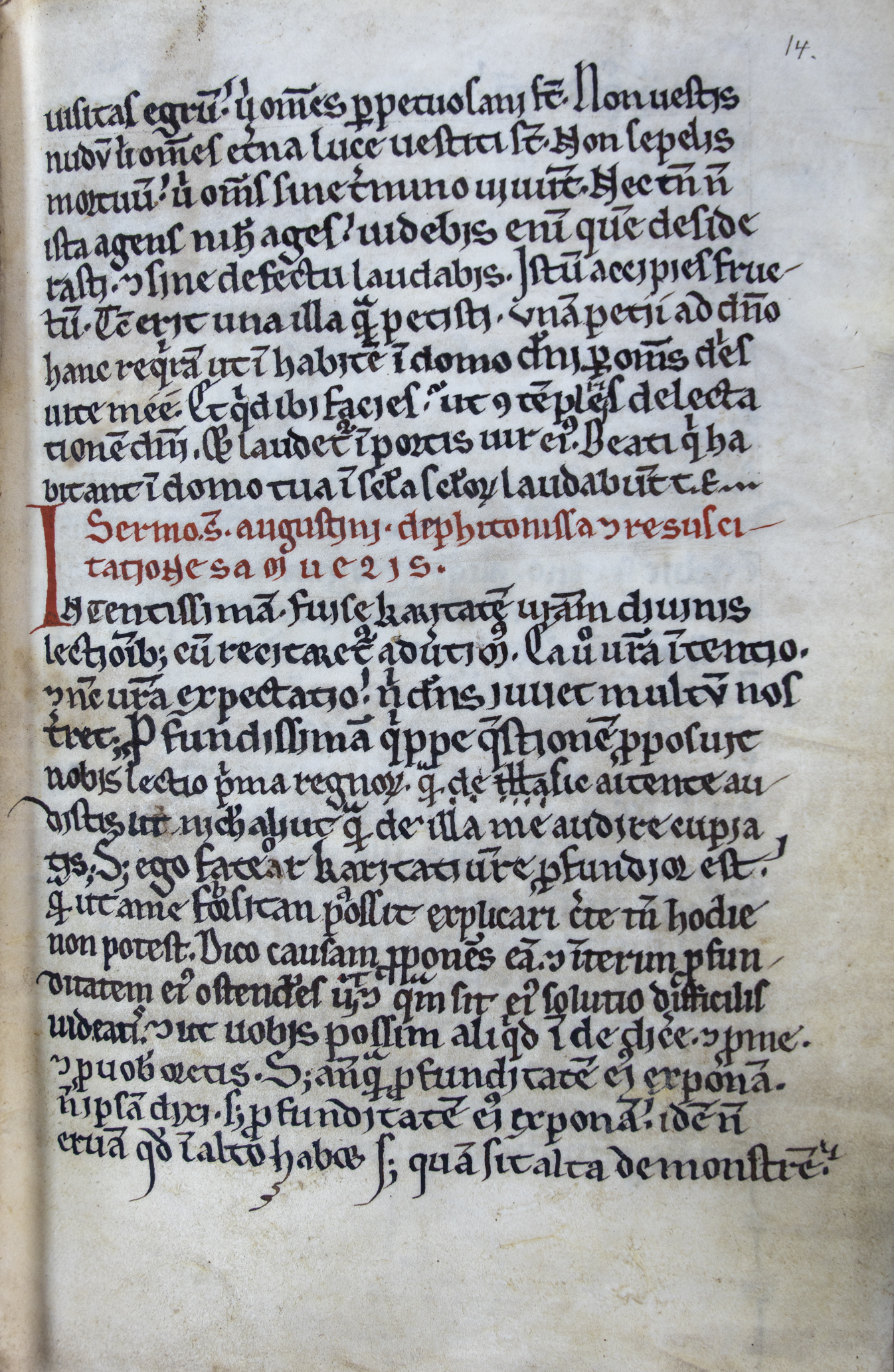
The manuscript was copied at the Doberan monastery during the 12th century and may have been transcribed from an older codex originating from Amelungsborn, a historic Cistercian monastery located in the present-day German state of Lower Saxony.
Of the four sermons analyzed, two were already known to specialists: one recognized as authentically Augustinian and another classified as pseudo-Augustinian. The other two, however, could not be immediately identified.
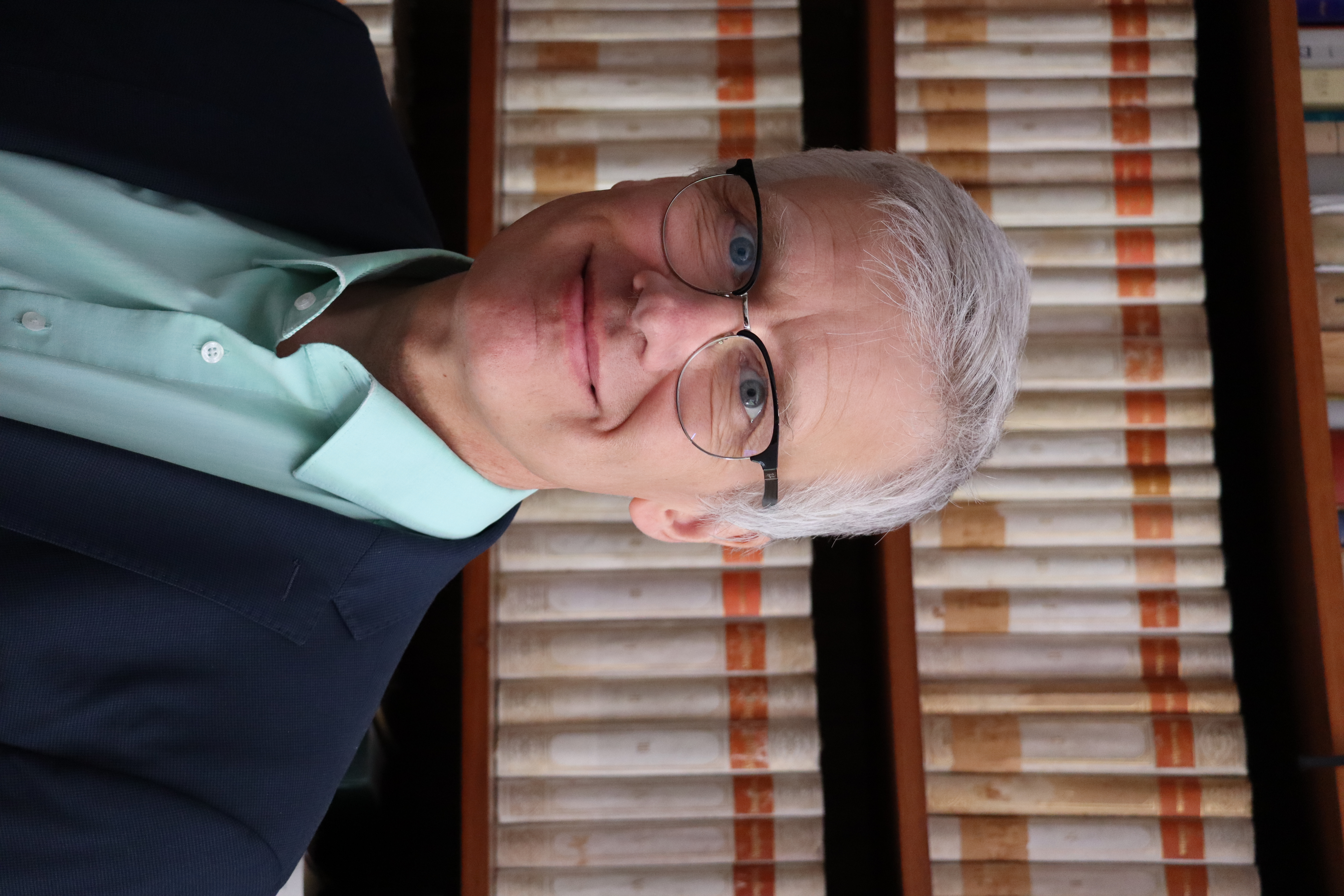
“We transcribed the new texts and began analyzing them with a view to a future edition. We were fascinated, of course, by the idea of having found new sermons by St. Augustine, but we soon became skeptical because, in some places, the sermons did not seem to have been written by Augustine,” Tornau explained to ACI Prensa, the Spanish-language sister service of EWTN News.
2 years of research to verify authenticity
Without letting themselves get carried away by the initial rush of excitement, the researchers wanted to subject the discovery to the highest academic standards before validating it. “Our final verdict that they are authentic is the result of continuous philological work during nearly two years,” noted the German scholar.
Part of this work was carried out during a summer school organized by the CSEL in Vienna in 2025, attended by doctoral students and early-career researchers specializing in early Christian literature. Following a meticulous analysis of the texts and their transmission into a manuscript, the team concluded that there were no serious objections to attributing them to St. Augustine.
According to the researcher, although several centuries of textual transmission separate the era of St. Augustine (fifth century) from the surviving manuscript, the document offers a surprisingly reliable version.
“Several centuries lie between Augustine and this 12th-century scribe, so it is easy to imagine that errors occurred during transmission. Nevertheless, we have a very good text, and with a few critical corrections, we can largely reconstruct what St. Augustine said,” he explained.
Among the most compelling arguments are the dating of the sermons to late antiquity — between the fifth and seventh centuries — as well as the description of liturgical practices that, in Tornau’s words, “would be unimaginable in the Middle Ages.”
Furthermore, according to the researcher, “the background is North African, as is evident from the concluding prayer of the first sermon, which is attested only in Africa of late antiquity.”
Specialists also confirmed that the author possessed a profound understanding of Augustinian thought, without, however, merely reproducing it mechanically.
“The preacher is familiar with the thought and works of St. Augustine, but he does not simply copy them — which could be a sign of inauthenticity,” he explained.
He further added that “the sermons contain nothing that could not have been said by Augustine, whether from a linguistic, exegetical, or theological standpoint.”
After comparing expressions, arguments, and textual features against the extant body of Augustinian works, the researchers reached a firm conclusion.
“Since the preacher is indistinguishable from St. Augustine, we consider it methodologically sound to accept St. Augustine’s authorship rather than inventing an anonymous ‘disciple’ or ‘follower,’” Tornau explained.
A biblical passage that posed a major theological problem
The two sermons center on one of the most complex episodes in the Old Testament: King Saul’s consultation with the medium or “witch” of Endor, recounted in Chapter 28 of the First Book of Samuel.
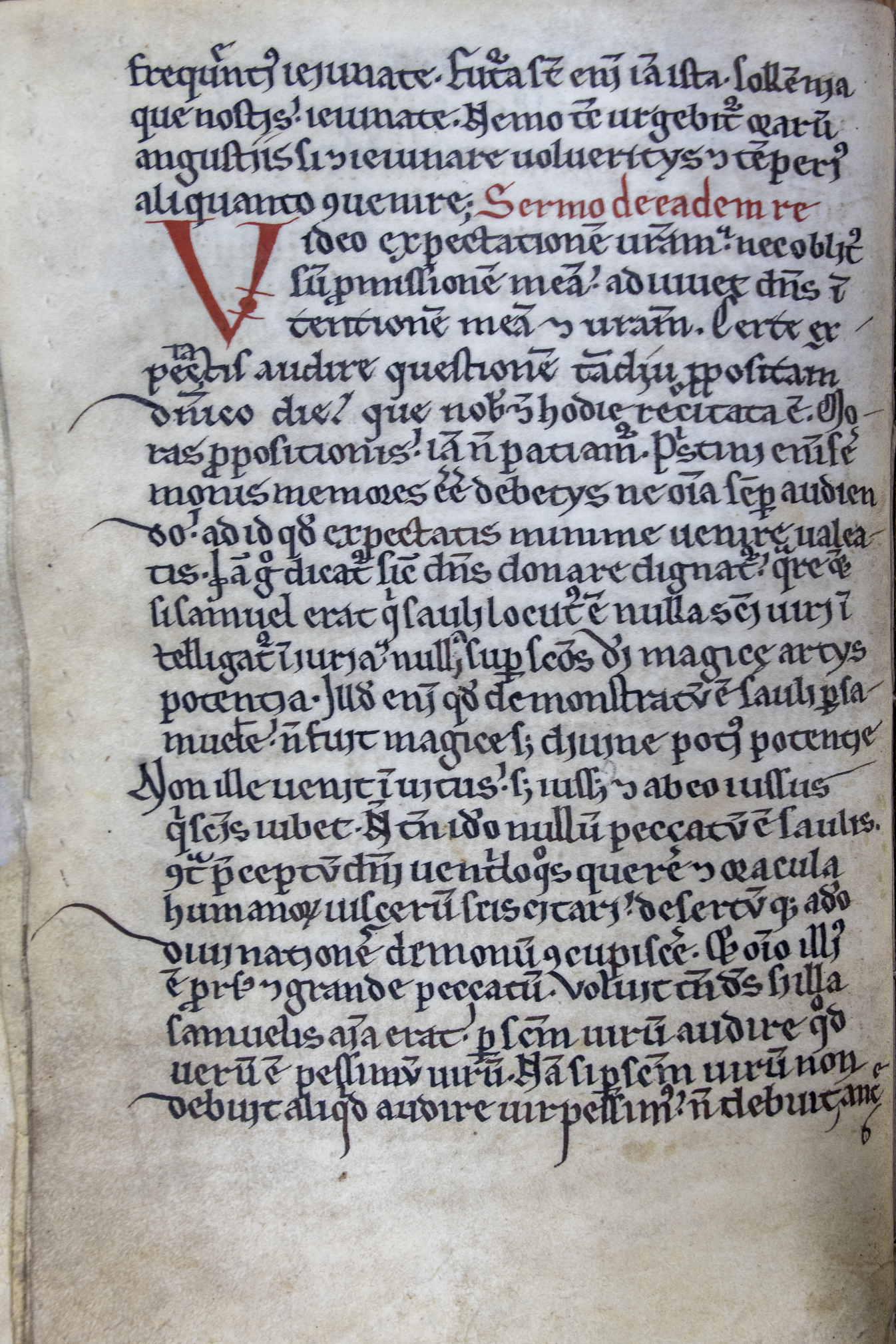
According to the biblical account, abandoned by God and in despair over the threat posed by the Philistines, Saul turns to a necromancer to summon the prophet Samuel. The prophet appears and foretells his imminent death.
“This narrative posed a problem for early Christian exegesis. How could a necromancer wield magical, diabolical power over Samuel, a saint of God? Is God unable or unwilling to prevent it? Evidently, this raises the question of theodicy,” Tornau explained.
According to Britannica, theodicy is “an explanation of why a perfectly good, almighty, and all-knowing God permits evil.”
Before St. Augustine, two main interpretations prevailed. The first held that Samuel had actually appeared, albeit by divine will or permission, and not as a result of magic. The second maintained that the apparition was, in reality, an evil spirit assuming the prophetʼs appearance to deceive Saul.
What is new is the emergence of two specific sermons in which the bishop of Hippo addresses the matter before his congregation without ruling out either possibility.
“In the new sermons, St. Augustine discusses both possibilities along with their advantages and drawbacks and concludes that both are acceptable because neither contradicts the Christian faith,” the professor noted.
For Tornau, this stance reflects a distinctive trait of the bishop of Hippo. “This openness to divergent interpretations of Scripture is characteristic of Augustine in general,” he observed.
According to the specialist, this doctor of the Church, one of the most significant and influential minds in the history of philosophy, adopts an attitude far more willing to dialogue than other ancient authors, who tended to engage in harsh polemics against opposing views.
The great surprise: Saul may have been saved
The most striking aspect of the new texts is a hypothesis previously unknown to the Augustinian tradition.
“The most notable element of the new sermons is the idea that Saul, after hearing Samuel’s prophecy, could have repented and been redeemed,” Tornau noted.
According to the researcher, this interpretation has no parallels in either the known works of the bishop of Hippo or in early Christian exegesis, where the figure of Saul is typically portrayed in a decidedly negative light.
In these sermons, St. Augustine seems to suggest that even a figure as controversial as Israel’s first king might have ultimately opened himself to divine grace.
“The idea may be an original invention of Augustine’s, or perhaps he had access — directly or indirectly — to Rabbinic Jewish exegesis, which is far more positive regarding Saul,” the specialist noted.
Be that as it may, Tornau said he believes this interpretation sheds light on a fundamental aspect of Augustinian thought.
“His intellectual independence and his willingness to consider that anyone, even those who seem most wicked, is capable of attaining salvation through the grace of God” is striking, Tornau commented.
For the expert, this insight accurately reflects the personality of the great Church Father who died in the year 430 and whose work has shaped European theology, philosophy, spirituality, and culture for centuries: “This combines intellectual honesty and episcopal humility in a remarkable and very Augustinian way.”
The next step is to prepare a critical edition of the Latin text with a German translation and a substantial introduction that will explain the history of the discovery; describe the manuscript, its contents and dating; and place the new sermons in the context of St. Augustine’s body of work and the history of Christian exegesis. The publication could appear in early 2027.
The discovery has already sparked numerous reactions in academic and ecclesiastical circles. “Perhaps also because the pope is an Augustinian, which has heightened interest in St. Augustine,” remarked Tornau, who said he hopes to personally present the future critical edition to Leo XIV.
This story was first published by ACI Prensa, the Spanish-language sister service of EWTN News. It has been translated and adapted by EWTN News English.