

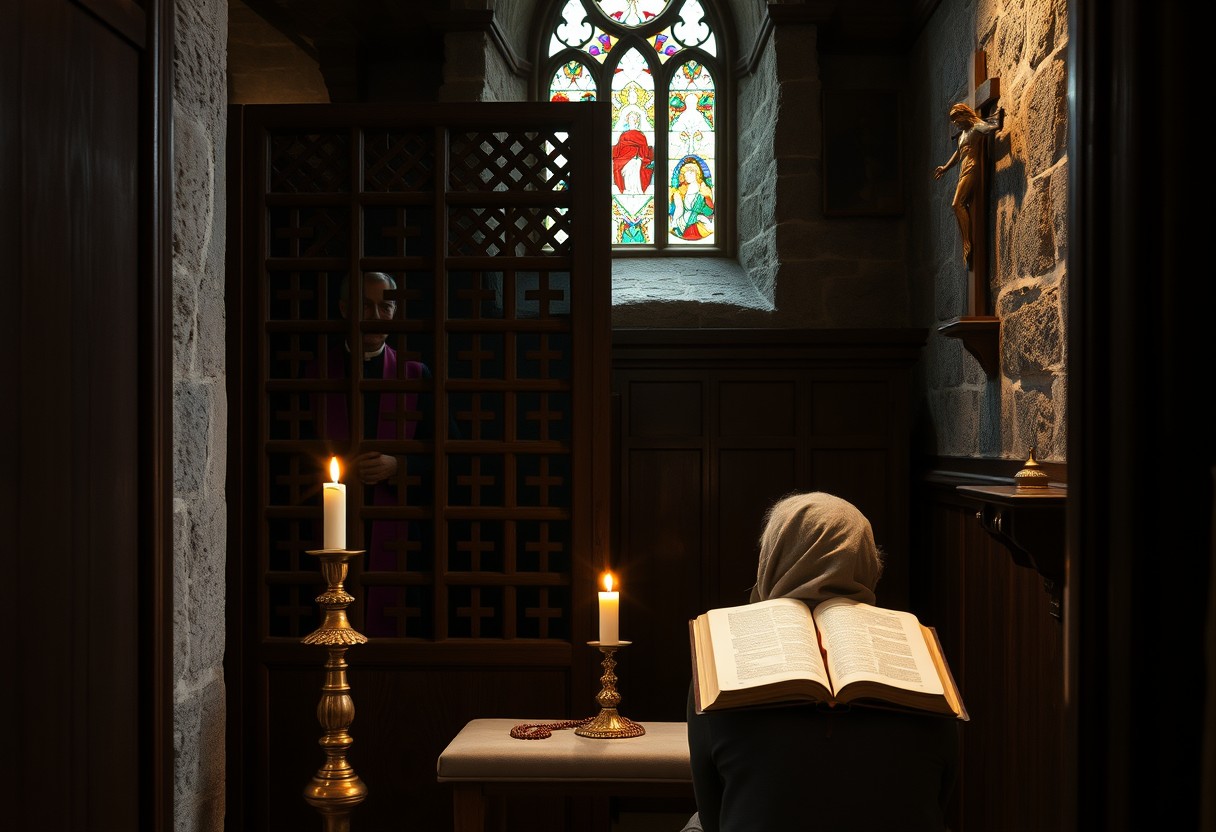
Most Catholics enter a quiet booth or reconciliation room, speak their sins aloud, and receive absolution from a priest-because the Church teaches that Christ instituted this sacrament as the ordinary means of forgiveness for serious sin after baptism. You participate in a rite rooted in divine mandate, not human tradition, where spoken confession makes repentance concrete and grace tangible.
Key Takeaways:
- Catholics confess sins to a priest because the practice is rooted in the belief that Christ entrusted his apostles with the authority to forgive sins, a power the Church holds is passed down through ordained priests.
- The sacrament of confession provides a structured, personal encounter with divine mercy, where verbal acknowledgment of wrongdoing before a spiritual witness fosters deeper contrition and accountability than private prayer alone.
- A mid-sized SaaS firm might track user engagement through analytics, but the confessional box measures spiritual return through absolution, offering a tangible moment of reconciliation that affirms the penitent’s renewed standing in the community of faith.
The Divine Logic of the Human Ear
God chose the human ear as the vessel for absolution, not merely for tradition but for theological precision. When you speak your sins aloud to another person, you break the silence that sin thrives in. The priest’s ear becomes a sacred conduit, not because he is sinless, but because Christ acts through him in the sacrament. This physical act roots grace in reality, not abstraction.
The Necessity of a Tangible Voice
Speaking your sins requires courage, but it also brings them into the light where healing begins. Your voice, trembling or steady, makes the internal external. The priest’s presence ensures you do not whisper into the void. Words spoken are harder to dismiss than thoughts concealed, anchoring repentance in action.
The Paradox of Private Guilt and Public Grace
You carry guilt in solitude, yet grace arrives through a shared moment. The confessional is private, but not isolated. By confessing to a priest, you submit your hidden failings to a visible representative of Christ’s mercy. The paradox lies in this: the most personal sins are forgiven in a communal sacrament.
Though your sins are spoken in hushed tones behind a screen, the act itself connects you to a centuries-old practice of the Church. This is not a transaction between two individuals, but a participation in Christ’s ongoing work of reconciliation. The priest speaks not his own forgiveness, but the words of divine commission, restoring you to both God and the Body of Christ.
The Scriptural Mandate
Jesus established a tangible means for forgiveness, one that involves spoken words and human instruments. You receive grace through a visible channel, not merely through private prayer. Scripture shows Christ giving His followers the power to forgive sins, grounding the practice in divine commission rather than ecclesiastical invention. This authority is not assumed but entrusted.
The Breath of Christ in the Upper Room
On the evening of His resurrection, Jesus appeared to His disciples and breathed on them, saying, “Receive the Holy Spirit.” In that moment, He conferred a unique spiritual power. You participate in a sacrament rooted in that breath, a divine impartation linking your confession to Christ’s victory over sin and death.
The Authority Delegated to Men
Christ did not leave forgiveness to personal interpretation. He gave clear authority to His apostles, saying, “Whose sins you forgive are forgiven them.” You approach a priest not as a substitute for God but as a minister of divine mercy, acting in persona Christi, with a mandate that traces back to that apostolic moment.
That authority was never intended to be temporary or symbolic. The early Church practiced confession to bishops and presbyters, recognizing their role in reconciliation with God and the community. You stand within a tradition where ordained men, despite their human frailty, are set apart to pronounce absolution-a solemn declaration backed by Christ’s own words, not personal judgment. A mid-sized SaaS firm might update its protocols annually, but this commission has endured for centuries with unbroken continuity.
The Psychology of the Box
Stepping into the confessional, you enter a space designed not for judgment but for healing, where the physical enclosure supports emotional vulnerability. The anonymity of the screen allows you to speak freely, transforming abstract guilt into a spoken reality. This sacred architecture, though simple, shapes the experience of repentance in a way few other rituals do. Learn more about the deeper reasons behind this practice at Why do Catholics Confess to a Priest?.
The Relief of a Spoken Burden
Voicing your sins aloud forces acknowledgment in a way silent reflection cannot, making the internal external. The moment words cross your lips, the weight shifts from hidden shame to shared truth, offering immediate psychological release. This act of naming wrongdoing breaks isolation and begins the restoration of inner peace.
The Humility of the Hidden Face
Behind the screen, your face is unseen, stripping away pride and status. This concealment ensures the focus remains on the sin, not the sinner, fostering a deeper sense of humility. You are not performing contrition-you are living it, in silence, in darkness, before God and His witness.
When your identity is veiled, the encounter cannot be shaped by reputation or recognition. A CEO and a janitor confess the same way-voice trembling, heart exposed. The hidden face prevents the priest from associating sin with appearance or status, preserving the sacred equality of all penitents. This deliberate anonymity protects both parties and deepens the authenticity of the moment, making the sacrament not a performance but a surrender.
The Priest as a Divine Mirror
Through the priest, you encounter a reflection of Christ’s mercy, not merely human judgment. His presence makes visible the invisible grace at work, allowing you to see your repentance through a divinely authorized lens. This sacred role transforms the moment into more than a conversation-it becomes a spiritual encounter where your contrition is met with heavenly authority to forgive.
Acting in the Person of Christ
You speak your sins not to a mere man, but to Christ who acts through him. The priest wears the spiritual identity of Christ the Good Shepherd during confession, granting absolution with divine mandate. This is not symbolic theater, but a real transmission of grace, where the words spoken carry eternal weight in your soul’s restoration.
The Seal of Absolute Silence
What you confess remains forever bound within the priest, protected by the inviolable seal of confession. No threat, law, or personal risk can compel its disclosure. This absolute confidentiality ensures your complete freedom to speak, knowing your secrets are held not by a man, but by God alone through him.
Church law treats any breach of the seal as the gravest of offenses, carrying automatic excommunication. Priests have endured imprisonment, torture, and death rather than reveal a single confessed sin. The seal is not a policy but a non-negotiable divine boundary, rooted in the sacred trust between penitent, priest, and God. A priest in 18th-century Ireland was hanged for refusing to disclose a dying man’s confession, a historical witness to this unbreakable vow. Your words enter a sanctuary where even silence speaks of uncompromised safety.
The Sacrament of New Beginnings
Each time you enter the confessional, you step into a sacred moment of renewal. The priest’s absolution doesn’t just erase wrongdoing-it unlocks a fresh spiritual trajectory, one where grace replaces guilt and purpose displaces shame. This is not repetition but resurrection, a weekly return to baptismal purity.
Beyond Mere Self-Improvement
Confession calls you to more than behavior modification. It demands honest confrontation with sin as rebellion against love, not just poor choices. You don’t confess to feel better about yourself, but to realign your will with God’s, allowing divine mercy to reshape your heart’s desires.
The Restoration of the Soul’s Health
Sin wounds the soul, distorting your relationship with God and others. Through confession, you receive spiritual medicine that heals these fractures, restoring inner harmony. The words of absolution are not ritual noise, but a divine intervention that renews your capacity to love and receive grace.
When you name your sins aloud and hear the words of forgiveness, a profound interior shift occurs. The burden of isolation lifts, not because you’ve been excused, but because you’ve been reintegrated into communion. A mid-sized SaaS firm may track user engagement through metrics, but God restores your soul through encounter-personal, immediate, and transformative. This is healing that reaches beneath the surface, mending what self-effort cannot touch.
Conclusion
You confess your sins to a priest because Christ entrusted his ministers with the authority to forgive sins in his name, making the sacrament a tangible encounter with divine mercy. The priest does not act as a moral judge but as a witness and conduit of grace, offering absolution that restores your relationship with God and the Church. This practice, rooted in centuries of tradition and scriptural foundation, provides a structured moment of honesty, repentance, and renewal. A mid-sized SaaS firm might track user behavior to improve service, but in the confessional, you confront not data but conscience, guided by a spiritual reality that transcends mere self-assessment.
FAQ
Q: Why can’t Catholics just confess their sins directly to God instead of going through a priest?
A: Catholics believe that while personal prayer and contrition are important, Jesus Christ instituted a specific sacramental form for the forgiveness of serious sins. In the Gospel of John, Christ breathes on the apostles and says, “Receive the Holy Spirit. Whose sins you forgive are forgiven them, and whose sins you retain are retained.” This moment is understood as the establishment of the priest’s authority to act in the person of Christ when absolving sins. The sacrament is not a replacement for direct prayer but a divinely structured encounter that includes verbal confession, penance, and formal absolution.
Q: Do priests ever reveal what they hear in confession?
A: No, the seal of confession is absolute and inviolable under any circumstance. A priest cannot disclose the contents of a confession, even under threat of legal action, imprisonment, or personal danger. Church law imposes automatic excommunication on any priest who breaks the seal. Historical cases, such as that of Saint John Nepomucene, who was martyred in the 14th century for refusing to reveal a queen’s confession, underscore the seriousness with which the Church guards this confidentiality.
Q: What kinds of sins must be confessed in the sacrament?
A: The Church requires the confession of all mortal sins-those committed with full knowledge and deliberate consent, involving grave matter-before receiving Holy Communion. Examples include murder, adultery, apostasy, and deliberate desecration of the Eucharist. Venial sins, which are less serious, may also be confessed, and the Church encourages regular confession even for these, as it strengthens spiritual discipline and fosters ongoing conversion.
Q: How often are Catholics expected to go to confession?
A: The Church requires Catholics to receive the sacrament at least once a year, especially during Lent, if they are conscious of having committed mortal sin. Many devout Catholics choose to go monthly or even more frequently, treating it as a routine spiritual check-up. A mid-sized SaaS firm’s CEO once described his biweekly confessions as akin to system maintenance-necessary for optimal performance and long-term integrity.
Q: Can a priest refuse to give absolution?
A: Yes, a priest may withhold absolution if the penitent shows no genuine contrition or lacks a firm purpose of amendment. For instance, someone openly cohabiting in a relationship outside of marriage who states they have no intention of changing their situation would not be absolved, as sacramental forgiveness requires a willingness to turn away from sin. The priest may offer counsel, suggest steps toward reconciliation, and invite the person to return when they are ready to make a sincere commitment to change.